

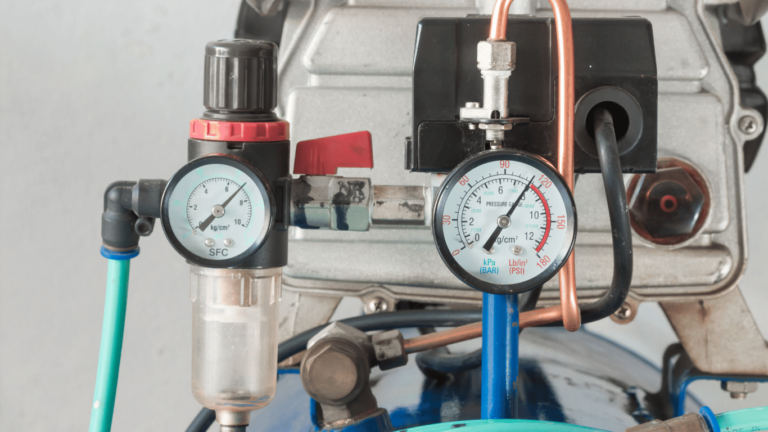
Low-pressure air systems are often introduced to improve control, reduce waste, or protect sensitive equipment. Compared to high-pressure pneumatic lines, they appear simple and forgiving. This perception leads many teams to treat low-pressure regulators as interchangeable accessories rather than precision control components. In reality, operating at low pressure reduces tolerance for error. Small deviations in regulation, response time, or stability have outsized effects on downstream equipment.
In manufacturing, automation, and process environments, low-pressure air is commonly used for delicate actuation, testing, coating, purge flows, and controlled assist functions. These applications depend on consistency rather than force. When the wrong regulator is installed, problems rarely show up immediately. They emerge as performance drift, unexplained variability, and recurring failures that are difficult to trace back to a single cause.
The failures below illustrate how incorrect regulator selection creates equipment issues that compound over time, often disrupting operations long before the regulator itself is suspected.
Table of Contents
Low-pressure regulation as a control function, not a utility add-on
A low-pressure air regulator is designed to maintain stable output within a narrow operating range while responding smoothly to demand changes. At pressures between zero and five psi, even small fluctuations represent a large percentage of total output. Regulators intended for higher ranges often lack the sensitivity required to perform reliably at the low end.
For teams specifying a low pressure air regulator 0-5 psi, the key issue is not airflow capacity alone, but control resolution and stability. When a regulator is mismatched to the application, equipment failures tend to appear downstream, masking the true source of the problem.
Why low-pressure issues are often misdiagnosed
Failures at low pressure develop subtly.
- Output appears acceptable at no load
- Instability increases only under operation
- Symptoms vary with cycle timing or demand
By the time failures are consistent, the regulator has often been ruled out prematurely.
1. Inconsistent actuator motion in precision equipment
Low-pressure actuators rely on smooth, predictable airflow to achieve repeatable motion. When a regulator lacks fine control, output pressure fluctuates with minor demand changes. Actuators may hesitate, overshoot, or move unevenly.
This inconsistency affects positioning accuracy and cycle repeatability.
How this failure disrupts operation
Motion instability leads to secondary problems.
- Increased wear on mechanical components
- Loss of alignment over time
- Difficulty maintaining calibration
Replacing actuators does not resolve the underlying pressure instability.
2. Premature wear in pneumatic seals and diaphragms
Seals and diaphragms in low-pressure systems are designed for gentle, controlled loading. Regulators that spike pressure during startup or demand changes expose these components to stress beyond their intended range.
Over time, repeated pressure excursions accelerate wear.
Why wear appears unrelated at first
Seal damage progresses internally.
- No immediate leaks are visible
- Performance declines gradually
- Failures appear intermittent
The regulator’s behavior under transient conditions is often the root cause.
3. Unstable test and measurement results
Low-pressure air is frequently used in testing, calibration, and inspection systems. These applications assume stable, repeatable pressure as a baseline condition. Regulators not designed for low-range accuracy introduce drift and noise into measurements.
Test failures then appear to be product defects rather than control issues.
Impact on quality processes
Measurement instability undermines confidence.
- False failures increase scrap
- Retesting consumes time and resources
- Root cause analysis becomes unreliable
The regulator becomes a hidden variable in quality outcomes.
4. Damage to sensitive components during startup
Some regulators overshoot target pressure briefly when air supply is first applied. In low-pressure systems, this overshoot can exceed safe limits for sensitive components such as membranes, films, or lightweight fixtures.
Damage may occur before steady-state conditions are reached.
Why startup events are risky
Transient behavior matters at low pressure.
- Pressure spikes represent large relative changes
- Components experience shock loading
- Damage occurs without obvious signs
Failures may be attributed to handling or material defects instead.
5. Process variability in coating, drying, or purge applications
Low-pressure air is often used to assist coatings, drying, or purging without disturbing surfaces. Inconsistent pressure alters airflow patterns, leading to uneven results.
Variability becomes more pronounced as production speeds increase.
Operational consequences of variability
Inconsistent airflow affects outcomes.
- Coatings vary in thickness or finish
- Drying times fluctuate
- Residual contamination increases
Process tuning becomes difficult when pressure is unstable.
6. Excessive air consumption despite low setpoints
Incorrect regulators may require higher upstream pressure to maintain minimal downstream output. As demand changes, the regulator compensates inefficiently, increasing air consumption even though output pressure remains low.
This inefficiency often goes unnoticed.
Why air waste is overlooked
Low pressure suggests low usage.
- Consumption is assumed to be minimal
- Energy costs rise gradually
- Compressor load increases subtly
The regulator’s internal design determines efficiency, not just the setpoint.
7. Failure of downstream control valves and instruments
In low-pressure systems, downstream components often assume stable inlet conditions. Pressure fluctuations introduced by an unsuitable regulator stress control valves, sensors, and instruments.
Over time, these components experience premature failure or drift.
Cascading effects of instability
One unstable element affects many others.
- Control loops become erratic
- Instrument calibration shifts
- Maintenance frequency increases
The regulator sits upstream, but the damage appears elsewhere.
8. Inability to maintain setpoint under dynamic demand
Some regulators perform adequately at static flow but struggle when demand changes rapidly. In applications with cycling actuators or variable flow, output pressure lags or overshoots the setpoint.
This behavior disrupts timing and synchronization.
Why dynamic response matters
Low-pressure systems are sensitive.
- Small delays alter system behavior
- Pressure recovery takes longer
- Control accuracy declines
Regulators must be selected for response characteristics, not just range.
9. Increased troubleshooting time and misdirected repairs
When failures are intermittent and spread across components, troubleshooting becomes time-consuming. Teams may replace actuators, sensors, or valves without addressing the regulator.
Downtime increases while the root cause remains active.
Hidden cost of misdiagnosis
Indirect failures consume resources.
- Maintenance hours increase
- Spare parts usage rises
- Confidence in equipment declines
A single upstream mismatch can drive repeated downstream interventions.
10. Reduced service life of the entire pneumatic system
Chronic pressure instability accelerates aging across the system. Components operate under fluctuating loads rather than steady conditions, reducing overall service life.
What appears to be normal wear is actually stress-induced degradation.
Long-term system impact
System reliability declines steadily.
- Maintenance intervals shorten
- Failure rates increase across components
- Planning becomes reactive
The regulator sets the tone for the entire system’s behavior.
Why low-pressure regulation is fundamentally different
Low-pressure regulation demands sensitivity rather than strength. Regulators designed for higher pressures often lack the fine control needed near zero. Spring rates, diaphragm areas, and internal geometry all influence low-end performance.
A general explanation of how pressure regulation works, including the relationship between spring force, diaphragm area, and output stability, is outlined in Wikipedia’s overview of pressure regulators. This context helps explain why devices optimized for one range perform poorly in another.
Common assumptions that lead to regulator mismatch
Several assumptions drive incorrect selection.
- “Lower pressure is easier to control”
- “Any regulator can be dialed down”
- “Problems would be obvious immediately”
In low-pressure systems, these assumptions fail quietly rather than dramatically.
Aligning regulator choice with application reality
Effective selection begins with understanding how the regulator will be used.
- Static versus dynamic demand
- Sensitivity of downstream components
- Startup and shutdown behavior
- Required stability, not just nominal pressure
Matching these factors to regulator design characteristics reduces failure risk.
Why failures cluster in low-pressure systems
Low-pressure applications often involve sensitive processes. When control is lost, even briefly, consequences are amplified. Failures appear unrelated because they manifest in different components, but the underlying cause is shared.
Recognizing this pattern shortens diagnosis time.
Preventing low-pressure regulator-related failures
Prevention focuses on appropriateness rather than redundancy.
- Select regulators designed specifically for low ranges
- Evaluate dynamic response, not just setpoint accuracy
- Consider startup behavior and overshoot
- Validate performance under real operating conditions
These steps address root causes rather than symptoms.
Reframing low-pressure air as a precision resource
Low-pressure air is often treated as a reduced version of standard pneumatics. In practice, it functions more like a control signal than a power source. Precision, stability, and predictability matter more than capacity.
This shift in perspective changes how components should be specified.
Closing perspective: most low-pressure failures start upstream
Equipment failures attributed to actuators, valves, or instruments in low-pressure systems often trace back to regulation issues upstream. Using the wrong low-pressure air regulator introduces variability that propagates throughout the system, creating failures that seem unrelated.
Selecting a regulator designed for the intended pressure range restores control, reduces stress on downstream components, and improves overall reliability. In low-pressure applications, correctness matters more than robustness. When regulation is stable and appropriate, equipment failures decline not because components are stronger, but because they are no longer compensating for an avoidable source of instability.


