


You might be feeling that your money situation has quietly outgrown the systems you set up years ago. What started as a simple spreadsheet, a part-time bookkeeper, payroll services for small business in Orem, UT, and a stack of neatly filed receipts has turned into something heavier. There are more transactions, more questions, more “I’ll deal with that later” items. Tax time no longer feels like a task. It feels like a threat.end
Because of this pressure, you might be wondering if your current setup is still enough. Your bookkeeper is doing what you asked, yet you keep having that nagging thought. Is it time to bring in a Certified Public Accountant instead of just “getting by” with basic bookkeeping support.
Here is the short version. You know it is time to move from a bookkeeper to a CPA when your decisions have tax consequences you do not fully understand, when your business or personal finances are getting more complex, and when you feel exposed if the IRS ever takes a closer look. A good CPA does more than record history. They help you shape it, and they stand next to you if anything goes wrong.
So where does that leave you right now.
Table of Contents
Are your finances getting too complex for “just” bookkeeping?
Bookkeepers are valuable. They record income and expenses, reconcile accounts, and keep your day to day financial picture organized. For a while, that is exactly what you need. Then things shift.
Maybe you started with a simple sole proprietorship, and now you have an LLC, a partner, or two different revenue streams. Maybe you added employees, or you started offering benefits. Perhaps you bought equipment, vehicles, or even a building. Each of these steps adds layers of tax rules, deadlines, and reporting requirements that go far beyond basic books.
Here is the first sign it may be time to transition. Your bookkeeper can tell you what happened, but cannot confidently tell you what it means for your taxes or your long term plans. You hear more “You should ask a CPA about that” than you used to. That is not your bookkeeper failing you. It is simply the limit of their role.
When your financial life becomes more complex, the risk of small mistakes grows. Choosing the wrong entity type, misclassifying workers as contractors instead of employees, or mishandling depreciation can cost far more than a CPA’s fee. At that point, staying with only a bookkeeper is not “saving money.” It is gambling.
Do you feel anxious every time tax season or an IRS notice appears?
The second sign is more emotional than technical. You feel an immediate knot in your stomach when you think about taxes. You are not sure if you are paying too much, or worse, not enough. You sign your return each year hoping it is correct, but you cannot say that you truly understand it.
Many people rely on whoever prepared their return last year, without really checking their credentials. The IRS itself warns taxpayers that choosing a reputable tax preparer is a key step in protecting your money and your identity. You can read more about that in this IRS guidance on choosing a reputable tax preparer.
If you are working with someone who only enters numbers into software, with no broader planning or explanation, you are being shortchanged. A CPA is trained, tested, and licensed to handle complex tax and accounting issues. They also must meet ongoing education and ethical requirements. The IRS explains the differences between tax preparer credentials, including CPAs, on its page about tax return preparer qualifications.
If you would feel exposed or alone in the room if the IRS asked questions, that is a strong signal. You are ready for a transition from bookkeeper to CPA who can explain, defend, and plan with you, not just total up your numbers.
Are you trying to make bigger decisions without clear financial guidance?
The third sign is that the questions you are facing now are bigger than “What did I spend last month.” You might be asking things like.
- Can I afford to hire another employee, and what will that do to my taxes.
- Should I buy or lease equipment.
- Is this the right time to form an S corporation or another entity type.
- How can I take money out of the business without creating a surprise tax bill.
A bookkeeper can generate reports. They can show your profit and loss and your balance sheet. That is useful. Yet those reports do not automatically translate into advice. A CPA is trained to read those numbers like a story. They can help you see patterns, spot risk, and plan moves months or years ahead.
If your financial questions are starting to affect your sleep, your relationships, or your willingness to grow, then you have outgrown simple bookkeeping. You are ready for a CPA for small business taxes and planning who can sit beside you, not just work behind the scenes.
Bookkeeper vs CPA: what actually changes for you?
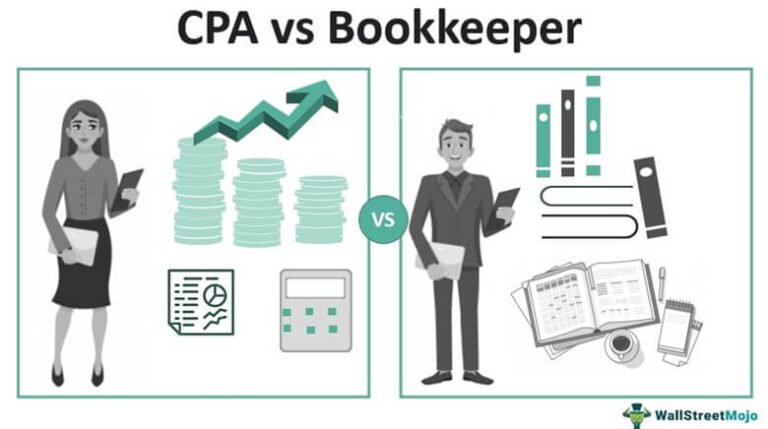
So what is the real difference between staying with a bookkeeper and hiring a Certified Public Accountant. It is not that one is “good” and the other is “bad.” They serve different roles. The question is which role you need now.
| Area | Bookkeeper | Certified Public Accountant (CPA) |
| Main focus | Day to day recording and organizing of financial data | Analysis, tax planning, financial strategy, and oversight |
| Typical tasks | Data entry, reconciliations, invoicing, basic reports | Tax returns, tax strategy, financial reviews, complex reporting |
| Training and credentials | May have certifications, but none required by law | State license, professional exam, ongoing education required |
| Who they answer to | Primarily you, with no formal regulatory body | State licensing board and professional standards |
| IRS representation | Generally limited or none | Can represent you before the IRS in many matters |
| When they fit best | Simple operations, low complexity, early stages | Growing or complex finances, higher risk, bigger decisions |
For many people, the right answer is not “bookkeeper or CPA.” It is both. The bookkeeper keeps the daily records accurate. The CPA reviews the books, prepares returns, and advises you on structure and strategy. If money is tight, you might start by keeping your bookkeeper and adding a CPA for quarterly or annual check ins.
What should you do right now if you think you are ready for a CPA?
Once you start to see these signs, it is natural to feel a mix of relief and worry. Relief, because you finally have a name for what you need. Worry, because change feels expensive and uncertain. So what can you do today that moves you forward without blowing up your current system.
1. Map your pain points in simple, honest language
Before you contact anyone, sit down with a notebook and write out where you feel overwhelmed or unsure. For example.
- “I do not understand my tax return or why I owe what I owe.”
- “I am afraid I am missing deductions.”
- “I am growing, but I do not know the tax impact of hiring or expanding.”
- “If I got audited, I do not know who would stand with me.”
These notes will help you speak clearly with a CPA and quickly see who listens and who brushes you off. A good Certified Public Accountant will take these concerns seriously and address them one by one.
2. Keep your bookkeeper in the loop and invite collaboration
This is not about replacing someone who has helped you. It is about giving them support, too. Tell your bookkeeper that you are considering bringing in a CPA for tax and planning help. Ask if they are comfortable sharing files and answering questions from that CPA.
When bookkeepers and CPAs work together, you get cleaner books, smoother tax filings, and fewer last minute crises. Your bookkeeper may even welcome the chance to hand off the parts that keep them up at night.
3. Interview at least two CPAs and ask specific questions
Do not rush to the first name you find. Talk with at least two CPAs. Ask clear, practical questions such as.
- “What types of clients do you usually work with. Do you understand my kind of business or situation.”
- “How often will we talk during the year, and what do you expect from me.”
- “How do you charge, and what is included in your fee.”
- “Can you give an example of how you helped a client reduce risk or plan better, not just file taxes.”
Pay attention not only to their answers, but to how you feel when you talk with them. You should feel heard, not rushed or judged. This relationship involves trust. You are inviting someone into the financial core of your life or business.
You are allowed to outgrow “good enough” and ask for expert support
Outgrowing your current setup is not a failure. It is a sign that you have built something real. When your finances become more complex, your tax questions get heavier, and your decisions carry more weight, you deserve guidance that matches that reality.
Transitioning from a bookkeeper to a CPA, or adding a CPA to your team, is not about making things fancy. It is about feeling calmer, more informed, and better protected. You do not have to keep guessing. You do not have to keep hoping your returns are right. You can choose someone whose job is to understand the rules, translate them for you, and stand beside you if anything goes wrong.
If you are seeing yourself in these signs, take one small step today. Write down your worries, talk with your bookkeeper, and start a conversation with a CPA. You deserve clarity instead of anxiety, and you are much closer to that than you might think.


