

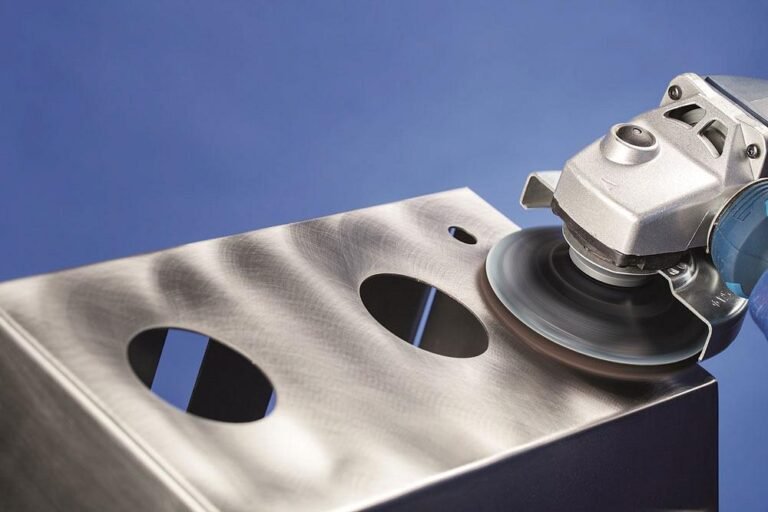
Metal finishing problems rarely stop a production line outright. Instead, they create quiet disruptions that surface as quality complaints, delayed shipments, or unexplained efficiency loss. Because finishing is often treated as a downstream or “final touch” process, its influence on overall manufacturing performance is frequently underestimated. In reality, inconsistent finishing introduces failure modes that propagate through inspection, assembly, logistics, and even customer use.
For high-volume and precision-driven manufacturers, these failures are especially costly because they do not announce themselves clearly. They accumulate gradually, become normalized, and are often addressed symptom by symptom rather than at the source. Understanding these silent quality failures is essential for organizations that care about long-term reliability, not just short-term output.
Table of Contents
Inconsistent metal finishing as a systemic quality risk
Inconsistent metal finishing occurs when surface condition varies across parts that are otherwise dimensionally identical. This includes variation in texture, edge condition, residue presence, or surface integrity. In operations that depend on vibratory plating services, finishing consistency is often assumed once a process is validated. However, as volume increases, small deviations in media condition, load mix, or cycle control can introduce variability that is not immediately visible.
These inconsistencies matter because surface condition influences how parts are handled, inspected, assembled, and ultimately perceived by customers. Unlike dimensional defects, surface-related issues often fall into gray areas of acceptability, making them harder to detect and correct early.
Why finishing inconsistency goes unnoticed
Surface-related failures are subtle by nature.
- Variation is spread across batches rather than concentrated
- Defects appear cosmetic until they affect function or handling
- Responsibility is diffused across finishing, inspection, and assembly
This makes finishing inconsistency a systemic risk rather than a localized defect.
1. Inspection slowdowns driven by subjective judgment
When surface finish varies, inspection shifts from verification to interpretation. Inspectors spend more time deciding whether a part meets standards rather than confirming that it does. This increases inspection cycle time without any formal change to inspection procedures.
Because the slowdown happens part by part, it rarely triggers capacity alarms.
How inspection absorbs finishing variability
Inspection becomes a buffer for upstream inconsistency.
- Inspectors recheck borderline parts
- More items are escalated for secondary review
- Release timing becomes unpredictable
The result is delayed flow even when staffing levels remain constant.
2. Assembly hesitation caused by unpredictable surface condition
Assemblers rely on consistent surface condition for safe, repeatable handling. Parts with sharp edges, uneven texture, or residue require extra care. Operators slow down to avoid injury, damage, or misalignment.
This hesitation is rarely logged as downtime, but it reduces effective assembly speed.
Assembly impact of finish variation
Surface inconsistency disrupts rhythm.
- Slower loading and positioning
- Increased pauses to assess part condition
- Higher risk of cosmetic damage during handling
These effects compound quickly in high-volume environments.
3. Hidden rework cycles that consume capacity
Inconsistent finishing often leads to quiet reprocessing. Parts are rerun through finishing steps to correct surface issues without being flagged as exceptions. Over time, this rework becomes part of “normal” production.
Because it is not tracked as failure, its impact on capacity is underestimated.
The cost of invisible rework
Untracked rework reduces real throughput.
- Machine time is consumed without increasing shipped volume
- Labor effort rises without visible output gains
- Scheduling assumptions drift from reality
This silent loss is difficult to recover later in the process.
4. Quality escapes that surface after shipment
Some surface defects are subtle enough to pass inspection but become problematic in use. Issues such as premature corrosion, cosmetic degradation, or poor tactile feel may only appear after the product reaches the customer.
These failures are costly because they bypass internal controls.
Downstream consequences of late detection
Post-shipment issues damage reliability.
- Customer complaints increase
- Warranty and return costs rise
- Root-cause analysis becomes harder
Inconsistent finishing increases the likelihood of these escapes.
5. Process drift masked by acceptable averages
Average quality metrics can hide variation. A finishing process may meet overall targets while still producing a wide spread of outcomes. As long as the average appears acceptable, underlying drift goes unaddressed.
This creates false confidence in process stability.
Why averages hide real risk
Variation matters more than central tendency.
- Extremes create rework and delays
- Operators compensate informally
- Problems surface under peak load
Consistent finishing reduces reliance on informal correction.
6. Safety risks introduced through edge variability
Uneven edge finishing increases the risk of minor injuries such as cuts or abrasions. While these incidents may not result in recordable injuries, they change operator behavior. Workers slow down and handle parts more cautiously.
Safety-related hesitation directly affects productivity.
Operational impact of edge-related risk
Perceived risk alters behavior.
- Slower manual handling
- Increased use of protective measures
- Reduced confidence during peak output
Consistency in finishing supports both safety and speed.
7. Erosion of trust between departments
When finishing output is inconsistent, downstream teams lose confidence in upstream processes. Inspectors double-check, assemblers second-guess, and planners build buffers into schedules.
This erosion of trust reduces organizational efficiency.
How inconsistency affects coordination
Unreliable finishing changes how teams interact.
- More verification steps are added informally
- Communication overhead increases
- Decision-making slows
Restoring trust requires stabilizing the process, not adding controls.
Finishing consistency in the context of production systems
Manufacturing performance is shaped by how processes interact, not by isolated step efficiency. Industrial engineering emphasizes system behavior, flow stability, and variation control as drivers of output and quality. A general explanation of this systems-based perspective is outlined in Wikipedia’s overview of industrial engineering, which describes how interconnected processes influence reliability and performance.
From this viewpoint, inconsistent metal finishing introduces variability that the rest of the system must absorb. The cost appears in places far removed from the finishing operation itself.
Closing perspective: making silent failures visible
Silent quality failures caused by inconsistent metal finishing rarely draw attention until their cumulative impact becomes unavoidable. They slow inspection, disrupt assembly, consume capacity through rework, and increase the risk of customer-facing issues. Because they are subtle, they are often addressed piecemeal rather than systematically.
For manufacturers focused on dependable quality and predictable throughput, surface finishing deserves attention as a core process, not a peripheral one. Stabilizing finishing consistency reduces hidden failure modes across the line. When variation is controlled at the source, quality stops being something the system compensates for and becomes something it can rely on.


