

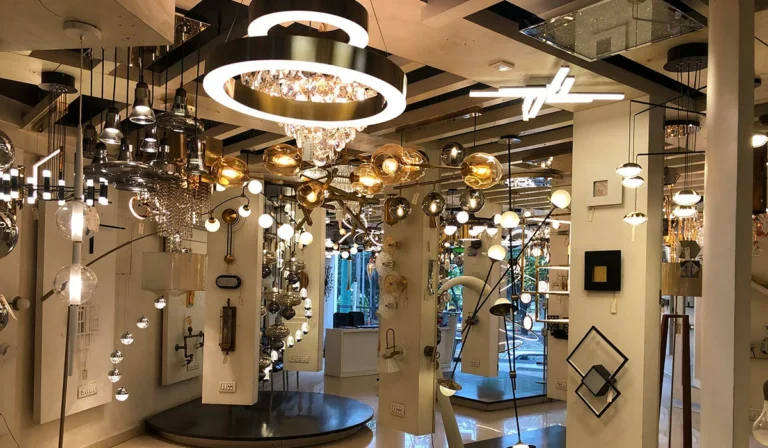
There’s a moment in most home renovation projects where lighting becomes the last decision rather than the first. Everything else gets sorted, the walls are painted, the furniture arrives, and then someone says “we still need a light for the hallway.” That’s usually when a chandelier gets bought in a hurry and ends up being slightly wrong for the room it’s in.
If you’re looking at chandeliers for sale right now, the range is genuinely broader than it’s ever been. That’s partly what makes it confusing. This guide cuts through the noise.
Table of Contents
The Category Has Shifted Significantly
The chandelier market in 2026 looks quite different from even three or four years ago. The old divide between traditional and modern has blurred considerably. What’s emerged instead is a more fluid approach where period forms get updated finishes, and contemporary silhouettes borrow proportion and confidence from classical design.
Neo Deco is the clearest expression of this right now. Art Deco’s geometric boldness and graphic structure, pared back and finished in aged brass or softly polished chrome rather than high-shine excess. The result feels timeless rather than theatrical. It works in a Victorian terrace, a Georgian townhouse, and a modern open-plan flat with equal ease. That versatility is exactly why it’s gaining ground so quickly.
What’s Actually Selling in 2026
Warm metals have taken over almost completely. Brushed brass, aged bronze, and champagne tones dominate across every price point. The cooler silvers and hard chromes that felt current a few years ago have retreated. Paired with diffused, warm-temperature light rather than harsh directional illumination, these finishes create an atmosphere that’s genuinely difficult to replicate through any other means.
Mixed materials are becoming the default rather than the exception. Brass softened with raw stone, polished glass paired with woven elements, marble where traditional glass shades once sat. The interest is in contrast between textures and weights rather than uniformity of finish. A chandelier that mixes two or three materials thoughtfully tends to feel more considered and more expensive than one made from a single material throughout.
Crystal hasn’t gone anywhere. It’s changed. In 2026 crystal is used to add lightness and movement rather than formality. Modern crystal chandeliers pair clear prisms with ribbed glass, fluted shades, or hammered metal to create something that feels collected and layered rather than purely ornate. The quality of refraction from genuine hand-cut crystal is still something no synthetic alternative replicates convincingly in person, regardless of how similar they appear in photographs.
Sizing Gets More People Wrong Than Anything Else
This is the decision that causes the most regret and it’s entirely avoidable. A chandelier that’s too small for a room looks like an afterthought. One that’s too large feels oppressive and makes the ceiling feel lower than it is.
A practical starting point for most rooms is to add the length and width of the room together in feet and convert that number directly to inches. That gives you an approximate diameter. A room that’s 14 feet by 16 feet wants a fixture somewhere around 30 inches across. It’s not a rigid formula but it prevents the most obvious mistakes.
Ceiling height is the other variable that trips people up. A chandelier that hangs too low in a room with a standard eight or nine foot ceiling compresses the whole space. Most quality retailers provide both the diameter and the drop length as part of the product specification. Check both. If the drop is adjustable, confirm what the minimum hanging height is before ordering.
The Craftsmanship Question
Something has shifted in what buyers are prioritising and it’s visible across the market. The appetite for anonymous, mass-produced fixtures is cooling noticeably. People are drawn to pieces that show evidence of how they were made. Hand-finished metalwork, individually crafted glass components, brushed rather than spray-painted surfaces. Lighting that tells you something about the person who made it.
Handcrafted pieces age differently. The finishes develop character over time rather than simply degrading. The materials are typically better throughout. The gap between the upfront cost and a mass-produced alternative is real, but so is the gap in longevity. A well-made chandelier that’s properly cared for lasts for decades. A cheap one rarely makes it past the first house move intact.
Where to Hang One That Isn’t the Dining Room
Most people default to the dining room when they think about chandeliers. Fair enough. But the most interesting applications right now are elsewhere.
Hallways and entrance areas are having a particular moment. A chandelier in a hallway sets the tone for everything that follows and it’s often a space where unusual proportions, either very tall or quite narrow, actually work in favour of a more dramatic fixture. Staircases too. A drop chandelier that cascades down a stairwell creates something that simply can’t be achieved any other way.
Bedrooms are underused for chandeliers in the UK compared to continental European interiors. A smaller, more delicate fixture above a bed replaces a ceiling pendant with something that contributes to the atmosphere of the room rather than just providing functional light. Pair it with a dimmer and it becomes genuinely useful across different times of day and different moods.
Getting the Light Quality Right
The fixture itself is only part of the equation. Colour temperature matters more than most people realise and it’s something that photographs almost never capture accurately. Warm white, around 2700 Kelvin, suits most residential settings and works particularly well with brass and gold finishes. Cooler temperatures make warm metals look wrong and tend to flatten the atmosphere chandeliers are designed to create.
Dimmability is non-negotiable now. The ability to shift the same fixture from bright and functional to low and atmospheric is what makes the investment genuinely worthwhile across the different ways a room gets used. Any chandelier worth considering should work with a standard dimmer circuit. Confirm compatibility with the bulb type before buying rather than after.


