

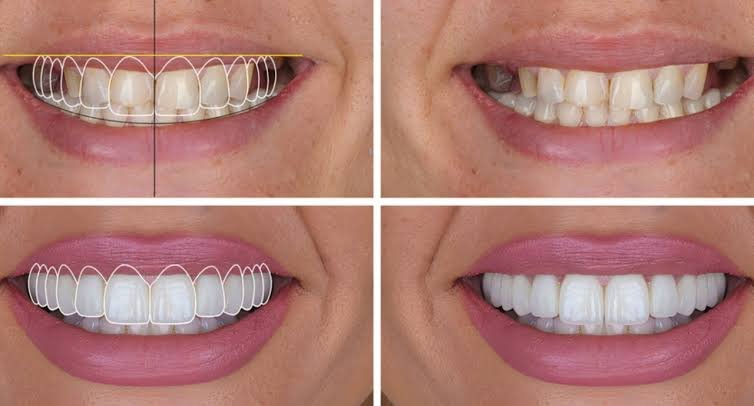
Among the most requested treatments in cosmetic dentistry are porcelain veneers, valued for their ability to adjust colour, shape and alignment with minimal intervention. Yet the success of veneers depends less on the material itself and more on the design principles guiding their creation. Patients researching veneers London often focus on dramatic before-and-after photographs, but the true difference lies in careful planning. This article outlines six veneer design principles shared by a respected smile specialist practising in the capital, offering insight into how subtle decisions shape natural-looking, durable results.
A cosmetic dentist from MaryleboneSmileClinic explains that veneers in London should always begin with facial analysis rather than tooth preparation. He advises patients to examine full-face photographs and consider how their smile sits within their overall features. “People often arrive requesting very white, perfectly straight teeth,” he notes, “but harmony is more important than uniformity. We assess lip dynamics, facial symmetry and speech patterns before discussing shade or shape. If patients want to understand our planning process in more depth, they can visit this site for clinical case studies and further information.” His advice reflects a broader shift in London dentistry towards individualised smile design grounded in proportion and restraint.
Table of Contents
Principle One: Facial Harmony Before Tooth Perfection
The first design principle centres on facial harmony. Veneers should complement the patient’s face rather than dominate it. London practitioners frequently assess interpupillary lines, lip curvature and midline alignment to determine how veneers will sit in relation to surrounding features. Even a technically flawless set of teeth can appear artificial if the proportions are mismatched to the patient’s bone structure or lip mobility.
In practice, this means measuring central incisor width against facial width and ensuring the smile arc mirrors the lower lip during movement. Subtle asymmetries are sometimes preserved intentionally to maintain authenticity. Overly symmetrical veneers can draw unwanted attention and undermine credibility, particularly in professional environments where natural presentation matters. Dentists also evaluate profile views to ensure veneers do not project excessively or alter lip support unnaturally.
By placing facial context first, clinicians avoid a template-driven approach. The result is a smile that enhances confidence without signalling obvious cosmetic work. Patients considering aesthetic treatment in London increasingly seek this understated outcome, favouring refinement over transformation.
Principle Two: Proportion and the Golden Ratio Revisited
The second principle addresses tooth proportion. While the golden ratio has long influenced smile design, contemporary London specialists interpret it flexibly. Rather than rigid mathematical adherence, dentists use proportional guidelines as a reference point. The visible width of each tooth when viewed from the front should gradually decrease from central incisors to canines in a balanced progression.
Accurate proportion requires precise diagnostic work. Digital smile design software allows clinicians to simulate changes before any irreversible procedure begins. Patients can preview variations in tooth length and width, enabling collaborative decision-making. This process reduces misunderstandings and supports realistic expectations.
Importantly, proportion also involves vertical dimensions. Excessively long veneers can age a patient, while overly short designs may appear juvenile. Gum display is carefully considered; minimal adjustment may be needed to ensure teeth do not seem compressed or elongated. In London’s competitive professional landscape, proportionate veneers offer aesthetic enhancement without distracting exaggeration.
Principle Three: Colour Depth and Light Reflection
Shade selection is often misunderstood as a simple choice of whiteness. In reality, colour depth and translucency are crucial to believable veneers. Natural enamel reflects light in layers, creating subtle variations from incisal edge to gum line. Replicating this complexity requires careful communication between dentist and laboratory technician.
Modern ceramic materials allow nuanced shading, including faint characterisations that prevent a flat appearance. London dentists commonly photograph teeth under different lighting conditions to capture accurate colour information. They may also analyse the whites of the eyes and skin undertones to determine which shade family will appear harmonious.
Patients sometimes request very bright shades influenced by social media trends. However, excessively opaque veneers can look artificial, particularly in natural daylight. A measured approach ensures brightness enhances the smile without overwhelming facial features. For those exploring veneers London as part of a broader cosmetic plan, understanding colour dynamics can prevent disappointment and ensure longevity in aesthetic appeal.
Principle Four: Conservative Preparation and Enamel Preservation
A defining feature of modern veneer design is minimal tooth reduction. Advances in bonding technology mean that, in suitable cases, little to no drilling is required. Preserving enamel improves bond strength and reduces long-term sensitivity risks. London clinicians increasingly prioritise additive techniques, building volume rather than aggressively reshaping teeth.
Before any preparation, dentists conduct detailed bite analysis. Occlusion plays a significant role in veneer durability. If bite forces are uneven, protective measures such as night guards may be recommended. Conservative preparation is particularly relevant for younger patients seeking cosmetic improvements while maintaining long-term oral health.
The philosophy reflects a shift from dramatic makeovers to measured enhancement. Patients benefit from reversible planning stages, including temporary mock-ups that allow them to test the proposed design. This step provides reassurance and enables refinements before final placement. The principle underscores that veneers are not merely aesthetic accessories but medical restorations requiring biological respect.
Principle Five: Texture, Surface Anatomy and Age Appropriateness
Texture contributes significantly to the realism of veneers. Natural teeth possess fine surface irregularities that scatter light and prevent a uniform sheen. Skilled ceramists replicate these microscopic details, adding faint ridges or subtle edge translucency to create depth.
Age appropriateness is closely linked to surface design. Younger teeth typically display more pronounced translucency and softer contours, while mature smiles may exhibit slightly flatter edges and gentle wear patterns. Attempting to recreate adolescent brightness on an older patient can appear incongruous. London dentists therefore tailor surface anatomy to reflect life stage as well as personality.
Speech and phonetics are also evaluated. Slight adjustments in length or contour can influence how sounds such as “f” and “v” are produced. Trial veneers allow these factors to be assessed before final cementation. By refining texture and anatomy, clinicians ensure the result integrates seamlessly into daily life rather than feeling unfamiliar or intrusive.
Principle Six: Long-Term Maintenance and Ethical Responsibility
The final principle extends beyond placement to long-term care. Veneers require maintenance comparable to natural teeth. Regular hygiene visits, careful brushing technique and avoidance of excessive force are essential to preserve margins and gum health. London practices often schedule review appointments to monitor bonding integrity and surface condition.
Ethical responsibility is central to veneer planning. Not every patient is an ideal candidate. Untreated gum disease, unstable bites or unrealistic expectations may indicate postponement. Transparent discussion protects both clinician and patient, reinforcing trust in the process. Those exploring veneers London should understand that suitability assessment is as important as design artistry.
When maintained properly, porcelain veneers can last well over a decade. However, longevity depends on thoughtful design and patient cooperation. The six principles outlined here illustrate that successful veneers emerge from careful evaluation, proportion, colour science and biological respect. In a city where appearance often intersects with professional opportunity, the most effective smiles are those that look entirely natural.