

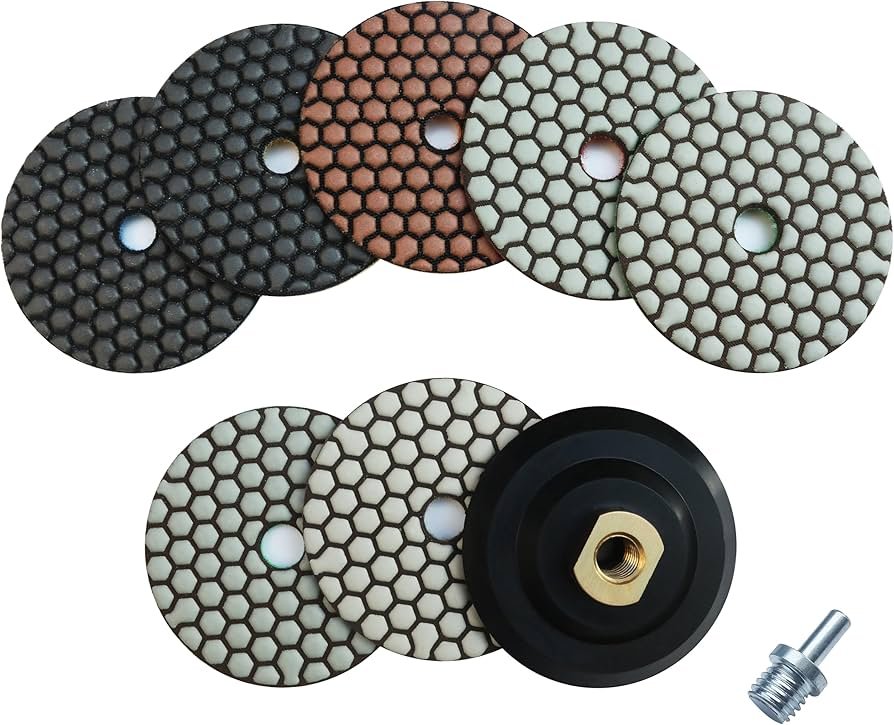
Polishing is one of the final steps in stone fabrication, but it’s also one of the easiest places for problems to show up. A cut can be perfect, and an edge can be shaped correctly, yet a poor polishing process will still ruin the finished piece. Dry polishing pads exist to solve specific shop-floor issues, not to replace skill or shortcuts.
Tait Sales & Consulting, LLC supplies dry polishing pads designed for fabricators who need control, consistency, and reliable results when wet polishing is not practical. These pads address common problems that appear every day in stone shops and on jobsites.
Table of Contents
Common Problems Solved by High-Quality Dry Polishing Pads
Problem 1: Inconsistent Surface Finish
One of the biggest complaints in a fabrication shop is finish inconsistency. You cut a slab, edge it, and polish only to find one area high gloss and another dull or scratched. That inconsistency shows up on installations and leads to callbacks.
Typical low-quality pads wear down unevenly, fail to maintain grit uniformity, or skip essential grit steps. A proper dry polishing pad system, like the Diamond Vantage 7-Step Hexagon Dry Polishing Pads at Tait Sales, lets fabricators work through a calibrated grit progression from coarse to ultra-fine. That progression systematically removes machining marks and builds a smooth, uniform gloss without guesswork.
Problem 2: Heat Buildup and Surface Damage
Dry polishing introduces heat. Without water to cool the surface, abrasive contact can cause burning, crazing, or heat-related discoloration if pads aren’t engineered to handle the load. Inferior pads overheat quickly, lose their shape, and end up doing more harm than good.
High-quality dry pads are designed with diamond abrasive and resin matrices that disperse heat more evenly and maintain structural integrity under load. This balance reduces the risk of thermal stress on the stone surface. A well-made pad still generates heat, but it does so in a controlled way that lets the fabricator manage speed and pressure without burning the material.
Problem 3: Pads Wearing Out Too Quickly
Cheap dry polishing pads wear fast. Once the diamond layer is gone, polishing slows down, finish quality drops, and operators push harder to compensate. That leads to more heat, more dust, and more damage.
Quality dry pads last longer because the abrasive layer is designed for real stone work, not light-duty use. Longer pad life means:
- Fewer pad changes
- Less downtime
- Predictable performance from start to finish
Instead of replacing pads mid-job, fabricators can complete full polishing sequences without interruption.
Problem 4: Poor Edge and Detail Polishing
Edges, corners, cutouts, and profiles are where bad pads show their limits. Flat surfaces might polish acceptably, but edges often end up uneven, scratched, or inconsistent.
High-quality dry polishing pads maintain flexibility while still cutting cleanly. This makes them effective on:
- Straight edges
- Radius corners
- Sink cutouts
- Profile transitions
When a pad performs well on edges, it reduces hand rework and improves the overall appearance of the finished piece.
Problem 5: Too Much Dust and Mess
Dry polishing will always produce dust, but low-quality pads create more of it because they cut inefficiently. More passes mean more airborne debris and more cleanup time.
Better pads cut faster and cleaner. That means fewer passes per grit and less unnecessary dust. In busy shops or on job sites, this helps keep work areas manageable and reduces cleanup between steps.
Less dust also means better visibility, which improves accuracy and operator control.
Problem 6: Slowing Down Production
When pads underperform, everything slows down. Operators spend more time on each grit, stop to change worn pads, or redo sections that didn’t polish the first time correctly.
High-quality dry polishing pads improve workflow by:
- Cutting consistently
- Reducing rework
- Allowing steady progression through grit stages
This keeps production moving and prevents polishing from becoming a bottleneck in the shop.
Problem 7: Limited On-Site Polishing Options
Wet polishing isn’t always practical, especially during installation or final adjustments. Water access, cleanup concerns, and site restrictions can make wet methods difficult or impossible.
Dry polishing pads give fabricators and installers the ability to:
- Touch up edges on site
- Refine seams after fitting
- Adjust profiles without water
This flexibility allows final polishing work to happen where the stone is installed, not back at the shop.
The Bottom Line
High-quality dry polishing pads are not a luxury. They solve real problems fabricators run into every shift:
- Consistent surface finishes with step-by-step grit progression
- Reduced heat damage and surface distress
- Cleaner work environment with less dust and downtime
- Tools that last longer and cut more efficiently
- Better access to edges, corners, and hard-to-reach areas
- Faster workflow between wet and dry processes
- On-site flexibility without water dependency
Tait Sales & Consulting, LLC offers dry polishing pads built for these challenges, pads that let you deliver results that match your layout lines, your edge work, and the expectations of your clients. Quality pads cut cleaner, finish smoother, and help you run an efficient, dependable operation every day.