

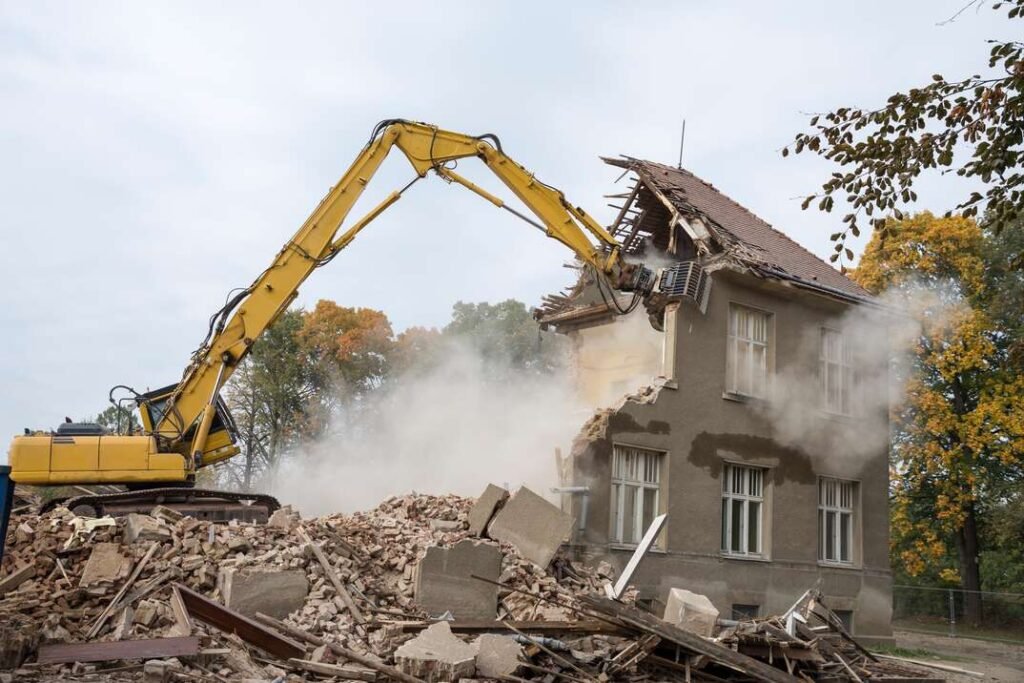
Demolition is far more than just tearing down a building. It’s a carefully planned process of dismantling structures, managing waste, salvaging materials, and preparing a site for what comes next. In Canada’s construction landscape, it plays a vital role—from clearing obsolete buildings to making way for new infrastructure or adaptive reuse. Because the stakes are high—safety, cost, waste, regulation—understanding demolition means understanding risk, value, and opportunity.
When it comes to changing building use, structural alteration or even lowering a basement, the interplay between true demolition and structural modification becomes critical. For instance, services such as Basement Lowering and Underpinning can come into play when, rather than complete dismantling, you’re reworking and strengthening an existing foundation or sub-structure. This process may include selective demolition (removal of certain structural elements) combined with underpinning and excavation work to create new floors or spaces below grade.
Table of Contents
1. The Scale of Demolition and Waste in Canada
Demolition directly ties into Canada’s broader construction, renovation and demolition (CRD) waste stream. The Canadian Council of Ministers of the Environment (CCME) reports that CRD waste constitutes one of the largest solid-waste streams in the country. And although full demolition is only one piece of this waste stream, it’s an especially waste-intensive phase: one review noted that demolition alone accounts for over 40 % of the CRD waste stream in Canada.
Additionally, through the lens of building permits, the Statistics Canada “Building and Demolition Permits – Monthly Report” helps reveal trends in how many structures are being demolished and the value of associated permits. Together, these data points demonstrate that demolition is a significant and measurable part of the built-environment lifecycle—and that its impacts (on waste, cost, neighbourhood disruption) warrant serious attention.
2. Why Demolition Requires Strategic Planning
Safety and structural considerations
A demolition project isn’t simply “knock it down”. It begins with site assessment: materials (asbestos, lead paint, hazardous components), structural evaluation, proximity to neighbouring buildings, utilities, environmental protection, noise and dust control. A misstep can lead to injuries, legal liability and budget overruns.
Environmental and waste-management obligations
Given the large volumes of waste and materials involved, demolition projects must integrate waste‐diversion strategies, recycling of salvageable components (steel, concrete, wood), and proper disposal of hazardous material. The CCME guide stresses this as a key policy focus.
Regulatory compliance
Local, provincial and federal rules apply. Demolition permits, utility disconnects, site safety planning, salvage requirements, dust/mud mitigation—all must be planned. The Statistics Canada permit guide lays out the kinds of data municipalities require.
Deconstruction vs full demolition
In some cases, selective removal (deconstruction) is more sustainable—removing reusable components, reducing waste. The decision hinges on condition of structure, salvage value, economic feasibility and timeline.
3. Demolition in Context of Re-use and Modification
Often the term “demolition” evokes complete removal of a building, but in many projects the story is more nuanced. Consider a scenario where a structure is being lowered or re-configured—perhaps converting a high-ceiling basement into a full-height lower level, underpinning the foundation to add extra space, or installing a new elevator shaft within an existing building envelope. In these cases, there might be selective demolition of structural elements, excavation beneath the existing slab, underpinning, and then rebuilding.
Here’s an example: Suppose a building owner wants to expand usable space below grade—the walls are reinforced, the slab is removed in sections, an underpinning system is installed, and structural load is transferred to new supports. Such work may involve both demolition (of slab, walls, stairs) and construction in the same project. Calling attention to services like Basement Lowering and Underpinning highlights this overlap between removal and constructive adaptation.
The key takeaway: demolition doesn’t always mean “end of life” for a building—it may also mark a transition to a new use or level of performance. That transition must be managed with the same rigour as full-blow demolition.
4. Best Practices and Innovations in Demolition
Pre-demolition audits and salvage
Before heavy equipment arrives, a comprehensive audit—identifying materials for salvage (brick, hardwood, steel), hazardous components, utility shut-offs—pays dividends. Effective salvage not only reduces waste but can recover value and reduce disposal costs.
Selective demolition and deconstruction
Instead of bringing in a wrecking ball, consider phased removal of interior elements, selective wall removal, and careful dismantling of systems. This approach allows for reuse of components, minimises waste, and often reduces disruption to neighbouring properties.
Waste-diversion goals
Projects that aim to divert large percentages of demolition waste from landfill can reduce both cost and environmental footprint. The CCME states that some reuse/recycling programmes manage to divert up to 95 % of CRD materials.
Integration of technology
Emerging approaches—drone surveys, 3D modelling, ground-penetrating radar, machine-learning predictions of demolition waste—are gaining traction. One academic study highlights how machine learning can drive demolition waste estimation and circularity planning.
Safety and community communication
Demolition work can cause noise, dust, vibrations and traffic impacts. A transparent communication plan with neighbours, scheduled operations, dust suppression, proper site fencing and staging all reduce risk, complaints and delays.
5. Demolition’s Role in Lifecycle and Construction Strategy
Demolition is often the first formal step in the lifecycle of a new build or renovation. Whether clearing a small building to allow infill, modifying a structure for a new use, or preparing an industrial site for redevelopment, the demolition and site-preparation phase sets the tone for cost, timeline and future flexibility.
From an owner’s perspective: poor demolition planning can inflate project budgets, delay follow-on work, increase waste disposal fees, and generate unforeseen structural issues. From a contractor’s perspective: efficient site clearance, accurate cost prediction, salvage value capture and safety controls all improve margins, reduce risk and position the firm competitively for future jobs.
Moreover, with sustainability on more owners’ minds—whether for corporate ESG targets or municipal waste-diversion mandates—the demolition phase is increasingly seen as a value-opportunity rather than a cost-centre. Already, research indicates that diverting CRD waste creates jobs and economic activity: one study estimated over 4,800 green jobs tied to CRD waste recycling in Canada.
6. Practical Checklist for Demolition Projects
Here’s a streamlined checklist tailored for Canadian contractors, owners or managers undertaking a demolition-oriented project:
- Site assessment: Review structural drawings, locate utilities, test for hazardous materials (asbestos, lead paint, PCBs).
- Permit and regulatory review: Secure demolition permit, confirm waste disposal permits, check neighbouring property rights and setbacks.
- Salvage plan: Identify materials for reuse or recycling, engage brokers for steel/wood/brick salvage if feasible.
- Waste-diversion goal setting: Establish diversion targets, track tonnes diverted, report if required by municipality or client.
- Demolition sequencing: Determine whether full removal or selective demolition/deconstruction is appropriate. If underpinning or basement lowering is involved, co-ordinate structural support, excavation and shoring.
- Safety plan: Control dust and noise, schedule when neighbours are least impacted, ensure proper fencing, site signage and personal protective equipment.
- Structural integration: If part of renovation or rebuilding, ensure underpinning, excavation, foundation-alteration works dovetail with demolition scheduling.
- Post-demolition site preparation: Clean site, test and clear soil/ground if contamination suspected, set elevations and grade for next phase of build or landscaping.
7. Why Choosing the Right Method Matters
When demolition is done well, the benefits include lower follow-on costs, fewer delays, higher reuse of material, safer job sites and fewer surprises—such as hidden structural elements, uncharted utilities or salvage value lost. When done poorly, the outcomes can include unexpected costs (e.g., disposal of asbestos, remediating contamination), neighbour complaints, permits delayed, structural surprises and budget overruns.
Furthermore, with Canada’s construction sector facing increasing pressure to improve sustainability, the demolition phase is under scrutiny. The ability to integrate selective demolition, salvage and reuse aligns with emerging regulatory expectations and societal expectations around resource efficiency.
Conclusion
Demolition is a multifaceted process that continues to evolve in Canada’s construction industry. It requires a blend of structural understanding, regulatory discipline, environmental conscience and logistical coordination. Whether the goal is full removal of a building or a complex transitional process where parts of the structure are retained or modified (as in underpinning and basement lowering scenarios), the underpinning message remains the same: good demolition is smart demolition.
By embracing best practices—pre-audit, salvage, selective removal, waste diversion, technology integration—and aligning with broader goals of site reuse and sustainability, demolition stops being a simple “do-over” and becomes a strategic launching point for whatever comes next.
For any project touching the underlying structure or site—especially where existing foundations are modified, levels are added or lowered, or spaces are re-purposed—treating the demolition phase with the same rigour as the new build can save time, money and future headaches. Done well, it sets the stage for success.