

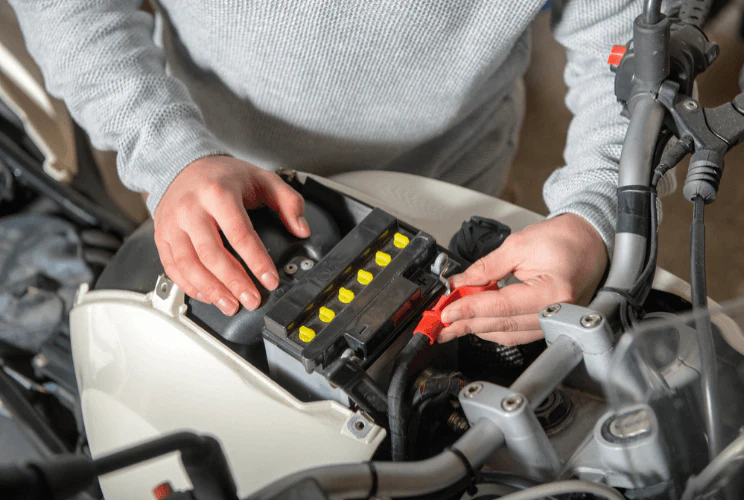
Most riders usually ignore the bike battery until the bike refuses to start. Yet this small part plays a big role in your vehicle. It powers the ignition, lights, horn etc that keep you safe on the road. When the time comes to replace it, you may wonder what decides the bike battery price and why prices differ so much.
The answer is, it is a mix of design, safety and long-term value. Understanding these helps you choose the right battery for your bike without confusion.
Let’s understand the features that determine your bike battery price.
Table of Contents
Why Do Bike Battery Prices Vary
In recent years, bike batteries have changed a lot. Riders are now looking for faster starts, longer life and less maintenance. These expectations make manufacturers improve their design and materials. As a result, not all batteries come at the same price. Some are for daily rides and others are made for rough conditions.
Knowing what all comes in the bike battery price helps you avoid paying too much or buying a battery that does not match your needs.
Here are the features that determine the bike battery price:
1. Battery Type and Build Technology
One of the biggest factors that affects the bike battery price is the battery type. Each has its own features and cost.
| Battery Type | Key Features | Best Suited For |
| Conventional Lead Acid | Uses liquid electrolyte and needs regular checks | Older bikes and light use |
| VRLA / Sealed Battery | Spill-proof, sealed design, low maintenance | Daily city riding |
| AGM Battery | Better power output and longer life | Frequent riders and touring |
2. Battery Capacity and Power Output
Battery capacity is measured in ampere-hours (Ah). A higher Ah rating means the battery can store more power. If your bike has electrical features, you need higher-capacity batteries.
Cold cranking is also important. This decides how well the battery can start your bike in cold or wet weather. Batteries designed to handle tough starts use better internal parts, which increases the bike battery price.
Choosing a battery with more power than needed can raise costs. Choosing too little power can cause early failure. So balance is key.
3. Size and Compatibility
Not all batteries fit all bikes. Each model needs its own size and terminal layout. A battery that fits perfectly can reduce damage and other issues.
Batteries made for common bike models are usually easy to find and they have similar prices. Special-sized batteries may cost more due to limited production. Always check your bike manual before buying.
4. Safety Features and Design
Modern bike batteries can keep a lot of energy in a small space. Safety features protect both you and your vehicle.
Some features that affect price include:
- Fully sealed to stop leaks
- The outer body resists heat
- Strong vents to release pressure safely
- Corrosion-resistant terminals
These features increase manufacturing costs, but they reduce risks. Paying a little more for safety is often worth it and your safety is guaranteed.
5. Warranty and After-Purchase Support
Warranty plays an important role in deciding your bike battery price. A longer warranty means you get better internal quality and testing. Now, many batteries come with warranties that last from one year to several years. A longer warranty can help you save money by reducing replacement costs.
Support also matters. Easy access to service centres adds value to your battery, even if the upfront price is higher.
6. Riding Habits and Usage Pattern
How you use your bike also affects which battery you should choose. Daily short rides can put more stress on a battery than long highway runs.
- If you use bike daily, you need a battery that can handle frequent starts
- If your bike is not used for a long time, you can choose a battery with low self-discharge
Batteries are made for specific uses. They may cost more, but they give you good performance over time.
7. Climate and Road Conditions
The weather plays a big role in your battery. Extreme weather can dry out internal parts and reduce starting power.
Batteries made for extreme climates use stronger materials and they have better insulation. These increase the bike battery price but help your battery last longer in tough conditions.
Tips to Choose the Right Bike Battery
Here are some tips you can follow:
| What to Check | Why It Matters |
| Bike manual | Confirms the correct size and capacity |
| Daily usage | Helps select the right technology |
| Climate | Ensures a better life and starts |
| Warranty | Reduces long-term cost |
| Budget | Keeps choices realistic |
Summarising
The bike battery price is shaped by many clear factors. Safety, capacity, warranty and usage all play equal roles. A higher price does not always mean you will get better value, but a low price can lead you to trouble.
When you understand these features, you can choose a battery that suits all your and your bike’s needs. This keeps your ride smooth, safe and reliable every day.


