

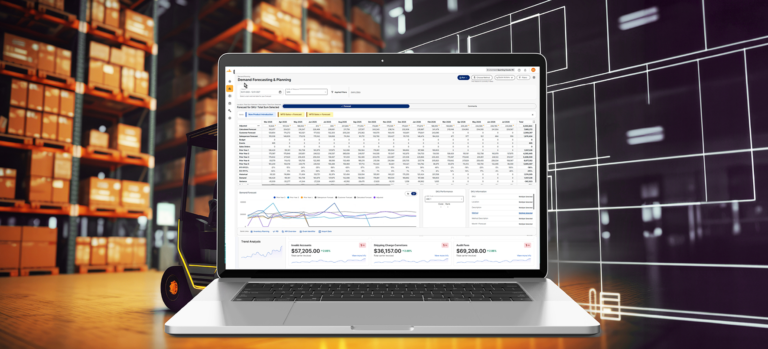
Accurate forecasting is essential for aligning supply with market demand. Businesses rely on structured processes and modern tools to anticipate future needs, reduce waste, and maintain service levels. Effective demand planning software provides the foundation for this accuracy by combining data, analytics, and collaboration.
Table of Contents
Centralizing Data for Better Insights
Forecasting requires information from multiple sources, including sales, marketing, and operations. When data is scattered across systems, teams struggle to identify trends. By using integrated demand planning tools, organizations can centralize historical data, current sales figures, and external indicators into one environment, improving consistency and visibility.
This unified data view allows planners to detect seasonal patterns, promotional impacts, and regional variations more easily. As a result, decision-making becomes based on facts rather than assumptions.
Enhancing Collaboration Across Departments
Forecast accuracy improves when all departments contribute to the planning process. Sales teams understand customer behavior, marketing knows upcoming campaigns, and operations manage production capacity. A shared platform supports communication among these groups, ensuring that everyone works with the same information.
Through structured collaboration, adjustments to forecasts can be made quickly when new insights emerge. This reduces the delays that often occur when each department uses separate spreadsheets or reports.
Leveraging Advanced Analytics and Scenarios
Modern demand planning software incorporates statistical forecasting methods and machine learning algorithms to detect patterns that might be overlooked by manual analysis. These methods evaluate large datasets efficiently, highlighting anomalies and predicting future outcomes with higher reliability.
Scenario planning is another crucial feature. Users can test how different conditions, such as price changes or supply disruptions, affect future demand. This flexibility allows organizations to prepare for uncertainty rather than react to it.
Integrating with Broader Planning Processes
Accurate forecasts are most valuable when they feed into a broader planning framework. Integration with s&op software helps align financial objectives, inventory policies, and production plans. This ensures that supply chain strategies remain balanced with market expectations and corporate goals.
When demand planning and operational planning systems work together, businesses can optimize inventory levels, reduce carrying costs, and maintain customer satisfaction even under volatile conditions.
Reducing Forecast Bias and Human Error
Manual forecasting often introduces bias, as individuals may rely on intuition or past experience rather than data. Automated analytical models minimize this risk by applying consistent statistical methods across all product lines and regions.
Moreover, automated alerts and performance tracking help identify where forecasts deviate from actual results. Continuous monitoring supports refinement of models and methods, improving accuracy over time.
Key Benefits of Improved Forecast Accuracy
Organizations that invest in structured planning solutions often experience measurable gains across several areas.
- Lower inventory holding costs due to better alignment with demand
- Reduced stockouts and improved customer service levels
- More efficient production scheduling and resource allocation
- Faster response to market changes and promotional activities
- Greater confidence in financial and operational planning
Building a Data-Driven Forecasting Culture
Technology alone does not guarantee accurate forecasts. Success depends on cultivating a culture that values data integrity, cross-functional collaboration, and continuous improvement. Regular review meetings, transparent performance tracking, and shared accountability help sustain forecasting accuracy over time.
When planners combine reliable data, proven analytical methods, and coordinated workflows, they create a more resilient and responsive organization. In this way, demand planning software becomes not only a technical solution but also a driver of strategic alignment and business stability.


