

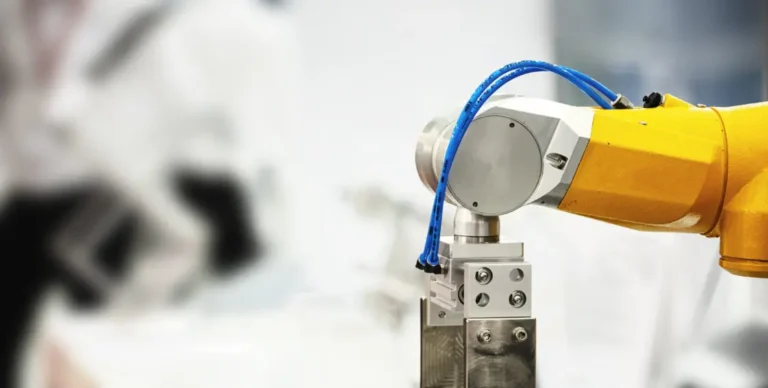
Walk into any packaging or assembly unit today and you’ll notice something right away: the push for speed and accuracy is higher than it has ever been. Companies can’t afford slow cycles, misaligned parts, or inconsistent handling, not when customer demand is rising and production timelines are shrinking. That’s exactly where pneumatic grippers step in and quietly take control of the show.
These devices may look simple from the outside, but inside, they’re doing some of the most precise and repetitive work on the shop floor. A pneumatic gripper uses compressed air to open and close its jaws, allowing machines or robots to pick, hold, and place components with remarkable consistency. And when you add them to packaging or assembly lines, they don’t just improve efficiency, they transform the entire workflow.
Let’s break down how they work, why industries depend on them, and how using advanced systems like a pneumatic gripper for robotic arm or pneumatic magnetic gripper is becoming a game-changer for modern manufacturing.
Table of Contents
What Exactly Is a Pneumatic Gripper?
Before diving deeper, it makes sense to understand the basics.
A pneumatic gripper is a mechanical end-effector powered by compressed air. Think of it as the “fingers” of a machine. When air pressure enters the chamber, it activates pistons, causing the jaws to move. When pressure is released, the jaws return to their original position.
Sounds simple, but the real magic lies in how reliable, fast, and precise these movements are.
Most grippers are:
● Lightweight
● Cost-effective
● Capable of thousands of cycles per hour
● Easy to maintain
● Strong enough for industrial-grade work
This blend of simplicity and power is exactly why packaging units, electronic assembly lines, and robotic work cells depend so heavily on pneumatic gripping technology.
Why Pneumatic Grippers Are Perfect for High-Speed Environments
Packaging and assembly lines demand three things above all: speed, repeatability, and uptime. Pneumatic systems tick all three boxes without breaking a sweat.
Here’s what sets them apart:
● Rapid Response Time: Compressed air acts almost instantly. That means gripping, releasing, and repositioning happens in milliseconds.
● Consistent Force: Every cycle applies the same gripping force, reducing defects and maintaining uniformity.
● Long Operational Life: These devices are built for repetitive use, sometimes millions of cycles, without losing performance.
● Low Maintenance: Unlike electric systems that involve wiring and motors, pneumatic systems require minimal upkeep, mostly air filtering and lubrication.
● Ideal for Harsh Environments: Dust, moisture, high temperature, pneumatic systems remain unfazed compared to electric alternatives.
In industries where margin for error is tiny, this reliability becomes a priceless asset.
Types of Pneumatic Grippers Used in Industry
Different tasks, different challenges, and different parts, all of this requires specialized gripping mechanisms. Here are the most widely used types:
● Parallel Grippers: Their jaws move together in parallel motion. Perfect for simple pick-and-place tasks.
● Angular Grippers: The jaws open at an angle, useful when space is tight.
● Three-Jaw Grippers: Provide more uniform grip around circular components, like caps, bearings, or gears.
● Pneumatic Magnetic Gripper: Uses magnetic force with pneumatic actuation, excellent for lifting ferrous materials without jaw contact.
● Soft Pneumatic Grippers: Gentle handling for fragile items like food, cosmetics, or medical components.
Each type solves a unique problem on the shop floor, and the right choice directly affects cycle time and product quality.
The Role of Pneumatic Grippers in Packaging Lines
Packaging is one of the most competitive and fast-moving sectors today. Whether it’s FMCG, pharma, consumer electronics, or beverages, companies rely on automation to keep pace.
Here’s how pneumatic grippers boost packaging operations:
● Precision in Product Positioning: A misaligned product may damage the packaging, stop the conveyor, or waste material. Pneumatic systems ensure every box, pouch, or bottle is placed perfectly.
● Faster Pick-and-Place: Robotic arms equipped with a pneumatic gripper for robotic arm pick items directly from conveyor belts and place them into cartons or trays with incredibly high speed.
● Damage-Free Handling: Sensitive items, like blister packs, sachets, or glass bottles, need controlled gripping. Adjustable air pressure allows grippers to handle products gently.
● Compatibility with Robotics: Most modern packaging systems integrate seamlessly with robots, and pneumatic grippers remain the top choice due to their speed and light weight.
● Reduced Human Fatigue: Repetitive picking and packing is exhausting for workers. Automation removes the strain while maintaining accuracy all day long.
The end result? Faster production, fewer errors, and better-quality packaging.
How Pneumatic Grippers Add Value in Assembly Lines
Assembly lines are even more demanding than packaging systems. Every component must be placed at the exact location, at the exact angle, with the exact force.
This is where pneumatic gripping technology delivers big advantages.
● Consistent Assembly Quality: The gripper ensures every component, no matter how small, is placed accurately during assembly.
● Handling Tiny Components: Electronics, automotive sensors, and precision tools require delicate handling. Pneumatic micro-grippers are built for such work.
● Ideal for High-Cycle Operations: Screw insertion, part transfers, alignment, pneumatic tools perform these operations thousands of times a day without losing accuracy.
● Integration with Automated Vises and Fixtures: Many assembly processes rely on pneumatic clamping systems for holding parts in place, and pneumatic grippers work hand-in-hand with them.
● Improved Workflow Consistency: Consistent force and speed mean consistent output. That predictability is priceless in high-volume production.
Manufacturers using pneumatic gripping systems often report 20–40% improvement in line efficiency.
Pneumatic Clamping: The Backbone Supporting Grippers
You can’t talk about gripping without mentioning pneumatic clamping. While grippers move parts, clamps hold them in position during machining, fastening, or inspection.
Pneumatic clamps offer:
● Fast locking
● Adjustable holding pressure
● Safe handling for delicate surfaces
● Smooth compatibility with robots and CNC machines
In packaging and assembly environments, they work as supportive structures that reduce manual errors and improve workstation efficiency.
Pneumatic Grippers vs Electric Grippers: Why Pneumatics Still Win
Electric systems are becoming advanced, but pneumatics still dominate high-volume production.
Why?
● Pneumatic systems are cheaper
● Fewer moving parts = less failure
● They’re much faster
● Lightweight design suits fast robotics
● They withstand harsh environments better
Electric grippers offer precise control, but for speed and durability, pneumatics hold the advantage.
How Robotic Arms Become More Capable with Pneumatic Grippers
Robotic automation is nothing without the right end-effector. And when speed matters, a pneumatic gripper for robotic arm is often the top pick.
Robotic systems equipped with pneumatic grippers deliver:
● Lightning-fast cycle times
● Consistent grip quality
● Lightweight motion for rapid acceleration
● Support for varied component shapes
● Lower operational cost
From case packing to electronics assembly, robotic grippers are reshaping automation landscapes worldwide.
The Role of Schunk India in Pneumatic Gripping Technology
If you’ve ever researched gripping, clamping, or robotic automation, you already know that Schunk India is one of the biggest names in the field.
The company is known for:
● High-precision pneumatic grippers
● Long-lasting gripping modules
● Reliable pneumatic magnetic gripper solutions
● World-class clamping and toolholding systems
● Integration support for robotics and automation setups
Manufacturers trust Schunk for high-accuracy components, especially in industries where failure is not an option, electronics, aerospace, automotive, pharma, and high-speed packaging lines.
Real-World Applications
Pneumatic grippers aren’t limited to one industry, they’re everywhere:
● FMCG packaging
● Automotive assembly
● Pharmaceutical blister packing
● Electronics soldering & placement
● Food and beverage handling
● Metal stamping lines
● CNC automation
Their adaptability makes them one of the most widely used end-effectors in industrial automation today.
Future Trends in Pneumatic Gripping Technology
With Industry 4.0 taking over factories, pneumatic grippers are evolving too.
Expect to see:
● Smart grippers with integrated sensors
● Pressure-controlled gripping for delicate products
● Hybrid pneumatic-electric modules
● Smarter pneumatic clamping controls
● Improved energy-efficient air systems
● On-board diagnostics for predictive maintenance
● Automation is getting smarter, and so are the grippers that power it.
Conclusion
The industrial world is moving faster every year, and packaging and assembly lines must keep up. Pneumatic grippers give manufacturers the speed, precision, and dependability needed to stay competitive, without driving costs through the roof.
Whether it’s a pneumatic gripper for robotic arm, a high-strength pneumatic magnetic gripper, or advanced gripping modules from Schunk India, the right system can reshape your production workflow entirely.
In high-volume manufacturing, efficiency isn’t achieved through one big change, it’s the sum of small optimizations. And pneumatic gripping technology is one of those silent, powerful upgrades that keeps your line moving smoothly from start to finish.


