

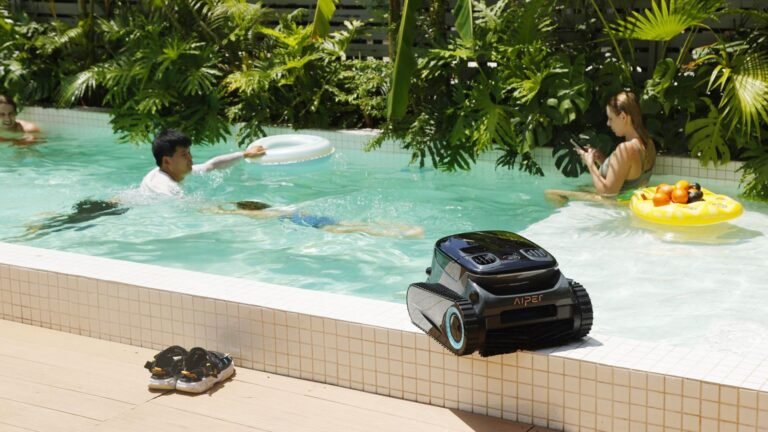
Owning a swimming pool is often portrayed as the ultimate lifestyle upgrade. The imagery used to sell the dream always features happy families splashing in crystal-clear water, hosting barbecues, and lounging on floating rafts with cold drinks in hand. What the brochures rarely show is the other side of the equation: the sweating homeowner standing by the water’s edge on a Saturday morning, holding a telescopic pole, and grimacing at a layer of leaves and silt.
The reality is that a pool is a large body of water exposed to the elements, and maintaining it can easily become a part-time job. For busy professionals and parents, the time required to keep a pool sanitary often conflicts with the time available to actually enjoy it. This is where modern pool cleaning technology steps in. Investing in the right cleaning equipment is not just about keeping the water blue; it is about buying back your free time. By automating the heavy lifting, you can transform pool ownership from a chore into the leisure experience it was meant to be.
Table of Contents
The Hidden Time Cost of Manual Maintenance
To understand the value of a cleaner, one must first quantify the cost of manual labor. Cleaning a pool the old-fashioned way is a multi-step process that demands physical exertion and significant time. You must manually skim the surface to catch floating debris before it sinks. Then, you have to brush the walls and tile line to dislodge algae spores and dust. Finally, you have to hook up a manual vacuum head, prime the hose, and slowly push the vacuum across every square inch of the pool floor.
This routine can take anywhere from one to three hours depending on the size of the pool and the surrounding foliage. If you do this weekly, you are losing over one hundred hours a year—essentially two full weeks of work—just to keep the pool swim-ready. This does not even account for the time spent backwashing the filter because it is clogged with the debris you just vacuumed up.
The Efficiency of the Pool Vacuum Robot
The single most effective tool for reclaiming this lost time is the automatic robotic cleaner. Unlike suction-side cleaners that rely on your pool’s filtration system, a pool vacuum robot is an independent machine. You simply drop it in the water, plug in the power supply, and press a button. The time commitment drops from hours of manual labor to five minutes of setup.
These robots are designed with intelligent navigation software that maps the layout of your pool. They methodically scrub the floor, climb the walls, and clean the waterline where scum lines tend to form. While the robot is working, you are free to do anything else—go to work, run errands, or simply relax.
Furthermore, these devices act as a secondary filtration system. They vacuum debris into an internal canister rather than sending it to your main pool filter. This means your sand or cartridge filter stays cleaner for longer, reducing the frequency of backwashing or cartridge cleaning. The cumulative time saved by not having to dismantle and clean your main filter every few weeks is substantial.
Preventing Problems Before They Start
A major aspect of time-saving is prevention. It is always faster to prevent a mess than to clean it up. This is where the management of surface debris becomes critical. Leaves, bugs, and pollen land on the surface of the water. If they are removed quickly, they are a minor nuisance. If they are allowed to sink, they decay, stain the floor, and consume your chlorine.
A high-quality automatic pool skimmer is a game-changer for this specific battle. These devices float on the surface, moving around continuously to collect debris before it becomes waterlogged. By automating surface cleaning, you drastically reduce the amount of material that ends up on the bottom of the pool. This means your bottom cleaner runs more efficiently and finishes its cycle faster because it is not choked by heavy leaf piles. The synergy between surface skimming and bottom cleaning ensures that your pool remains in a state of constant readiness.
Stabilization of Water Chemistry
One of the most surprising ways automated cleaners save time is by stabilizing your water chemistry. Organic matter is the enemy of balanced water. Decaying leaves and insects release phosphates and acids into the water, which lower your pH and consume your free chlorine.
When you rely on manual cleaning, debris often sits in the pool for days until you have time to get to it. During this lag time, the debris is actively degrading your water quality. This forces you to spend more time testing the water, adding chemicals, and waiting for levels to rebalance.
By using automated cleaners that run daily or every other day, debris is removed almost as soon as it enters the pool. This keeps the organic load on the water low. Consequently, your chlorine lasts longer, your pH remains more stable, and you spend significantly less time playing chemist with test tubes and measuring cups. The cycle of “test, treat, wait, and re-test” is drastically shortened.
Reducing the Risk of Algae Blooms
The biggest time-sink for any pool owner is an algae bloom. Turning a green pool back to blue is a grueling process that can take days or even weeks of shocking, brushing, and continuous filtering. It requires constant attention and can ruin planned pool parties or weekends.
Algae thrives in still water and on dirty surfaces. Automated cleaners provide two critical defenses against this. First, they provide supplemental circulation. As the robot moves around the pool, it churns the water, ensuring that sanitized water reaches dead spots in the deep end or corners where algae likes to hide. Second, the physical scrubbing action of the robot prevents the protective slime layer of algae from forming on the walls.
By consistently keeping the surfaces clean and the water moving, automated cleaners make it nearly impossible for algae to take hold. Avoiding a single algae bloom per season saves you countless hours of stress and labor, not to mention the cost of the emergency chemicals required to fix it.
The Mental Shift From Worker to Owner
There is a psychological component to the time savings as well. When you know the pool needs to be cleaned but you do not have the time to do it, the pool becomes a source of guilt and stress. It sits there, collecting dirt, acting as a visible to-do list item that nags at you.
Automating the process removes this mental load. Knowing that your pool vacuum robot is scheduled to run on Tuesday and Thursday mornings frees your mind from worrying about the state of the pool. You stop checking the weather forecast with dread, knowing that your equipment can handle the aftermath of a storm.
Ultimately, the value of a swimming pool is measured by the enjoyment it provides. If the maintenance ratio exceeds the enjoyment ratio, the pool becomes a burden. Modern cleaners invert this dynamic. They handle the dirty work so that when you walk into your backyard, the only question you have to ask is whether the water is warm enough for a swim. By outsourcing the labor to machines, you are not just saving hours; you are saving the experience of pool ownership itself.


