

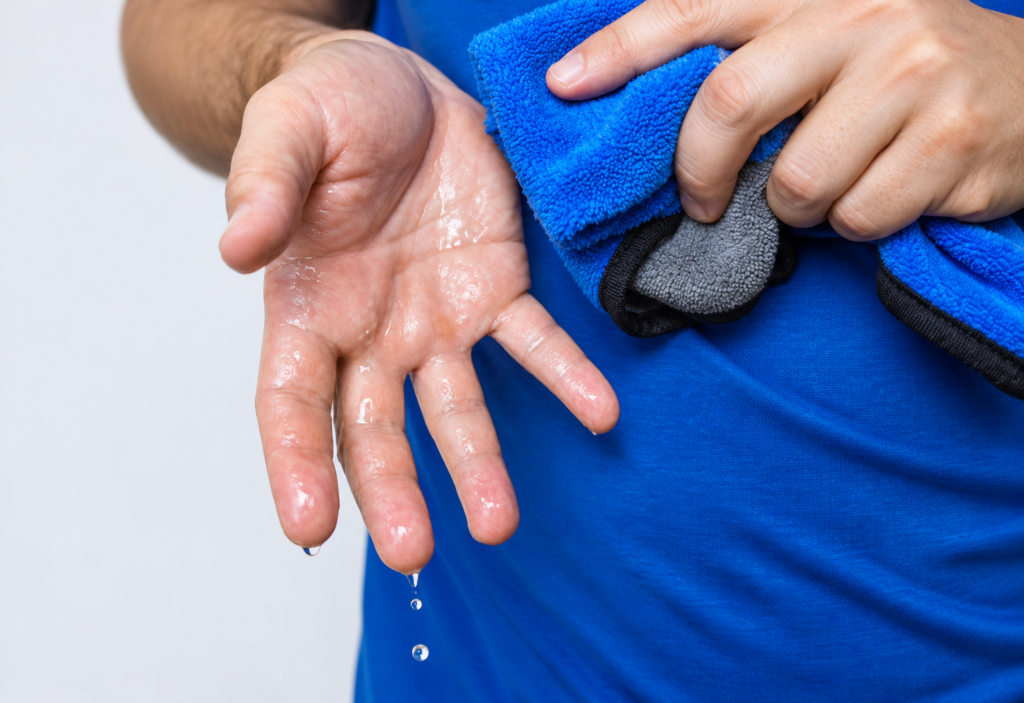
Damp handshakes, smudged phone screens and pens that slip during an exam. For many people in Singapore, sweaty palms are about more than the heat. They can show up in an air-conditioned office, on a cool evening or while you are sitting still, and they can make everyday moments feel awkward.
There are several ways to manage sweaty palms, and most people start with simple steps at home. Knowing what to try first and when to look into sweaty palms treatment with a doctor can save you months of guesswork.
Table of Contents
Why do some people’s palms sweat more?
Sweating is controlled by the nervous system. In some people, the nerves that signal the sweat glands in the hands are more active than they need to be. This is known as primary palmar hyperhidrosis. It often begins in childhood or the teenage years, usually affects both hands and may run in families.
Less commonly, sweating is linked to another health issue, such as an overactive thyroid, diabetes, an infection or certain medicines. This is called secondary hyperhidrosis, and the underlying cause usually needs to be looked at first.
Step 1: Start with simple daily habits.
These steps may not stop the sweating, but they can make it easier to manage:
- Keep tissues, a small towel or unscented wipes within reach
- Wash and dry your hands well before important moments, such as meetings or exams
- Notice your triggers, such as stress, caffeine, spicy food or warm rooms
- Use a light grip aid, such as a cloth cover, for phones, steering wheels or sports equipment
Step 2: Try antiperspirant on your palms.
Antiperspirants containing aluminium salts work by temporarily blocking sweat ducts. Many people do not realise they can be used on the hands, not just the underarms.
To get the most from it:
- Apply it at night, when the sweat glands are less active
- Make sure your hands are completely clean and dry first
- Wash it off in the morning
- Use it nightly at first, then less often once you notice a difference
Some people get itching, stinging or dry skin. If irritation persists, stop using the product and speak to a pharmacist or doctor. Results vary from person to person.
Step 3: Know when it is time to see a doctor.
Consider seeing a doctor if:
- Sweating affects your work, studies or relationships
- The skin on your palms is peeling, cracking or getting infected
- Over-the-counter products have not helped after a few weeks
- The sweating started suddenly in adulthood
- It comes with night sweats, weight loss, a racing heart or fever
A sweaty palms specialist can assess how severe the sweating is, check for underlying causes and talk you through options that fit your daily life. An assessment usually covers your medical history and a physical examination. Sometimes it also includes a severity score or blood tests.
Step 4: Treatment options a doctor may discuss
Depending on your situation, a doctor may talk about:
- Prescription-strength antiperspirants: stronger formulas for when shop-bought products are not enough
- Iontophoresis: your hands rest in shallow trays of water while a mild electrical current passes through. Sessions are usually several times a week at first, then less often to maintain the effect.
- Botulinum toxin injections: these block the nerve signals to the sweat glands. The effect usually wears off after several months, and some people notice temporary hand weakness or discomfort.
- Oral medicines: these can reduce sweating across the body, but may cause side effects such as a dry mouth
- Endoscopic thoracic sympathectomy (ETS): keyhole surgery for severe cases that have not responded to other treatments. Its effect is long-lasting, but increased sweating elsewhere on the body (compensatory sweating) is a common side effect and needs careful discussion beforehand.
Each option has its own benefits, limits and side effects. The right choice depends on how severe the sweating is, your lifestyle and your medical history.
Frequently asked questions
- Can sweaty palms go away on their own?
Some people notice the sweating eases with age, but for many it continues into adulthood. If it affects your daily life, it is worth getting it checked. - Is it safe to use antiperspirant on my hands every day?
Most people can use it regularly without problems. If you get ongoing redness, itching or cracked skin, stop and ask a doctor for advice.
Getting the right support
Sweaty palms are common, and you do not have to put up with them quietly.
KYM Surgery is a Singapore surgical practice founded by Dr Kan Yuk Man, a senior consultant surgeon with more than 25 years of experience in keyhole surgery. Dr Kan holds the FRCSEd and FRCS (Gen Surg) qualifications. For sweaty palms, he starts by confirming the type of sweating, then reviews non-surgical options first. Endoscopic thoracic sympathectomy (ETS) is considered only for severe cases that have not responded to other treatments, and compensatory sweating is discussed in detail before any decision is made.
The practice has two clinics:
- Farrer Park Medical Centre: 1 Farrer Park Station Road, #13-05/06, Connexion, Singapore 217562
- Mount Elizabeth Medical Centre: 3 Mount Elizabeth, #12-01, Singapore 228510
Procedures are carried out at Mount Elizabeth Hospital and Farrer Park Hospital. Dr Kan is on several insurance panels, and some procedures may be MediSave claimable. Patients are advised to check their coverage with their insurer.
If you want to know more, contact their team to book a consultation and find out which options may suit you. You can call (+65) 6443 3133 or WhatsApp (+65) 9638 1751.
This article is for general information only and is not a substitute for medical advice.