

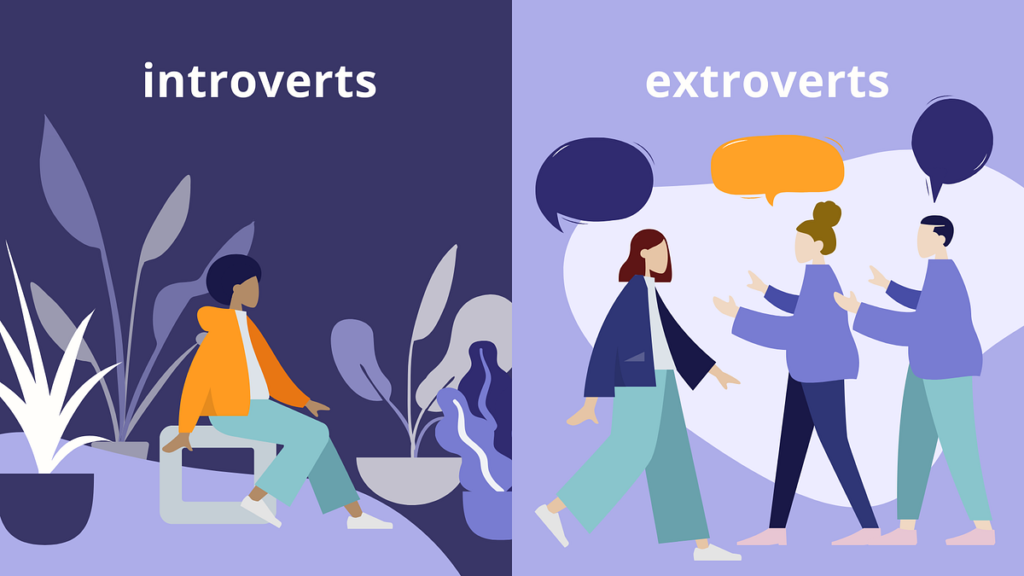
At meetings, some employees actively contribute ideas, while others remain silent. In correspondence, some respond immediately, while others take a long time to consider their reply. Some people are passionate about their work, while others burn out quickly. Managers usually attribute this to employee motivation or competence, although the reason may lie elsewhere — in their personality types.
Introverts and extroverts react differently to participation in communication and tasks.
If these differences are not taken into account, conflicts may arise within the team, valuable ideas may be lost, and productivity may decline. In this article, we discuss how to recognise the strengths of each personality type, assign tasks appropriately, and build processes so that both introverts and extroverts can work to their full potential.
Who are introverts? An introvert is a person whose energy is directed towards their own inner world. They recharge their batteries through solitude and find it difficult to communicate actively for long periods of time.
Introverts feel more comfortable when they have space to work alone and the opportunity to think before speaking. To others, such people often seem closed off, distant, and uncommunicative. In reality, introversion is a way for a person to recharge their batteries.
An introvert can be just as involved in their work as the most active employee, but they express it differently. If given the time and the right format to express themselves, the company will gain a responsible employee who knows how to concentrate, think deeply and come up with valuable ideas.
Tired of the usual games? Then here you will find a lot of excitement and drive — find out for yourself at Free Spin Casino login
Who are extroverts? An extrovert is a person who gets energy from the outside world when interacting and actively communicating with others. They feel more comfortable in a dynamic environment, make decisions faster in dialogue, and recharge their batteries through contact with people.
The strength of an extrovert is that they quickly find common ground with people. If allowed to reach their potential, the company will gain an employee who will help attract customers, find partners, build relationships with investors, and unite the team.
How introverts and extroverts behave at work and in everyday lifeThe behaviour of introverts and extroverts differs. In everyday life, extroverts are sociable, optimistic, impulsive, and have many friends. Introverts, on the other hand, like order in everything, keep their feelings under control, and are more often silent.
They are either lost in their thoughts or surrounded by close friends. You can learn how introverts can use their strengths and establish connections without anxiety from Susan Cain’s book Introverts.
“Extroverts need recognition and attention. It is important for them that their ideas are noticed and supported.
They quickly get excited about new things: launching a product, developing a direction, expanding a project. If this is not the case, they become bored. Unlike introverts, who can calmly work on a complex task for years and bring it to fruition, extroverts need movement.
They are well suited to roles where they can speak at conferences, organise exhibitions, communicate with people and promote ideas.”