


Most students approach medical career preparation like they’re filling out a college application checklist. They chase high GPAs, rack up volunteer hours, and collect research positions without understanding how these pieces actually work together in real healthcare settings.
This approach creates a dangerous gap.
Students end up with impressive credentials but lack the integrated skills that clinical practice demands every single day. The four essential dimensions of preparation—biological understanding, healthcare exposure, interpersonal effectiveness, and ethical reasoning—aren’t separate boxes to check. They’re interconnected capacities that must function simultaneously across pre-medical, nursing, public health, and biomedical research pathways.
Yet most preparation strategies treat these dimensions as isolated achievements rather than the integrated foundation they’re meant to become.
Table of Contents
Why Isolation Kills Preparation
Understanding these four dimensions means nothing if you approach them separately. Students typically treat preparation requirements like they’re collecting trading cards. They don’t grasp how these elements must interconnect. This stems from misinterpreting what admissions committees actually want: not a pile of credentials but evidence you can integrate multiple capabilities under pressure.
Healthcare delivery doesn’t happen in silos. You’re applying biological knowledge while talking to patients. You’re evaluating research evidence while communicating with worried families. You’re making ethical decisions under time pressure with incomplete information.
Preparation that develops capabilities in isolation produces candidates who excel on paper but can’t think on their feet.
There’s a crucial distinction here. Superficial preparation involves activities you pursue to enhance applications. Authentic development means engagement that builds real capability. This framework lets you evaluate whether your approach creates genuine readiness or just impressive documentation.
Building Your Scientific Foundation
The first dimension—biological understanding—creates the conceptual infrastructure that makes everything else possible. You need academic preparation that reaches sufficient depth to enable clinical application of biological principles. Rigorous scientific curricula develop both content mastery and investigative methodology. These prove essential for medical reasoning.
Biological knowledge isn’t just prerequisite content. It’s the foundation for diagnostic reasoning, treatment evaluation, and adopting emerging technologies. Healthcare professionals must understand disease mechanisms at cellular and molecular levels. This understanding helps them interpret symptoms, anticipate complications, and evaluate therapeutic options.
Surface-level familiarity won’t cut it. Clinical situations require applying principles to novel presentations or assessing conflicting evidence.
Academic rigor means curriculum design that incorporates content complexity, analytical problem-solving, and laboratory investigation. It’s not just difficult courses or high grades. Rigorous programs like IB Biology HL give students real exposure to complex biological systems. They learn how to investigate, analyze research, and solve problems. This builds the theoretical understanding and research skills you’ll need to interpret disease mechanisms and treatment approaches in modern healthcare.
Biological mastery connects directly to research methodology. Understanding how scientific knowledge gets generated lets you critically evaluate medical evidence. You can participate in clinical research and adopt evidence-based practice. Students who develop both content mastery and methodological literacy approach healthcare with the analytical foundation necessary for continuous learning throughout their careers.
Research That Actually Teaches You Something
Methodological literacy sits useless on a shelf unless you actually use it. Research engagement builds both technical skills and critical thinking abilities. It teaches healthcare professionals to judge evidence quality, spot study flaws, and contribute to creating new knowledge.
Research participation does two things at once: it develops skills and prepares your mind for complex thinking. Lab or clinical research builds concrete abilities like experimental design, data analysis, and scientific writing. But it also shows you how medical knowledge actually advances through careful investigation.
Students who dive into research learn something crucial. They can evaluate evidence with a critical eye, understand where studies fall short, and see the real gap between research findings and what happens in the clinic.
This matters for evidence-based practice. You need to assess whether treatment effectiveness research actually applies to your patients.
Understanding research methods lets you participate in clinical investigation throughout your career. Medical professionals must interpret new research constantly. They need to spot weak methodology and apply findings appropriately. These skills develop through hands-on research work, not by watching from the sidelines.
Authentic research participation means making genuine contributions and progressing your skills. It’s not about padding your resume. Sustained engagement that gives you responsibility for experimental parts, data interpretation, or scientific writing develops real research literacy. Surface-level participation can’t achieve this depth.
Clinical Exposure That Goes Beyond Watching
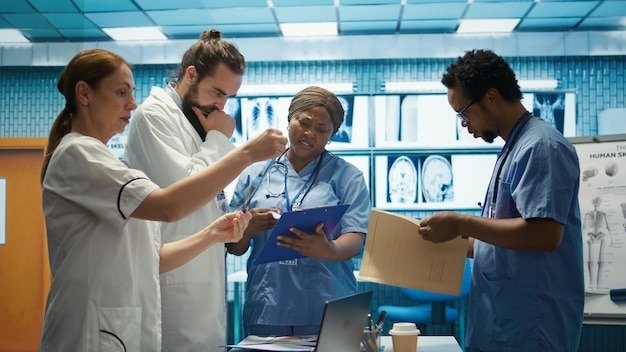
While research develops your analytical foundation, clinical exposure provides essential insight into healthcare delivery’s practical, interpersonal, and systemic dimensions that textbooks simply can’t convey. These aren’t sequential steps. They’re complementary perspectives you need simultaneously.
There’s a critical difference between credential-building activities and experiences that develop practical understanding. Hospital volunteering, international health programs, and community health initiatives offer pathways for relevant exposure. But developmental value depends on engagement depth, not participation duration. Too many students rack up hours like they’re punching a time clock without actually learning anything meaningful about healthcare delivery.
Authentic clinical exposure provides observation of how theoretical knowledge applies in patient care. You’ll understand healthcare systems and interprofessional collaboration. You’ll recognize medicine’s human dimensions including suffering, uncertainty, and mortality.
These insights prove essential for informed career decisions and realistic preparation.
Community health initiatives serve as contexts for understanding healthcare access, social determinants of health, and population-level interventions. These experiences broaden perspective beyond individual patient care to public health systems and policy approaches. They’re particularly relevant for students pursuing public health pathways.
What distinguishes authentic engagement from superficial participation? Sustained involvement that allows skill progression. Responsibility that requires decision-making or problem-solving. Reflection that connects experience to career preparation. And genuine contribution to organizations rather than passive observation. Without these characteristics, experiential activities enhance applications without building practical competencies.
Talking to Real People About Real Problems
All that clinical observation becomes meaningless without communication skills that let you actually interact with patients, families, and healthcare teams. You need to translate technical knowledge into patient understanding. You need cultural competence across diverse populations. You need effective interdisciplinary collaboration.
Communication abilities separate competent from exceptional healthcare professionals.
Medical practice happens through human interaction. You’re explaining diagnoses, discussing treatment options, addressing pain management needs, delivering difficult news, and collaborating with teams. Technical knowledge proves insufficient when professionals can’t translate complex information for diverse audiences.
Communication includes multiple dimensions. You translate technical concepts for lay audiences. You actively listen to understand patient perspectives and concerns. You develop cultural competence that enables effective interaction across diverse populations. You collaborate professionally through clear information exchange with colleagues.
These capabilities develop through practice and reflection rather than innate talent. Students gain communication experience through clinical volunteering that requires patient interaction. They develop scientific communication skills through research presentations. They build cultural sensitivity through community health engagement.
Communication development connects to career pathway requirements. Nursing candidates particularly need patient care communication skills. Pre-medical students must demonstrate interpersonal effectiveness through clinical volunteering. Public health professionals require community engagement capabilities. Biomedical researchers need scientific communication abilities for collaboration and publication.
Navigating Real Ethical Dilemmas
Strong communication skills inevitably bring you face-to-face with complex ethical dilemmas where technical knowledge and interpersonal effectiveness aren’t enough. Healthcare professionals constantly navigate situations where multiple ethical principles conflict and perfect solutions rarely exist.
What does this look like in practice? You’re respecting patient autonomy while recommending optimal treatment. You’re balancing individual needs against resource constraints. You’re managing conflicts between family preferences and medical recommendations. You’re addressing cultural considerations that influence care decisions.
These situations don’t come with formulaic rules.
Healthcare professionals face scenarios where multiple ethical principles clash and standard protocols prove inadequate. Ethical reasoning develops through engagement with real healthcare dilemmas, study of bioethics frameworks, and reflective practice that examines your own values and assumptions.
Ethics connects directly to communication. Ethical decision-making requires effective dialogue with patients about values, priorities, and tradeoffs. Technical excellence without interpersonal effectiveness and ethical sophistication produces healthcare that may be medically sound but fails to serve patients holistically.
Students develop ethical reasoning through clinical exposure that presents moral dilemmas, research participation that requires consideration of human subjects protection, and community health engagement that reveals health equity challenges. This preparation proves essential across all healthcare pathways as ethical complexity pervades medical practice.
Different Paths, Same Integration Challenge
Pre-med students obsess over MCAT scores while nursing students focus on clinical rotations and public health majors chase internships—but they’re all missing the same fundamental point. Sure, pre-medical, nursing, public health, and biomedical research pathways emphasize different preparation elements. But here’s what matters: all require strategic integration that connects academic foundation with practical engagement and interpersonal development.
Pre-medical students build competitive applications through strategic academic planning. They combine this with clinical volunteering that shows genuine healthcare service commitment. Add research participation that proves investigative capacity. These students must develop biological mastery, clinical exposure, communication abilities, and ethical reasoning comprehensively.
Nursing candidates? They develop practical patient care experience alongside academic excellence in biological sciences and communication skills.
Nursing preparation particularly emphasizes interpersonal effectiveness and clinical competence while requiring solid scientific foundation for understanding disease processes and treatment rationales.
Public health professionals combine epidemiological understanding with policy analysis and community engagement capabilities. This pathway emphasizes research methodology for population health investigation. It also focuses on communication skills for community interaction and ethical reasoning regarding health equity and resource allocation.
Biomedical researchers integrate laboratory skills with advanced theoretical knowledge and scientific communication abilities. Research-focused preparation particularly develops methodological expertise and biological depth. It also requires communication capabilities for collaboration and publication.
Making It All Work Together
Despite these pathway differences, they all need the same thing: purposeful coordination of academic choices, experiential engagement, and skill development. You can’t just pile up credentials. Integration separates competitive candidates from people who collect impressive-looking activities.
Here’s what people miss: healthcare contexts demand you deploy multiple competencies at once.
During patient encounters, professionals access biological knowledge, apply research evidence, communicate effectively, and navigate ethical considerations simultaneously. Preparation that develops capabilities separately produces candidates who aren’t ready for this integrative demand.
Understanding interdependence matters. Biological knowledge informs clinical observation. Research literacy enables evidence evaluation during patient discussions. Communication skills help facilitate ethical dialogue about treatment options. Ethical reasoning guides research design that respects human subjects. Each competency enhances and depends on the others.
Strategic approaches include selecting clinical experiences that let you apply academic knowledge. Pursue research that investigates questions you’ve encountered during healthcare exposure. Reflect on communication challenges you’ve observed in clinical settings. Analyze ethical dilemmas that arise in research or patient care contexts. Can you articulate how academic knowledge informed clinical observations? Can you explain how research methodology applies to evaluating healthcare interventions? Do you recognize how communication challenges connect to ethical principles?
What Real Readiness Actually Looks Like
Knowing how to evaluate your preparation brings us to what this ultimately means for your readiness. There’s a central distinction between credential accumulation and genuine preparation that most students completely miss. You can have a perfect GPA and impressive research experience but still be unprepared for the realities of healthcare practice.
Medical careers demand professionals who can simultaneously access biological understanding, apply research evidence, communicate effectively with diverse populations, and navigate ethical complexity. Preparation that develops these capacities integratively produces candidates who aren’t just ready for admission. They’re ready for the sustained challenges of healthcare practice.
This requires shifting from transactional thinking that focuses on admission requirements to developmental thinking that focuses on building functional capabilities. Integrated preparation demands strategic selection of experiences that build interconnected competencies. It demands sustained engagement that allows skill progression. And it demands reflective practice that connects academic knowledge with practical application.
The distinction between candidates who gain admission and those who actually thrive doesn’t lie in the impressiveness of their isolated credentials.
It lies in the depth of their integrated preparation that connects biological mastery, practical engagement, interpersonal capability, and ethical reasoning. Everything else is just checking boxes.


