

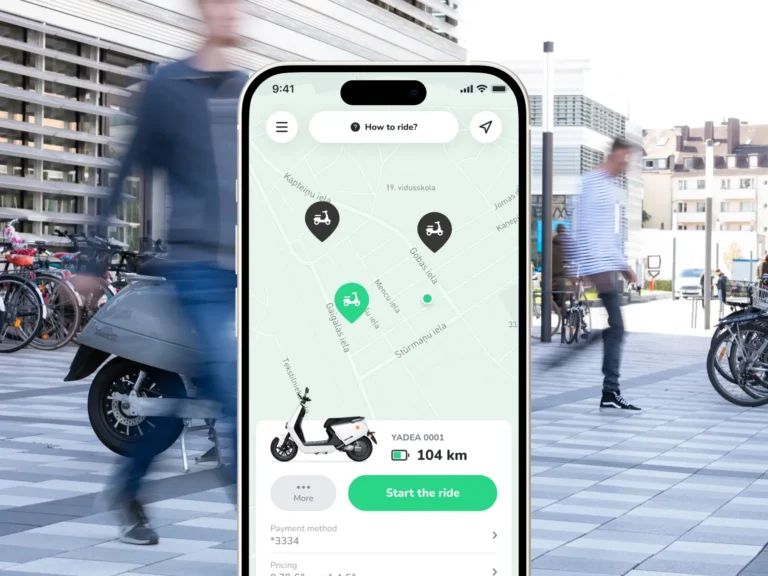
Urban transportation is undergoing a major transformation. With rapid urbanization, increasing traffic congestion, and growing environmental concerns, cities around the world are searching for smarter, cleaner, and more efficient mobility solutions. Scooter sharing has emerged as one of the most impactful answers to these challenges. Lightweight, affordable, and easy to deploy, shared electric scooters are redefining how people move through cities for short-distance travel.
Behind every successful scooter-sharing service is a robust digital foundation: a well-designed mobile application integrated with intelligent backend systems. In this blog, we explore scooter sharing app development, its importance in modern urban transportation, key features, technology stack, business models, and why choosing the best scooter sharing app development platform is critical for long-term success.
Table of Contents
The Rise of Scooter Sharing in Urban Mobility
Scooter sharing fits perfectly into the concept of micro-mobility. It addresses the “last-mile problem” by providing a quick and convenient way for users to travel short distances that are too far to walk but inefficient for cars or public transport. Cities benefit from reduced congestion and emissions, while users enjoy affordable, on-demand mobility.
Several factors are driving the adoption of scooter sharing:
- Urban congestion: Scooters reduce reliance on cars for short trips.
- Environmental awareness: Electric scooters produce zero direct emissions.
- Smartphone penetration: Mobile apps make scooter access seamless.
- Changing user behavior: Younger generations prefer access over ownership.
As demand grows, competition in the scooter-sharing market intensifies, making app quality and user experience key differentiators.
Why Scooter Sharing App Development Matters
A scooter-sharing app is more than just a booking interface. It acts as the central nervous system of the entire operation, connecting users, scooters, operators, and city infrastructure in real time. A poorly built app can lead to operational inefficiencies, safety issues, and user dissatisfaction. On the other hand, a scalable and secure app enables smooth rides, efficient fleet management, and sustainable growth.
High-quality scooter sharing app development ensures:
- Reliable real-time scooter availability
- Secure payments and user authentication
- Accurate GPS tracking and navigation
- Efficient maintenance and fleet optimization
- Compliance with local regulations
This makes the choice of development approach and platform a strategic decision rather than a purely technical one.
Core Features of a Scooter Sharing App
To succeed in today’s competitive urban mobility market, a scooter sharing app must include a comprehensive set of features for both users and administrators.
User-Focused Features
- User registration and verification: Email, phone, or social login with identity verification.
- Map-based scooter discovery: Real-time GPS map showing nearby available scooters.
- QR code scanning: Quick unlock of scooters using in-app scanning.
- Ride tracking: Live ride data including time, distance, and cost.
- In-app payments: Multiple payment methods such as cards, wallets, and subscriptions.
- Ride history: Access to past trips and invoices.
- Safety guidelines: Built-in tutorials and riding rules.
Admin and Operator Features
- Fleet management dashboard: Monitor scooter location, battery levels, and usage.
- Maintenance alerts: Automated notifications for repairs and charging.
- Pricing management: Dynamic pricing based on demand, time, or location.
- Analytics and reporting: Insights into user behavior, revenue, and operational efficiency.
- Geo-fencing: Control parking zones and riding areas.
Technology Stack Behind Scooter Sharing Apps
Developing a scooter sharing app requires a combination of mobile, backend, and IoT technologies working together seamlessly.
- Mobile app development: Native or cross-platform frameworks for iOS and Android.
- Backend infrastructure: Cloud-based servers for scalability and reliability.
- Real-time databases: For live scooter status and ride tracking.
- GPS and mapping APIs: Accurate location services and navigation.
- IoT integration: Communication between scooters and backend systems.
- Payment gateways: Secure transaction processing.
Choosing the right architecture ensures the app can handle thousands of concurrent users and devices without performance issues.
Business Models for Scooter Sharing Platforms
A well-designed app supports multiple monetization strategies, allowing businesses to adapt to different markets.
- Pay-per-ride: Users pay based on time or distance.
- Unlock fees: Fixed cost to start each ride.
- Subscriptions and passes: Daily, weekly, or monthly ride packages.
- Corporate partnerships: Fleet access for businesses or campuses.
- Advertising and promotions: In-app ads or brand collaborations.
The flexibility to experiment with pricing and revenue models is a major advantage of investing in the best scooter sharing app development platform.
Challenges in Scooter Sharing App Development
Despite its potential, scooter sharing comes with several challenges that must be addressed during development:
- Regulatory compliance: Different cities have different rules for micro-mobility.
- Scalability: The app must support rapid expansion into new locations.
- Security and fraud prevention: Protecting user data and preventing misuse.
- Battery and maintenance management: Ensuring scooter availability at all times.
- User safety: Encouraging responsible riding behavior through app design.
A future-ready app anticipates these challenges and builds solutions directly into the platform.
The Role of a Strong Development Partner
Choosing the right development partner is just as important as choosing the right technology. An experienced scooter sharing app development team understands urban mobility ecosystems, regulatory landscapes, and user expectations. They can help transform an idea into a scalable product that delivers real-world impact.
This is where platforms like eazyride stand out, offering end-to-end expertise in building intelligent scooter-sharing solutions tailored for modern cities. With the right strategy, technology, and execution, businesses can launch faster and scale smarter in the competitive mobility market.
The Future of Scooter Sharing Apps
The future of scooter sharing lies in deeper integration with smart city infrastructure. AI-driven demand forecasting, predictive maintenance, multimodal transportation integration, and sustainability analytics will shape the next generation of apps. As cities continue to prioritize eco-friendly transport, scooter sharing apps will become essential components of urban life.
Investing in a high-quality scooter sharing app today is not just about launching a service; it’s about contributing to the future of urban transportation. By leveraging the best scooter sharing app development platform, businesses can create reliable, user-friendly, and scalable solutions that benefit riders, cities, and the environment alike.
In a rapidly evolving mobility landscape, innovation, reliability, and user trust will define the leaders. With the right digital foundation and vision, scooter sharing can truly transform how cities move.


