

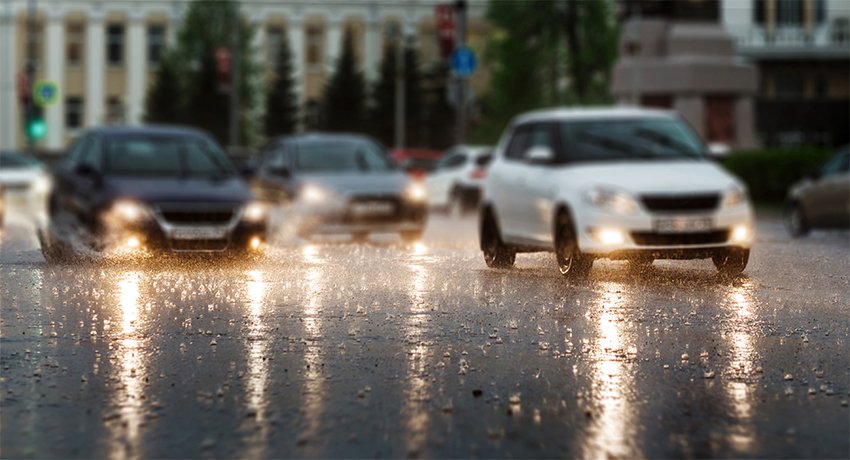
Hazardous weather can present anything from a minor annoyance to a severe danger to any driver on the road, and heavy rainstorms are at the far end of the severity spectrum. A heavy rainstorm is one of the most dangerous times to drive, for a variety of reasons. Unless you have an urgent need to get somewhere, it’s always best to put off driving if you observe or anticipate a heavy rainstorm.
Table of Contents
Limited Visibility
The first danger that driving during a heavy rainstorm presents is drastically reduced visibility. Simply put, if the rain gets too heavy, you’ll be driving practically blind.
A heavy rainstorm reduces visibility in two ways. The first is by deluging your windshield and other windows with a steady stream of water. Even with perfectly functioning windshield wipers, heavy enough rainfall will decrease your visibility through the windshield dramatically. And if you’ve got old or poorly maintained wipers, you’ll quickly see visibility drop nearly to zero.
Even aside from the impact of heavy rain on your windshield, a heavy rainstorm reduces your ability to see long distances, even outside of the clutter on your windshield. Between reduced sunlight and the fall of rain, you’ll be driving in night-like visibility conditions even during the middle of the day.
This limited visibility makes you less safe on the road for a variety of reasons. You’ll be less aware of traffic around you, unable to react to the presence or the actions of your fellow drivers until it may be too late to take evasive maneuvers.
You’ll also have more trouble following and staying in your lane, and curves or changes to the course of the road may catch you by surprise. This can be especially hazardous when driving in unfamiliar areas, where the unique layout of a road or series of roads may present special challenges for an unwary driver.
The Risk of Hydroplaning
When driving in rainy conditions, it’s possible to experience hydroplaning, one of the most dangerous and least predictable risks on the road. When a vehicle hydroplanes, it loses traction on the road and glides on a layer of water for some unknown length of time before the vehicle either collides with something or regains traction.
While hydroplaning, you’ll have no control over the direction of your vehicle, and won’t be able to stop, slow down, or speed up. You’re completely at the mercy of the direction you were headed and the speed you were going when your vehicle starts to hydroplane.
Some of the worst collisions and accidents are the result of hydroplaning, from multi-car pileups to head-on collisions to vehicles running off the road. These types of accidents can have life-altering consequences and may require consulting with a knowledgeable car accident lawyer.
And when it comes to the risk of hydroplaning, the more water on the road, the greater the risk. That’s why heavy rainstorms present a maximum risk for hydroplaning.
Decreased Stopping Times and Reduced Traction
Even if you don’t experience full hydroplaning, you’ll be driving a less responsive and harder-to-stop vehicle while in a heavy rainstorm. And those conditions increase your risk factor in a number of ways.
We’re all creatures of habit, and that goes for our driving skills too. Over the years, we build up a natural sense of how much distance we need to stop, but that calculation changes when driving in heavy rain. Most of the time, we can make that adjustment, but every once in a while, we might miscalculate, and the consequences can be significant.
It’s worth considering that we often drive in less-than-ideal circumstances to begin with. From speaking with passengers or on a hands-free telephone call to radio programs, podcasts, or other forms of entertainment, to the cares and worries of our lives, there are countless ways to get distracted on the road. When you combine those factors with the reduction in traction and increased stopping time a heavy rainstorm causes, your risk of experiencing an accident increases dramatically.
Many people are unaware of a pertinent fact about road conditions and traction: The road is often most treacherous when rain first begins, not when it’s been raining for a while. This is because dirt, oil, grime, and debris build up on a dry road over time. When water first mixes with this accumulated filth, it can create an extra slippery surface that can easily lead to mishaps. As the storm progresses, this substance will wash away, but the first several minutes after heavy rain can be the riskiest.
Flooding
So far, we’ve chronicled some of the risk factors that make a heavy rainstorm more likely to cause a car accident. But heavy rainstorms can also lead to flooding, which is just as serious an issue, especially in certain regions.
Torrential downpour can cause flooding within a matter of a few minutes, and the factors leading to rapid flooding may not always be apparent. The current saturation of the ground, drainage in the area, the elevation where you’re driving, and other considerations will dictate how quickly an area may flood, and you might not know these things ahead of time.
Drivers frequently underestimate how little water is necessary to stop or even carry away a car. A foot of moving water is enough to sweep away the average small-to-midsize car, and two feet of water can carry away SUVs, trucks, and other larger vehicles.
Even when flooding doesn’t reach the level where it risks halting your progress or sweeping away your vehicle, it can mask hazards that have the potential to cause serious damage to your car. When large puddles form on the road, you’ll be forced to drive through them without knowing the depth, meaning you might hit potholes that can damage your vehicle’s suspension and alignment.
Heavy rainstorms are one of the most severe and dangerous weather conditions for drivers, for a variety of reasons. Unless you’ve got no choice, postpone any driving if the forecast calls for heavy rainfall. And if you do need to drive, make sure to keep the above hazards in mind and use caution when on the road.