

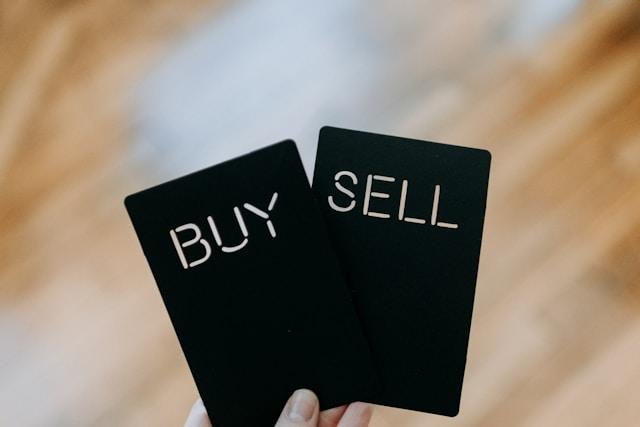
Emotions play an essential role in decision-making, especially in crypto trading, and understanding how these psychological factors affect market behavior is key to refining and adapting investment strategies to stay ahead. This is where the Fear and Greed Index comes into play. It quantifies the emotional landscape of crypto trading, providing insights into potential price movements, which often serve as indicators for investors looking to capitalize on the next big opportunity.
Fear and greed are emotions that every trader will encounter at some point during their journey. The pursuit of quick returns can ignite greed, which can manifest in several ways, such as overtrading and ignoring risk management. Greed can lead to overconfidence, and investors become convinced they have superior knowledge and skills. As might be expected, the outcome could be disastrous if there’s a market correction. Fear manifests itself, for instance, when a trader exits profits very quickly.
Table of Contents
CNN Business Developed The Original Fear And Greed Index In 2012
CNN Business (formerly CNN Money) introduced the Fear and Greed Index in 2012 to measure stock market performance. Since it provides a broad view of global market sentiment, the index serves as a valuable supplement to fundamental and technical analysis, enabling a more thorough examination of market risks and opportunities. As CNN describes, the Fear and Greed Index combines seven market indicators:
- Market momentum: When the S&P 500 is above its moving or rolling average over the past 125 days, it signals a positive momentum. If the index is lower than the prior average, it shows investors are fearful.
- Stock price strength: The number of stocks on the New York Stock Exchange (NYSE) that have touched their 52-week highs and lows are compared. A higher high pattern indicates a strengthening uptrend and signals greed.
- Stock price breath: The Fear and Greed Index integrates the McClellan Volume Summation Index, a breadth indicator based on stock advances and declines. Rising trading volume illustrates fear, whereas declining volume reveals fear.
- Put and call options: When put options lag behind call options, investors are greedy. If put options surpass call options, extreme fear may present buying opportunities.
- Market volatility: The Fear and Greed Index leverages the 50-day moving average of the CBOE Volatility Index, which shows the market’s expectation of 30-day volatility. It tends to be lower in bull markets and higher in bear markets.
- Safe haven demand: Many investors believe it’s important to seek safety above anything else. Safe haven demand demonstrates the difference between Treasury bond and stock returns over the past 20 days. If more investors want to buy stocks, they’re feeling a little greedy, but if bonds take the lead over stocks, investors are more cautious.
- Junk bond demand: The spread between yields on investment-grade bonds and high-yield (junk) bonds is appraised to determine if investors are willing to take on or avoid risk. A smaller difference between yields is a sign investors accept a high level of risk. A wider spread shows more caution.
The Fear And Greed Index Can Be Adapted To The Unique Characteristics Of The Crypto Market
Inspired by CNN’s methodology, Alternative.me has specifically tailored the Fear and Greed Index to the crypto market to help investors navigate turbulent waters. It incorporates several factors that influence market behavior, such as volatility, market momentum, social media sentiment, Bitcoin dominance, and Google trends. The index operates on a scale from 0 to 100: 0 indicates extreme fear, 50 marks a neutral sentiment, and 100 implies extreme greed. By way of illustration, in March 2020, as the COVID-19 pandemic began, the Fear and Greed Index fell to an annual low of 2.
Practical Applications Of The Fear And Greed Index In Crypto Trading
The Fear and Greed Index is updated as soon as new data is available and can be implemented. It can help you better assess risks and make well-informed decisions. Here’s why it’s so useful:
- You can predict the price movements of cryptocurrency: When fear prevails, investors rush to liquidate, leading to a sharp decline in prices. By contrast, when greed dominates, investors feel confident in the market, and prices move up. By leveraging data and employing sophisticated techniques to analyze the data sets, you can discern meaningful trends.
- You can protect your investments and minimize losses: In the volatile world of cryptocurrencies, risk management is an indispensable approach. An understanding of the market’s emotional dynamics can help you make sound decisions about whether to enter or exit trades.
- You can understand patterns and trends: Sentiment-related variables can reveal patterns and correlations with past market cycles, so you can make the best possible decisions and stay on track despite volatility. Extreme greed has more often been associated with price rebounds, while extreme fear often precedes market corrections.
The Fear And Greed Index Isn’t A Definitive Predictor Of Market Movements
Like other sentiment indicators, the Fear and Greed Index has limitations in predicting future market movements. It detects extreme sentiments but doesn’t help investors gauge potential reversal points. Unpredictability is a fundamental part of human nature: behavior is the outcome of a complex interaction of factors, and small variations in any of these can lead to unexpected changes. While the Fear and Greed Index contributes to improved results, it’s based on a limited number of indicators and doesn’t consider other factors that can impact the crypto market, such as geopolitical events.
Some critics argue that the Fear and Greed Index oversimplifies complex market dynamics and the prevailing attitude of investors. Its utility is contingent upon how its implementation and the specific setting. For significant improvements in decision-making, you should combine the index with technical analysis (moving averages, volume analysis, chart patterns, etc.), fundamental analysis (industry trends), and on-chain analysis (transaction volume, supply distribution, total value locked).
Final Thoughts
The Fear and Greed Index is a fairly nascent tool, and it’s fair to assume its composition and usage will be changed. For example, it’s susceptible to influence by emerging artificial intelligence (AI) analytic tools, which could improve data analysis, sentiment analysis, and predictive capabilities.