

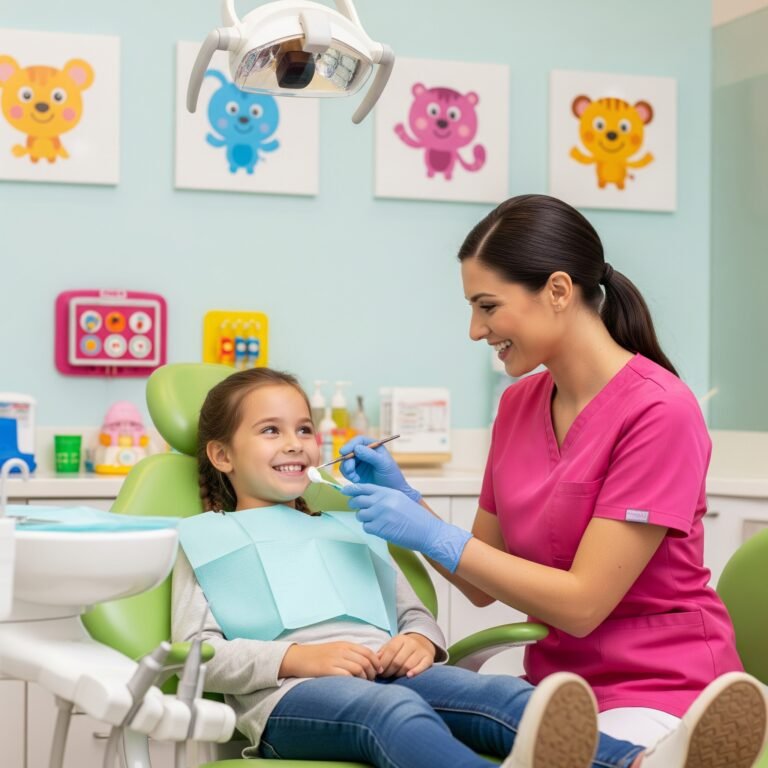
You might be wondering if your child really needs dental X rays, especially when everything “looks fine” and there is no obvious pain. You sit in the waiting room, your child swinging their feet from the chair, and the dental team mentions X rays again and possibly dental sedation in Killeen. A part of you feels uneasy about radiation, another part worries about missing something serious, and you may also be thinking about the cost. It can feel like you are caught in the middle with no clear answer.end
Because of this tension, it helps to know two things at the same time. First, your concern about safety is completely reasonable. Second, routine X rays, when thoughtfully prescribed for children, are one of the quiet tools that protect your child’s future smile. They help find problems while they are still small, easier to treat, and less expensive to fix.
So where does that leave you. In simple terms, routine dental X rays for children are about seeing what the eye cannot see. They help your pediatric dentist monitor growth, catch decay between teeth, and watch for issues with roots and developing adult teeth. When used according to scientific guidelines, the benefits strongly outweigh the risks, and the amount of radiation is very low, often similar to the exposure from a short airplane flight.
Table of Contents
Why are routine X rays recommended if my child’s teeth “look fine”?
From the outside, your child’s smile might look healthy. The enamel is white, there are no obvious holes, and your child is not complaining. That is the “before” picture most parents see. The “after” picture, without the right monitoring, can be very different. Hidden cavities between teeth, infections at the root, or problems with adult teeth forming under the gums can grow silently for months or years.
This is the heart of the problem. Cavities in children often start between the back teeth where toothbrushes and even careful flossing sometimes miss. These areas are almost impossible to assess by sight alone. By the time decay becomes visible or painful, it is often larger, closer to the nerve, and may need more complex treatment such as a baby root canal or even extraction. That means more time in the chair for your child and more cost and stress for you.
Now add the emotional layer. Many parents carry a quiet fear of “over treating,” so they hesitate when X rays are suggested. At the same time, they dread the guilt of finding out something serious was missed. You might ask yourself, “Am I protecting my child or putting them at risk” and it can feel like there is no perfect choice.
This is exactly why modern pediatric dentistry does not use a one size fits all approach. The American Academy of Pediatric Dentistry provides clear guidance on prescribing dental radiographs for infants and children. These recommendations focus on your child’s age, cavity risk, medical history, and past findings. The goal is simple. Use the fewest images needed to keep your child safe, and only as often as their individual situation requires.
How safe are pediatric dental X rays and what are dentists watching for?
Radiation is a word that can trigger instant worry. It is important to know that modern dental X rays use very low doses, especially with digital systems and focused beams. Protective aprons and thyroid collars add another layer of safety. The American Dental Association explains that dental X rays are a controlled and necessary part of care when guided by current science. You can learn more from their overview of dental X rays and radiation.
So what exactly are pediatric dentists looking for with these images. With routine pediatric dental radiographs, your child’s dentist can:
- Find early decay between teeth before it causes pain.
- Check whether baby teeth are being lost on time and adult teeth are coming in correctly.
- Spot extra teeth, missing teeth, or teeth that are stuck in the bone.
- Monitor the health of roots and surrounding bone.
- Watch for signs of infection, cysts, or trauma after an injury.
Think of X rays as a safety net. They do not replace what the dentist sees and feels during an exam. They complete the picture, especially in growing children whose mouths are changing every year. Without them, the dentist is partly working in the dark.
What are the real trade offs of routine X rays for kids?
You want to balance doing enough with not doing too much. That is wise. One way to think about it is to compare the risks of skipping X rays with the risks of taking them when recommended. The table below can help you see these trade offs more clearly.
| Question | With Recommended Routine X Rays | Without Recommended Routine X Rays |
| Chance of catching hidden decay early | High. Between tooth cavities usually found when small. | Low. Decay often found later when it is deeper and more painful. |
| Typical treatment needed for cavities | Smaller fillings. Shorter visits. Less stress for child. | Larger fillings, baby root canals, or extractions may be needed. |
| Effect on long term costs | More predictable. Early care usually costs less overall. | Higher risk of emergency visits and more expensive procedures. |
| Radiation exposure | Very low dose, guided by AAPD and ADA guidelines. | No X ray exposure, but higher risk of undetected disease. |
| Impact on future adult teeth | Developing teeth monitored. Problems often corrected early. | Issues with spacing, missing teeth, or impaction may be missed. |
When you see it laid out this way, the purpose of routine X rays in kids’ dental care becomes clearer. They are not taken “just because.” They are part of a careful plan to avoid bigger problems, protect your child’s comfort, and support healthy development of both baby and adult teeth.
What can you do right now to feel more confident about X rays for your child?
You do not need to become a radiation expert to make good choices. You only need a simple plan for your next visit and a few clear questions to ask.
1. Ask your pediatric dentist to explain why each X ray is recommended
Before any images are taken, you can ask “What are you looking for with these X rays” and “How will the results change my child’s care.” A thoughtful pediatric dentist will welcome these questions. They can point out your child’s cavity risk, growth stage, and any specific concerns. This turns X rays from something that “just happens” into a shared decision you understand.
2. Discuss how often your child truly needs X rays
Frequency is not the same for every child. A child with no history of cavities, excellent brushing, and a healthy diet may need images less often than a child who has had several fillings or special health conditions. You can say, “Based on my child’s risk, what is the right interval for X rays” and “Can we adjust the schedule if their risk changes over time.” This keeps the plan flexible and tailored to your child.
3. Focus on prevention between visits to reduce the need for extra images
Good daily habits can reduce the need for additional X rays to check new problems. Help your child brush twice a day with fluoride toothpaste and floss once a day, especially between molars. Limit frequent snacking and sugary drinks. Keep regular checkups so small issues are caught early. When prevention is strong, your dentist can often rely on a consistent set of routine images instead of extra ones to monitor new decay.
Finding steady ground in your decisions about your child’s dental care
It is normal to feel a mix of protectiveness and worry when someone suggests X rays for your child. You are not alone in that. With clear information and open conversation, those feelings can settle into calm, confident choices. Pediatric dental care works best when you and your child’s dentist act as partners, weighing benefits and risks together and always keeping your child’s comfort and long term health at the center.
You do not have to choose between “doing nothing” and “doing too much.” Thoughtfully used, routine X rays are one of the quiet supports that help keep your child out of pain, out of the emergency chair, and on track for a strong, healthy smile that lasts.


