

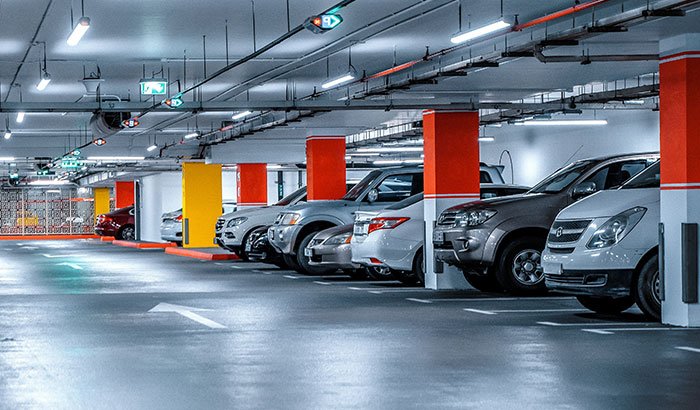
Saturday afternoon at the shopping center. You spot it, a front-row space practically glowing like a mirage. You flick on the blinker. Then you notice the minivan creeping in from the other direction, blinker on, eyes locked on the exact same spot. Nobody moves. Everybody stares.
Parking lots are where perfectly calm people turn into cowboys at high noon. Speeds are low, but tempers aren’t. Cars back out blind, shoppers wander between bumpers with full carts, and drivers cut diagonally across empty rows like the painted lines are mere suggestions.
It’s chaos at five miles per hour, and it raises a question almost nobody can answer with confidence. That’s exactly why so many people end up searching who has the right of way in a parking lot after a fender bender ruins their errand run.
Table of Contents
Why Parking Lots Don’t Work Like Ordinary Roads
Regular streets come with a script. Lanes are marked, signals tell you when to go, and signs spell out who yields. Parking lots? They’re more like improv theater. Some have stop signs and arrows. Plenty have faded paint and a whole lot of guesswork.
Private property adds another twist. Many California Vehicle Code rules are written with public roads in mind, though some apply on private property, and every driver still owes a basic duty to act with reasonable care. Private pavement isn’t a free-for-all.
Then there are the pedestrians. People walk out from between parked SUVs, kids dart ahead of their parents, and someone’s always pushing a cart that seems to steer itself. Drivers have to watch every direction at once, which is a lot harder than it sounds.
The Difference Between Main Lanes and Parking Aisles
Most lots have a hierarchy, even if nobody posted it. The wide lanes running along the storefronts or around the perimeter act like main roads. The narrower rows lined with spaces are feeder aisles. Traffic in the main lanes usually expects to keep moving.
That’s why drivers pulling out of a feeder aisle are generally expected to wait for a gap in the through lane, much like a side street meeting a busier road. It’s a common safety practice, and posted signs or markings may make it official.
Backing out is its own adventure. Someone reversing out of a space generally has to make sure the path is clear before rolling into traffic. Still, safety habits and legal duties aren’t always identical, and the specific layout of a lot can change how things play out.
When Two Drivers Both Think They Have the Right of Way
The classic showdown is two cars backing out at the same time. Both drivers check their mirrors, both see nothing, and both hit the gas. Crunch. Each one swears the other should’ve waited. Sometimes they’re both a little bit right. That’s what makes it messy.
Simultaneous turns cause plenty of drama too. Two drivers approach the same intersection of aisles, nobody’s sure who got there first, and each assumes the other will stop. A friendly wave can save the day. A stubborn inch forward can cause the crash.
Pedestrians and space-grabbers add more friction. A driver focused on snagging a spot may miss someone walking behind the car, and a driver pulling in quickly can clip a car pulling out. People on foot deserve extra caution, every single time.
How Responsibility Is Determined After a Parking Lot Collision
Vehicle positioning tells a lot. Where each car was, which direction it was moving, and whether one was fully stopped can all shape the story. Damage patterns help too, since a dent on a rear corner suggests something very different from a crumpled front bumper.
Evidence in parking lots is often better than people expect. Stores usually have security cameras, and many cars have dash cams. Witnesses are frequently nearby, loading groceries or waiting for a ride. Getting footage quickly matters, since businesses may record over it. Ask fast, before it vanishes.
California follows a pure comparative fault system, which means responsibility can be split between drivers. Someone who was 30 percent at fault may still recover damages, reduced by their share. Applicable traffic rules, lot markings, and plain common sense all feed into those percentages.
Conclusion
Parking lots might be the lowest-speed battlegrounds around, but the confusion is real. Missing signs, blind spots, wandering pedestrians, and drivers who all think they’re first can turn a quick errand into an insurance claim. It happens all the time.
The fix is surprisingly simple. Slow down. Look twice before backing up. Treat main lanes like real roads, and give pedestrians the benefit of the doubt. Assuming you have the right of way is how most of these collisions start.
A little patience beats a parking lot showdown every time. If a collision does happen, take photos, get witness information, and ask the business about camera footage. For injuries or disputed fault, a qualified attorney can explain the options. Trust that no parking spot is worth it.