

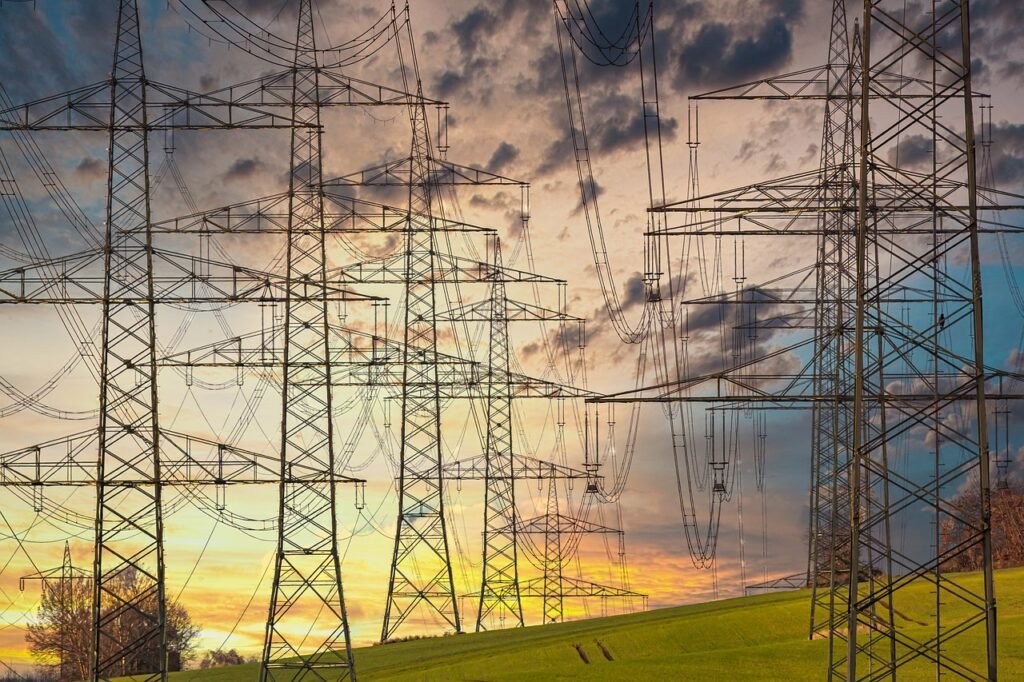
Electric power distribution is the final stage in the delivery of electricity from generation sources to end users. It begins after transmission and is responsible for bringing electricity from the transmission network to individual consumers, businesses, and industrial facilities. In simple terms, power distribution is the process that connects high voltage power infrastructure with the needs of the end user.
Electricity is produced in power plants during the process of power generation. The electricity is then transported over long distances through transmission lines operating at high voltage. After that, the distribution system is responsible for reducing the voltage and delivering electricity safely and efficiently to customers.
Table of Contents
Distribution Systems
Distribution systems are complex networks that carry electricity from distribution substations to consumers. These distribution systems are designed to operate at medium voltage and low voltage levels, depending on the type of users they serve.
The distribution includes overhead lines or underground cables, protection devices, and monitoring equipment. Distribution systems are structured to ensure reliable delivery of electricity, even during peak demand.
The distribution system is carefully engineered so that electricity is delivered with proper voltage regulation and minimal losses. In addition, modern distribution systems incorporate smart grids and automation technologies that improve performance and reliability.
Electric Power Distribution Systems
Electric power distribution systems form the bridge between transmission and the end user. The power distribution system is responsible for transforming electricity from high voltage to medium voltage and finally to low voltage secondary circuit levels suitable for residential customers and industrial users.
What is more electric power distribution systems support the integration of renewable energy sources such as wind or solar. The integration of renewable energy into the power distribution system helps reduce dependence on traditional power plants.
Because electricity demand continues to grow, power distribution systems are being modernized to handle additional loads and maintain stability.
Distribution Substations
Distribution substations are key facilities in the distribution network. They receive electricity from the transmission grid at high voltage and reduce the voltage to medium voltage for further distribution.
They play a critical role in voltage regulation, load balancing, and protection of electrical equipment. Circuit breakers installed in distribution substations protect the system from faults and overloads.
Without properly functioning distribution substations, electricity from the transmission network could not safely reach individual consumers.
Distribution Transformers
Distribution transformers are essential components of power distribution. They reduce medium voltage to low voltage suitable for residential customers, commercial customers, and other end users.
These transformers are often located close to the customer to minimize losses of power and maintain stable voltage levels. Distribution transformers ensure that the voltage supplied matches the requirements of electrical equipment used by consumers.
Distribution Lines
Distribution lines carry electricity from substations to the final users. These lines can be overhead or underground, depending on geographic and urban conditions. High quality distribution lines are necessary to maintain system reliability and reduce outages.
Electricity from the substation flows through primary distribution lines operating at medium voltage and then through secondary lines at low voltage until it reaches the end user.
Conclusion
Electric power distribution is a vital component of modern infrastructure. The power distribution system is the final stage in the process that begins with generation and transmission.
The distribution of electricity depends on distribution substations, distribution transformers, circuit breakers, and distribution lines working together as a unified system.
As electricity demand increases and renewable energy integration expands, power distribution systems are evolving. Modernization efforts focus on smart grids, improved voltage regulation, better load balancing, and the replacement of aging infrastructure to ensure reliable electricity for all consumers.