

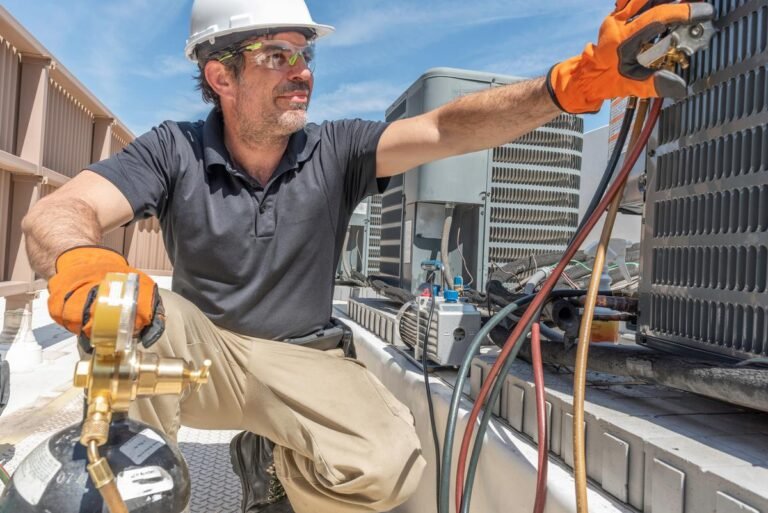
It can be frustrating when a repair is completed, the equipment turns on normally, and yet the home still feels uneven, drafty, or hard to keep comfortable. Many homeowners assume the repair “didn’t work,” but comfort problems often involve more than a single failed part. Temperature swings, rooms that never match the thermostat, and humidity that won’t settle can continue even after major components are replaced. HVAC contractors approach these situations like an investigation, checking whether the system is delivering the right output, moving air correctly, and responding to real conditions inside the home. Persistent issues frequently point to airflow limits, hidden duct leaks, control problems, or building factors such as insulation gaps and air leakage. A careful, step-by-step review usually reveals why comfort still isn’t consistent.
Finding the Hidden Causes
- Confirming System Output and Repair Quality
When comfort complaints persist, contractors first confirm that the repaired system is producing the expected heating or cooling output under real operating conditions. That means measuring temperature changes across the equipment, verifying airflow through the indoor unit, and confirming the system runs long enough to condition the space rather than short-cycling. They also check whether the repair addressed the root symptom or only restored operation. For example, a replaced capacitor may get a blower running again, but it won’t fix restricted airflow caused by a dirty coil or a duct bottleneck. In heating season, contractors look at burner operation, flame stability, and safety limits that might cause the furnace to cycle off early. If the recent work involved a Furnace repair service, they may revisit setup details such as gas pressure, airflow settings, and filter fit to ensure the equipment is operating as intended, not just turning on.
- Airflow Measurements and Static Pressure Checks
Airflow is one of the most common reasons comfort problems remain after repairs, because a system can be mechanically “fixed” while still struggling to move enough air to the right places. Contractors measure static pressure to see whether the duct system is forcing the blower to work outside its preferred range. High static pressure can come from undersized ducts, restrictive filters, closed registers, or dirty indoor coils, and it often leads to noisy operation, uneven room temperatures, and reduced efficiency. Low airflow can also cause humidity complaints in summer or overheating concerns in winter because conditioned air isn’t being delivered effectively. Technicians may measure airflow at supply registers, compare it across rooms, and check for pressure differences when doors are closed. These tests help identify whether the remaining comfort issue is a distribution problem rather than an equipment problem.
- Duct Leakage, Poor Returns, and Imbalanced Rooms
Ductwork issues are easy to miss because they are hidden behind walls, in attics, or in crawl spaces, yet they can significantly affect comfort. Contractors inspect accessible duct runs for disconnected joints, crushed flex duct, gaps around boots, or sections routed through very hot or cold spaces without proper insulation. Even small leaks can reduce airflow to key rooms and pull in unconditioned air, making the system seem weak. Return-air design is another major factor; if returns are limited or poorly placed, some rooms become pressurized while others struggle to receive enough supply air. Contractors also look at room-to-room balance, checking whether certain spaces always lag behind due to long duct runs, restrictive branches, or missing return pathways. Solving these problems often brings more comfort improvement than changing equipment, because the system finally distributes air as designed.
- Thermostat Accuracy, Sensor Placement, and Control Logic
When a homeowner says the temperature “doesn’t match the thermostat,” contractors do not assume the thermostat is wrong; they test it. They verify calibration, check wiring, and ensure the thermostat is not exposed to direct sunlight, supply air drafts, or heat sources like kitchens and electronics. In multi-level homes, thermostat placement can cause persistent comfort complaints because conditions near the thermostat may differ from those in occupied rooms. Control logic matters too, especially with heat pumps, staged systems, and variable-speed equipment. Incorrect configuration can cause frequent cycling, delayed fan operation, or staging that never reaches higher output when needed. Contractors may review runtime patterns, compare setpoint behavior to actual supply temperatures, and confirm that the equipment’s control board and thermostat settings match the system type. A small control mismatch can cause significant comfort swings even when the mechanical components are functioning properly.
- Humidity, Ventilation, and “Comfort That Feels Wrong”
Comfort is not just about temperature; humidity and indoor air movement also strongly influence how a home feels. After repairs, a system may cool the air but leave it clammy if airflow is too high for proper moisture removal or if short cycling prevents longer dehumidifying runs. In winter, overly dry air can make rooms feel cooler than they are, driving higher thermostat settings and uneven comfort. Contractors look for oversized equipment, incorrect blower speeds, and ventilation conditions that introduce excess outdoor humidity. They also consider exhaust fans, dryer vents, and return leaks that may pull humid air into the system. If a home has poor ventilation balance, stale air can settle in certain rooms, making comfort complaints seem worse even when temperatures are acceptable. Addressing humidity often involves tuning airflow, improving run consistency, sealing leaks, and, in some cases, adding targeted humidity-control support.
- Building Factors That Keep Overwhelming the HVAC System
If the HVAC system is producing correct output and airflow tests look reasonable, contractors often shift attention to the building itself. Insulation gaps, air leaks around doors and windows, attic bypasses, and poorly sealed penetrations can create steady heat gain or loss that no repair can fully overcome. Uneven sun exposure, shaded rooms, and wind-driven infiltration can cause certain areas to drift from the thermostat, especially during extreme weather. Contractors may use temperature readings near exterior walls, check attic conditions, and look for patterns such as a single room always being uncomfortable regardless of equipment performance. They also consider whether the home has undergone changes—like new windows, a remodeled space, or a converted garage—that altered airflow needs without updating duct design. Sometimes the system is not “bad,” but the house now behaves differently than when the equipment was installed.
When comfort issues persist after repairs, HVAC contractors look beyond the replaced part and evaluate the entire chain that delivers comfort: output, airflow, distribution, controls, humidity, and the way the home retains conditioned air. Many complaints stem from hidden restrictions, duct leakage, return-air limitations, thermostat placement, or building leaks that keep reintroducing unwanted heat or cold. A methodical approach—measuring performance, testing pressure, confirming control behavior, and checking the home’s envelope—usually identifies why the space still doesn’t feel right. Once the true cause is found, solutions are often more targeted and less disruptive than repeated part replacements. With the right adjustments, homeowners can move from “it runs but feels wrong” to steady, predictable comfort in every season.


