

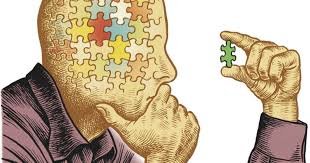
What is critical thinking? Critical thinking is the ability to objectively analyse information, assess its reliability and draw reasonable conclusions. Thinking critically means making balanced and informed decisions.
It means not buying currency when there is a sharp jump in the exchange rate and not filling your warehouse with products that, according to rumours, will soon cease to be imported into the country, but rather gathering information, assessing risks, checking various sources, and only then making a decision.
Critical thinking is important in both everyday life and business. The brain does everything it can to save resources and avoid double-checking information, which is why we may take random statements at face value.
This phrase is so common on the internet that it seems authentic, but in fact, he never said it. And you’ve probably been told that nerve cells don’t regenerate — but guess what? They do regenerate, so it’s okay to be nervous. But we don’t recommend it.
How it differs from analytical thinking Analytical thinking involves deep processing of information to break it down into separate small facts and evaluate each one. A person carefully studies numbers and data to better understand the issue. Critical thinking also requires examining information — but in order to question it and verify whether it is true.
Table of Contents
Why is it important to think critically?
Critical thinking forces you to check, question and investigate. It will save you from making certain mistakes, show you different ways to solve a problem, and make your decisions more reasonable and understandable to those around you. This is how a person with developed critical thinking behaves.
Sport always helps you relax and take a break from everything — play with us — NBA online betting at Voltage Bet
What personal growth looks like for entrepreneurs
A friend offers Michael to buy a parcel delivery point. The owner is urgently selling the business due to family circumstances. “The location is very profitable, the price is below market value. The investment is not critical, and if it doesn’t take off, you can always sell the ready-made business and get some of your money back.”
Michael starts to look into the matter himself and finds out that the location for the point is poorly chosen — there is no parking nearby, and the bus stop is far away. Over the past six months, two more such outlets have opened within walking distance, and the flow of customers has decreased. Franchise royalties must be paid from turnover, which is not as profitable as a percentage of profit or a fixed rate.
How it works
Critical thinking is not an innate skill; it develops throughout life.
In the 1970s, renowned psychologist and Nobel laureate Daniel Kahneman conducted a series of studies and proposed distinguishing between two fundamentally different systems of thinking: fast and slow.
Fast thinking. It is sometimes called intuitive or unconscious. This system works automatically and processes information very quickly.
It helps us to quickly answer typical questions and perform simple actions without wasting resources — calculating how much 1 + 1 is, turning around when we hear someone’s voice, or making tea
. Fast thinking replaces complex questions with simple ones and offers us ready-made solutions instead of a deep analysis of the situation. A clear example of how this works is the response to the question ‘How are you?’ We encounter such questions every day and often respond with a template answer: ‘Fine,’ ‘Good.’


