

For many business owners, energy costs feel like one of those unavoidable expenses—right up there with rent and wages. They arrive every month, they’re hard to predict, and they often increase without warning. Over time, these costs quietly chip away at margins and limit how confidently businesses can plan for growth.
That’s why more businesses are starting to view commercial solar not just as an environmental decision, but also as a financial one. When approached thoughtfully, solar becomes less about “going green” and more about gaining control, reducing long-term costs, and building resilience into the business.
Table of Contents
Energy Costs You Can Actually Plan Around
One of the biggest challenges for businesses is unpredictability. Electricity prices fluctuate, usage changes with seasons, and energy-intensive operations can see bills spike without much notice.
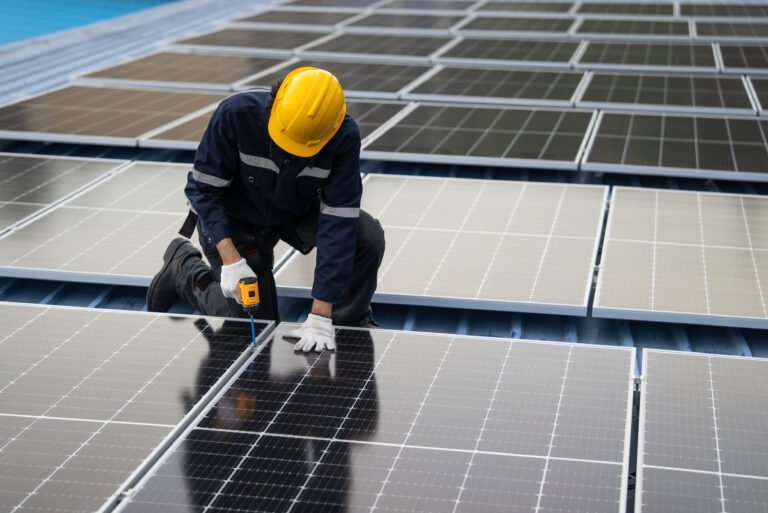
Commercial solar installations help reduce that uncertainty by generating power directly on-site. Instead of relying entirely on the grid, businesses can offset a large portion of their energy use with solar energy produced during daylight hours—often when operations are at their busiest.
Think of it like owning your premises instead of renting. While there are upfront considerations, ownership provides stability and insulation from rising costs. Solar works in a similar way by reducing exposure to future energy price increases.
This predictability makes budgeting easier. When energy costs become more stable, business owners can plan staffing, expansion, and investment decisions with greater confidence.
Turning Operational Expenses into Long-Term Assets
Unlike many business expenses, solar systems don’t disappear once the money is spent. They continue producing value year after year.
A well-designed commercial solar system can operate for decades, delivering consistent energy savings over its lifespan. Instead of paying electricity providers indefinitely, businesses redirect some of that spending into the infrastructure they own and benefit from directly.
This approach mirrors smart investment decisions in other industries. Manufacturing companies invest in machinery to reduce labour costs. Logistics firms invest in efficient vehicles to lower fuel usage. Solar is simply another tool that improves operational efficiency over time.
According to general information on solar energy, commercial-scale systems are increasingly used worldwide because they deliver reliable, low-cost energy once installed.
Solar That Fits Real Business Operations
Every business uses energy differently. A warehouse operating during daylight hours has different needs than a hospitality venue running late into the evening. That’s why commercial solar solutions work best when designed around actual usage patterns—not generic assumptions.
Factors such as roof space, operating hours, equipment load, and future expansion plans all influence system design. A tailored approach ensures businesses aren’t overspending on unnecessary capacity or installing systems that don’t deliver meaningful savings.
This kind of planning is common in other areas of business. Software systems are customised to workflows. Marketing strategies are built around target audiences. Energy systems should be no different.
In the middle to later stages of evaluating options, many businesses explore commercial solar installations by Ramselec Solar to better understand how purpose-built systems can support real-world operations without disrupting daily activity.
Improving Cash Flow Without Changing How You Work
One of the most appealing aspects of commercial solar is that it doesn’t require businesses to change how they operate day to day. The system works quietly in the background, producing energy while staff focus on their jobs.
Lower energy bills free up cash flow that can be redirected into other areas of the business—whether that’s hiring staff, upgrading equipment, or building financial buffers. Over time, this improved cash flow can strengthen overall business health.
This is similar to refinancing debt at a lower rate. The business doesn’t suddenly earn more revenue; it operates more efficiently, creating room to grow.
For businesses operating on tight margins, even modest monthly savings can make a meaningful difference when compounded over the years.
Strengthening Brand and Market Position
Beyond financial benefits, solar can also support brand positioning. Customers, partners, and investors increasingly value businesses that demonstrate responsible, forward-thinking practices.
Installing solar sends a clear signal that a business is planning for the future—not just reacting to today’s costs. While sustainability alone may not drive purchasing decisions, it often reinforces trust and credibility.
This is particularly relevant in industries where clients care about environmental impact, compliance, or long-term partnerships. Solar becomes part of a broader narrative around reliability and responsibility.
Importantly, these brand benefits don’t come at the expense of performance. Unlike marketing campaigns that require ongoing spend, solar delivers both practical savings and reputational value simultaneously.
Risk Reduction Through Energy Independence
Energy dependence is a risk many businesses don’t think about until something goes wrong. Grid disruptions, supply issues, or price spikes can all affect operations.
While solar doesn’t eliminate every risk, it reduces reliance on external energy sources. When paired with smart energy management or battery storage, it can significantly improve operational resilience.
This risk-reduction mindset is standard in business planning. Companies diversify their suppliers, insure their assets, and build redundancies into their systems. Solar fits naturally into that framework by strengthening energy security.
Long-Term Thinking That Pays Off
Commercial solar installations aren’t impulse decisions—and they shouldn’t be. Their value lies in long-term thinking and alignment with business goals.
The most successful installations are those treated as strategic investments rather than short-term cost fixes. When planned carefully, they deliver savings, stability, and confidence for years to come.
Businesses that take this approach often find that solar becomes one of their most reliable assets—quietly working in the background while supporting growth and sustainability.
Final Thoughts
Commercial solar installations are a smart investment because they turn a recurring cost into a controllable asset. They reduce energy expenses, improve cash flow, support sustainability goals, and provide long-term stability in an unpredictable energy market.
For businesses focused on resilience and growth, solar isn’t just about saving money—it’s about building confidence in the future. When energy becomes something you manage rather than endure, the benefits extend far beyond the power bill.


