

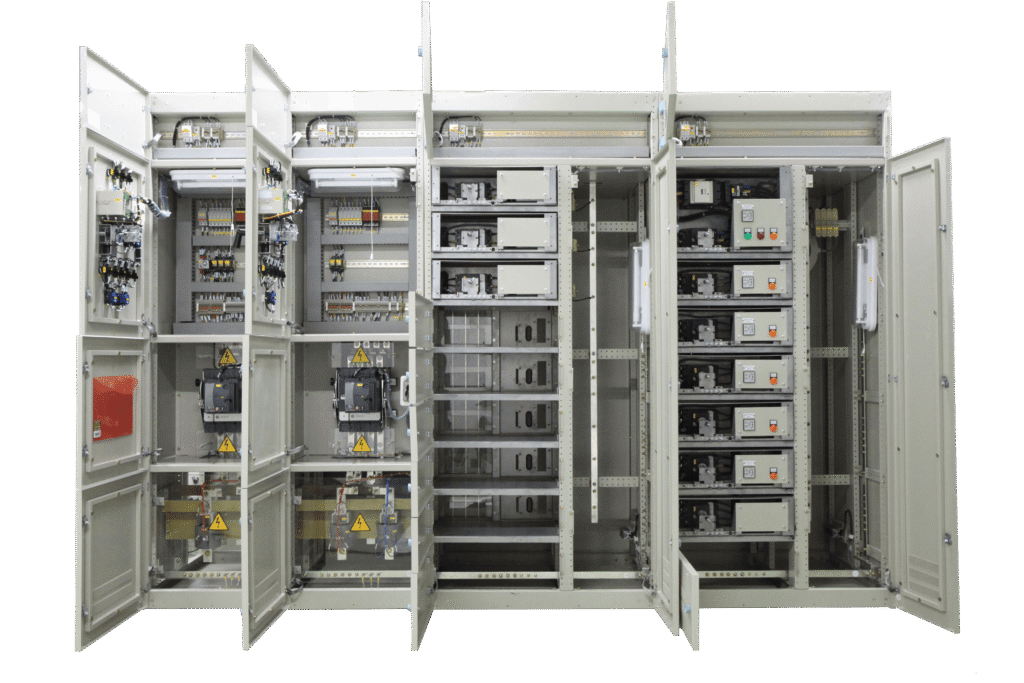
The truck arrived right on time. Everyone smiled. The packaging looked perfect. Then someone checked the nameplate.
Silence. Wrong voltage.
It’s a surprisingly quiet moment for something that just added two weeks to a construction schedule.
Ordering electrical equipment has a funny way of looking simple, until it isn’t. On paper, it’s just another purchase order. On a jobsite, though, one incorrect specification can stall inspections, shuffle subcontractors, and leave an expensive crew standing around wondering what happened.
Nobody plans for that conversation. Which is exactly why asking a few smart questions before ordering electrical switchboards can save far more than time.
Table of Contents
Question #1: Is This Actually the Right Switchboard?
Let’s start with the obvious. Or maybe the not-so-obvious.
Electrical switchboards aren’t interchangeable pieces of equipment. Service voltage, amperage, fault current ratings, building occupancy, available space, and future expansion all influence what belongs in a particular installation.
It’s tempting to assume that if the dimensions match, everything else will too. Electricity would politely disagree.
Getting the specifications right from the beginning means fewer surprises during installation, and far fewer uncomfortable conversations during inspection.
Question #2: Is It Available… or “Available”?
There’s a difference. Some suppliers mean it’s sitting in the warehouse. Others mean the manufacturer expects to build one eventually.
Construction schedules don’t really care which answer you were given.
Supply chains remain unpredictable, particularly for specialized electrical equipment and discontinued product lines. Waiting until installation week to discover a panel or switchboard is on indefinite backorder is about as enjoyable as discovering concrete was poured in the wrong location.
Technically fixable. Painfully expensive. Always ask what inventory is physically available and whether alternatives exist if lead times suddenly change.
Question #3: What Happens If This Building Is Older Than Google?
Renovation projects love surprises. Open one electrical room, and suddenly you’re looking at equipment that hasn’t been manufactured in decades.
Now what?
Replacing an aging switchboard isn’t always as straightforward as installing the newest model on the market. Existing infrastructure, compatibility requirements, and available replacement components often dictate the solution.
That’s why contractors benefit from suppliers who understand both modern electrical systems and obsolete equipment.
Because older buildings don’t care that catalogs have moved on.
Question #4: Can the Supplier Solve Problems, or Just Ship Boxes?
Some suppliers process orders. Others solve headaches. There’s a difference.
Questions inevitably come up during procurement. Will this switchboard integrate with the existing distribution system? Are replacement breakers still available? Can the equipment accommodate future capacity upgrades?
Those answers matter long before installation begins.
Companies like electrical switchboards support contractors with tested electrical switchboards, circuit breakers, and hard-to-find replacement components while providing the technical knowledge needed to identify compatible solutions. Having access to both inventory and product expertise often prevents small specification issues from becoming major project delays.
A knowledgeable supplier doesn’t just fill an order. They reduce uncertainty.
Question #5: What Happens After Delivery?
Here’s a question that doesn’t get asked often enough. What happens if something changes?
Projects evolve. Equipment gets damaged during shipping. Expansion plans shift. Future maintenance requires replacement parts years after construction wraps up.
A supplier’s value doesn’t end when the delivery truck leaves the site. Warranty support, product testing, technical assistance, and long-term component availability all deserve consideration before the purchase order is signed.
The cheapest quote rarely includes the best backup plan.
The Best Orders Usually Start With Better Conversations
Nobody remembers the purchase order that went perfectly. That’s kind of the point.
The National Fire Protection Association (NFPA) continues to emphasize using properly listed electrical equipment that meets applicable safety standards, and experienced electricians know that selecting the right switchboard is every bit as important as installing it correctly.
Asking thoughtful questions before ordering electrical switchboards isn’t about slowing down the project. It’s about preventing the kind of delays that quietly snowball into missed deadlines, unexpected costs, and frustrated clients.
Because on a construction site, success rarely comes from fixing problems quickly. It usually comes from making sure they never happen in the first place.