

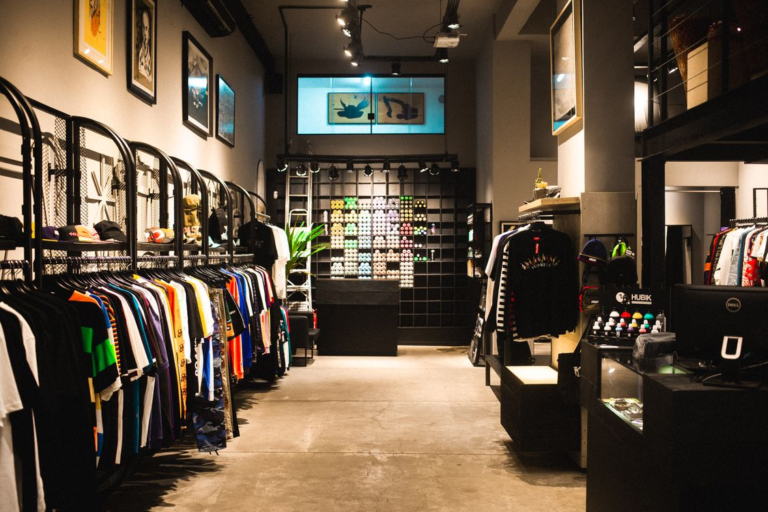
Retail space planning is one of those skills no one discusses…..Until sales plummet.
Most store managers spend their time stressing about staffing levels, inventory levels, and promotions. The design of the store itself? That falls by the wayside.
Here’s the problem with that:
90% of the selling in your store is being done by your store layout. Bad layouts equal lost sales. Good layouts equal pleasant shopping experiences and increased buying.
The good news?
Effective retail space planning is a learnable skill. And when you learn it, you’ll see results quickly. Usually within a month.
Table of Contents
What Retail Space Planning Actually Means
Retail space planning involves organising your products, fixtures and customer traffic flow within a store with the goal of increasing sales.
It sounds simple. But it covers a lot of ground:
- Where the entrance leads shoppers
- How aisles are spaced and laid out
- Which products sit at eye level
- Where impulse buys are placed
- How the checkout area is structured
A good space planning solution makes all of those decisions repeatable. Store managers no longer have to guess – they can test out layouts with a space planning solution before moving a single shelf.
That’s why teams are implementing software like Scorpion virtual merchandizing software to create digital planograms and run their entire space planning solution from a single dashboard. It saves time, eliminates the guesswork and allows the entire team to visualize the plan before moving a single product.
Why Most Store Managers Get Space Planning Wrong
Retail space planning – there are three major pitfalls most store managers fall into.
Trap #1: They copy other stores.
A layout that works for one store doesn’t necessarily mean it will work for another. Foot traffic patterns, customer behaviour and even climate can affect what sells.
Trap #2: They never change anything.
Some retailers’ layouts are years behind. Customers get bored. Best-sellers get buried by outdated habits. And sales slowly creep downward, unnoticed.
Trap #3: They make random changes.
Randomly shuffling products “to keep things fresh” creates more problems than it solves. Regular users get confused and your data breaks.
Solution? Approach retail space planning like the science it is. Data, testing and strategy are required to hone this discipline. Top performing retailers plan their store layouts weekly. Once a year when corporate issues a directive is NOT enough.
The Real Sales Impact of a Good Layout
This is where things get interesting.
Good store layout isn’t just attractive …It affects profitability.
Did you know that around 70% of buying decisions happen in-store rather than before entering? Planogram is literally closing the sale for you.
Other quick numbers worth knowing:
- 73.4% of shoppers are unhappy with current visual merchandising standards
- Cross-merchandising complementary products can lift sales by up to 20%
- Disorganised stores cost retailers over $8 billion in lost sales every year
And the kicker?
Studies have found that effective planogram compliance can boost profits by 8.1% due to decreased stockouts and overstock.
These aren’t small figures. They can mean the difference between a business that is just “getting by” and one that crushes its sales goals month after month.
5 Steps To Start Planning Better
Retail space planning doesn’t have to be difficult. Learn the essentials of store planning every manager should know.
Step 1: Map The Current Layout
First things first. Make a sketch of your store exactly how it is. Label every fixture, display and aisle. This will serve as your template.
Step 2: Watch The Customers
Stand in the store for an hour and just watch. Pay attention to:
- Where shoppers enter
- Which way they turn first
- Which aisles get skipped
- Where they slow down or speed up
This data is gold. And it’s completely free.
Step 3: Identify Hot & Cold Zones
Every store has hot zones that sell a lot of product and cold zones that customers never visit. Identifying those zones is the job of a good store manager.
Hot zones usually include:
- The front-right area as customers walk in
- Eye-level shelves
- The path to high-demand products
Cold zones are whatever remains. The key is taking stronger products into cold zones to improve performance.
Step 4: Test, Don’t Guess
Don’t overhaul your entire store overnight. Change one area and monitor the sales figures for two weeks. If they go up, great! If they don’t, try something different.
Step 5: Document Everything
Record what worked and what didn’t and why. This becomes the store’s playbook for future changes/layouts.
Tools That Make The Job Easier
The right tools take a ton of pain out of retail space planning.
A good space planning solution should let store managers:
- Build digital store layouts and planograms
- Test changes virtually before moving products
- Share plans with the whole team
- Track compliance across multiple stores
- Pull in sales data to measure results
Here’s what good tools help you avoid:
- Hours wasted measuring shelves by hand
- Mistakes that only show up after products are moved
- Arguments about which version of the layout is the “right” one
Free tools can be a great starting point as well. Graph paper, simple spreadsheets and retailer sales reports will get you off to a good start. Once you become more skilled, virtual merchandising software is a logical progression.
The goal is always the same:
Make better decisions, faster.
Bringing It Home
One of the most under appreciated skills any store manager can learn is retail space planning. It’s free to learn. And the benefits to sales, customer experience, and employee performance are enormous.
To quickly recap:
- Space planning controls how shoppers move through the store
- Most managers either copy others or never change anything
- A good layout can boost sales by double-digit percentages
- Start small, test changes, and document the results
- Use a space planning solution to scale things up
The merchants who take space planning seriously (as an actual craft) are the ones who continually meet their monthly goals.
Next time you feel something isn’t right in your store … Stop blaming the weather or economy. Take another look around. The answer may be right there on the floor.


