

Cell culture research depends on media that support consistent growth, attachment, and biological activity. Defined formulations provide control, but many cell systems also require proteins, hormones, nutrients, and growth factors found in serum. Species-origin changes alter the biological profile, making serum selection a practical research decision rather than a routine purchase. Researchers who match serum composition to the model can limit unwanted variables before testing begins. That process starts with a clear view of serum’s function.
Table of Contents
Why Serum Still Matters
Animal serum is the acellular, non-clotting fluid that remains after blood coagulates and cellular components are removed. This process removes fibrinogen and active clotting factors from plasma, leaving a fluid that contains growth factors, hormones, transport proteins, immunoglobulins, and nutrients.
These components support cell growth in ways that defined media alone cannot fully replicate. Serum also contains attachment proteins that help cells establish and maintain cultures under laboratory conditions.
Researchers select animal serum products based on the culture system, species involved, and the purpose of the experiment. Fetal bovine serum remains common in cell culture, while adult bovine, rabbit, equine, porcine, ovine, canine, feline, goat, chicken, donkey, mouse, rat, and other sera create different biological conditions. The appropriate choice depends on the proteins and growth factors required by the model.
Species Origin Changes the Biological Profile
Serum composition varies by species. Protein profiles, immunoglobulin content, and growth factor concentrations influence how cells respond in culture.
Fetal bovine serum supports many applications because it supplies components that growing cells require. Adult bovine serum provides a different profile, while rabbit serum and other species-specific options help researchers create a closer biological match for certain models.
A matched serum also helps when fetal bovine serum creates cross-reactivity or produces a physiological mismatch. Researchers working with animal-derived systems should compare the serum species with the species of the cells, antibodies, and assay conditions used in the protocol.
Choosing Serum for the Research Model
Serum selection starts with the cell type and intended application. Cell culture media supplementation requires attention to growth support and attachment. Immunoassay development requires attention to immunoglobulins and possible cross-reactivity. Diagnostic reagent validation requires a matrix that reflects the biological conditions under evaluation.
The serum’s processing status also matters. Sterile-filtered material is suitable for protocols that require a controlled input, while non-sterile products require different handling. Researchers should confirm the product description, intended use, and available lot information before adding serum to a validated workflow.
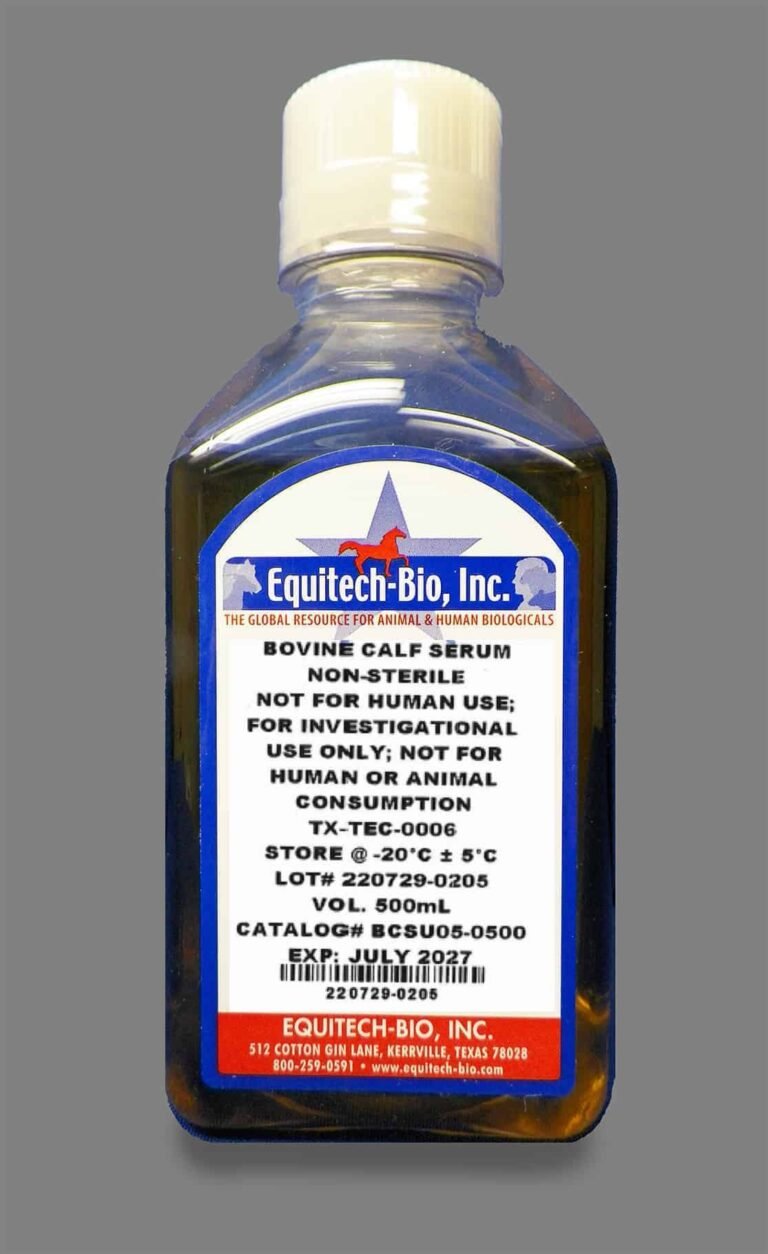
The animal serum category lists products by species, including bovine calf, bovine, canine, chicken, donkey, equine, feline, goat, mouse, newborn calf, sheep, and porcine serum. Listed products include non-sterile options, with product codes such as BCSU05, BSU05, CAS05, and PS05.
Consistency Starts With Documentation
Serum introduces biological material into a culture system, so documentation supports reproducible work. Researchers should record the species, product code, lot information, processing status, storage conditions, and date of use.
Lot-to-lot differences can affect cell behavior because serum contains many active components. A documented qualification process provides laboratories with a basis for comparing results across experiments and for identifying changes when a new lot enters use.
The same record should connect serum selection with the cell line, basal medium, supplements, passage range, and assay readout. This approach helps separate serum-related variation from other protocol changes.
Practical Checks Before Ordering
A purchasing decision should answer several basic questions. Which species best matches the biological model? Does the protocol require sterile-filtered or non-sterile material? Is the serum intended for cell culture, immunoassay development, or reagent validation?
Researchers should also review the product page to see which species and variants are available before placing an order. The inspected animal serum category lists multiple species, product codes, and selectable product options. Those details help laboratories compare materials with established protocols without treating every serum as interchangeable.
Clear selection criteria reduce unnecessary testing. A laboratory that defines its species, processing, and documentation requirements early can evaluate incoming material against the same standards used during method development.
Conclusion
Animal serum remains useful because it provides a complex biological mixture that defined media cannot fully replicate. Species selection, processing status, and lot documentation determine whether the material fits a research model. Laboratories should begin with the cell system, identify the required biological match, and confirm product details before ordering. A written qualification record then gives researchers a practical basis for tracking performance and explaining changes across experiments.


