

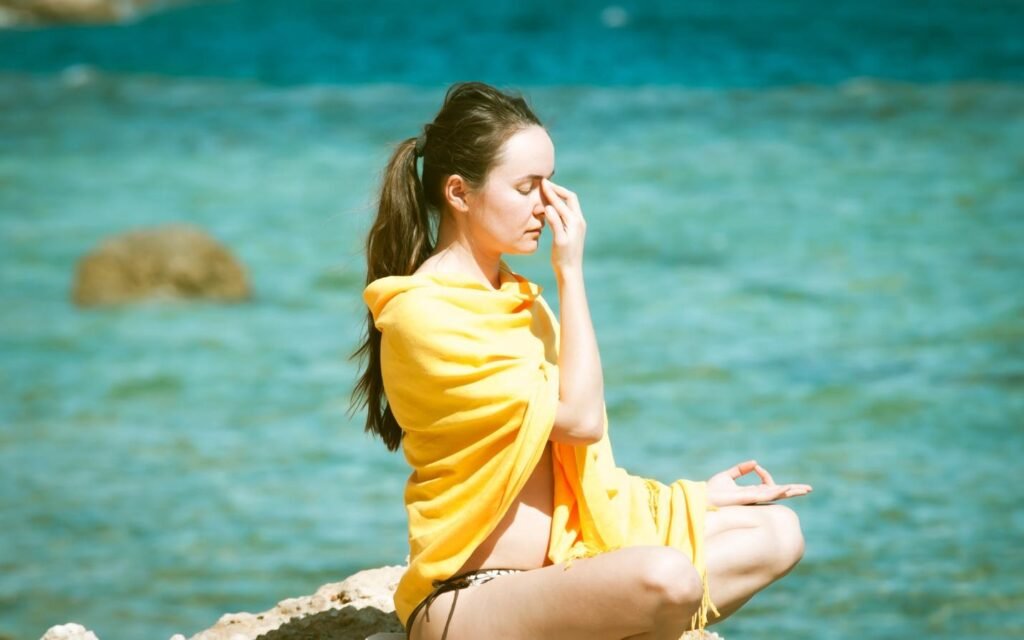
Yogic breathing or pranayama has been around since ancient times. These are used for bringing your physical body into a relaxation state. Pranayama consists of two words. The first word is prana which means the life force present within you or the spark that helps keep your mind and body sharp and sound. The other part is Ayama which indicates expansion. When composed, pranayama’s primary purpose is to encourage the growth of positive energy that nurtures your mind and body. This is possible by someone who possesses the required discipline for practicing the breathing methods that have been around for many years. Yoga schools in Rishikesh offer several yoga training classes that teach you several pranayama practices.
Table of Contents
Four basic kinds of pranayama to assist you in getting started
Nadhi Sodhana: It is regular pranayama called alternative nasal breathing. This relaxing and balanced breathing method is suitable for a restful night’s sleep. It is performed by enhancing the amount of oxygen that you intake.
To do this, first, breathe out all air in your lungs before starting, then make use of your dominant hand, cover up your nostril using your finger and then breathe out through the left nostril. Take a deep breath and then change. Now cover up your left nostril using your finger and use your right for living in and out. Carry on this rotation of breathing using each nostril till your body is in a relaxed state.
Bhastrika pranayama: This is also called bellows breath and is famous for its capability to fill you with energy. According to some, it also helps lose weight, as you might enhance your metabolism and digestion.
Start practicing this by sitting up tall and keeping your shoulders relaxed. Next, breathe in through your nose, and inflate your belly while breathing in. Your belly breathing starts when you exhale forcefully through your nose very rapidly, followed by a rapid inhale. Then, while keeping your upper body still and focusing on your breath, your belly should move in and out.
Ujjayi pranayama: It is also known as ocean breath because of its sound. It encourages your lungs to reach their full potential.
Look for a comfortable place where you can sit by keeping your spine straight. Start this practice by inhaling and filling your lungs to their maximum capacity. Then hold on to your breath for a brief period. Then, like whispering, start exhaling slowly through your nose and using your throat to mimic the ocean wave sound. Try to feel the air passing on the mouth roof to know that you have the proper form.
Sitali pranayama: The meaning of sitali is cooling, and thus you can expect this while making it very useful during the summer and warm environments. Start this practice by rolling your tongue, so the sides touch and inhale through the mouth to create a hissing noise. After inhalation, turn the tip of your tongue toward the mouth roof to feel the sensation of the cooled air. Finish this practice by breathing air through your nose and repeating this practice for about 5 minutes.
Where should you practice pranayama?
- You can practice pranayama anywhere, but when the environment is relaxing, it’s easy for your body to achieve a state of relaxation and adjust to all breathing techniques. To prepare yourself for getting success while doing pranayama, here are a few tips you should keep in mind:
- Choose a place where you can focus appropriately and give all your attention to your breathing.
- Try to remain away from distractions and make everyone around you aware of your purpose to practice so that they will give respect to your space.
- Remain mindful of the space and the time that you have. If you have limited time, then select your method accordingly. Ensure to make out some time for remaining committed to your self-care.
- The room where you will practice pranayama should remain well-ventilated, uncluttered and clean with a lot of free space for free movement and your yoga mat. There must not be any noises that will distract your mind.
- You can also practice pranayama outdoors in any garden or lawn but only when the weather is neither too hot nor too cold. Also, it would help if you did not practice pranayama outdoors when a strong wind blows.
- Do not practice pranayama under a fan or an air conditioner as it will disturb the body temperature.
- It is best to practice pranayama at home, like one or two hours before the sun rises when the air has maximum oxygen. Also, your body remains fresh in the early morning, and your mind stays clear of all thought processes.
- Doing pranayama is good when your stomach is empty. This is because the food you consumed the previous day is digested in the early morning. Clear all your bowels before doing pranayama or asanas is often recommended.
Pranayama posture
Sitting in a good posture with your spine straight and well-aligned is very important. Your whole upper body must remain straight and engaged. Sit in such a way that your back, head and neck stay well-aligned, and you can relax your abdomen muscles and shoulder relaxed. You should sit with your hands on your knees and your eyes closed. One of the vital things is you should keep your body as still as possible during the whole practice. When your body is motionless, your soul rests. Many people find sitting in a cross-legged position on the floor with their knees touching the ground quite relaxing.
Precautions for pranayama
- Patients suffering from asthama or hypertension should avoid holding their breath.
- Try not to do Bhastrika and Surya Bhedi pranayama during summers and Shirkari, Chandra – bhedi and Shitali in winters.
- Try not to Kapalbharti when you are pregnant.
- If you are suffering from a breathing problem, you should consult your doctor before practicing pranayama. Also, it is recommended to learn from a yoga instructor with at least 200 hour yoga teacher training in Rishikesh who can explain all details of the guidelines for pranayama and subtle differences between postures and techniques.
- Try to avoid smoking as it nullifies the impacts of pranayama.
- Best guidelines for proper breathing while doing pranayama
- Your breathing must not be jerky or hasty but should be rhythmic and patient. Breath in at a consistent flow rate, and the whole process must be smooth so that there is no noise during the entire process.
- Try to breathe through your nose until and unless it is needed for any specific pranayama.
- Never do pranayama as if you are in a hurry, and follow all basic pranayama guidelines.
- When you are doing pranayama, forget all your worries and stresses and try to focus on your breath. Never strain yourself while doing pranayama.
- The basic pattern to do pranayama is extended inhalation, a short pause while holding the breath and then a long exhalation.
- If you are a beginner, holding on to your breath is not recommended. When you feel comfortable with pranayama and asanas, start practicing holding of breath. Slowly enhance the breath holding.
Many people do not like practicing asanas but rather only pranayama. It assists in enhancing your concentration and revitalizes your mind and body. These guidelines for doing pranayama are never exhaustive, you can add more to it depending on your experience.