

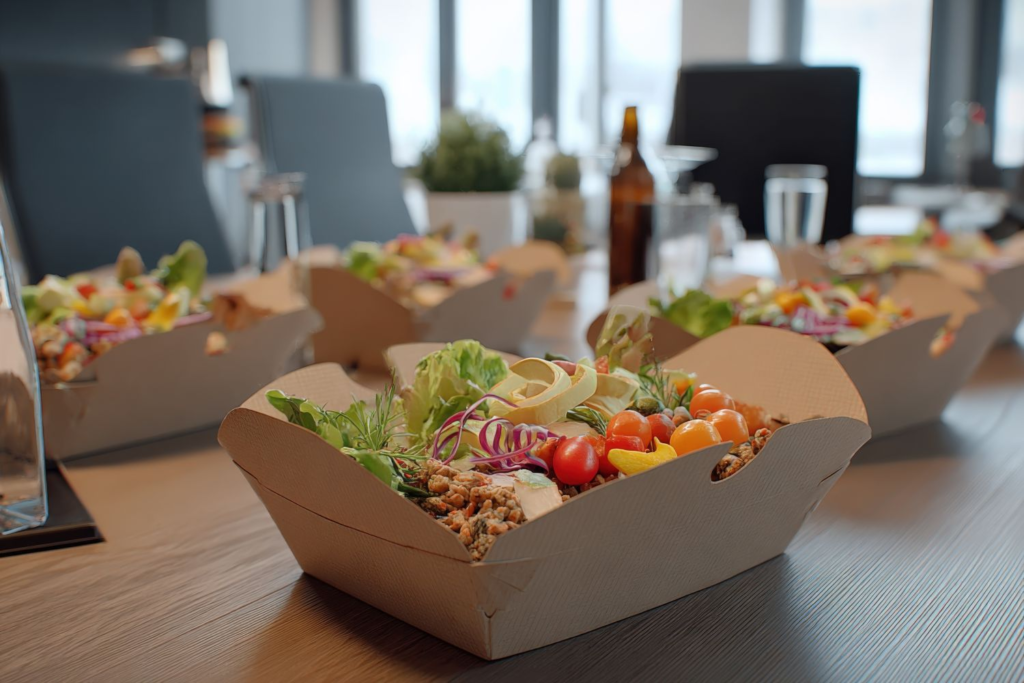
The landscape of corporate catering is undergoing a significant transformation. Gone are the days when event menus were synonymous with calorie-laden pastries, greasy finger foods, and sugar-saturated beverages. Modern organizations increasingly recognize that the food served at meetings, conferences, and corporate gatherings can directly impact attendee engagement, cognitive function, and overall event success.
Providing healthy catering options is no longer merely a trend but a strategic component of fostering a productive and positive corporate culture. It communicates your company’s commitment to employee and client well-being, supports diverse dietary needs, and enhances the overall experience, leaving participants feeling energized rather than lethargic.
Below are some healthy catering options for corporate events:
Table of Contents
Strategic Menu Planning: Beyond the Basic Salad
A common misconception is that healthy catering is limited to a simple green salad. While salads are an excellent component, they should be reinvented as hearty, nutrient-dense bases. Consider robust options like a quinoa bowl with roasted vegetables and a lemon-tahini dressing, or a kale and Brussels sprouts salad with almonds and dried cherries. The key is to build meals around a foundation of whole grains, legumes, and colorful vegetables, topped with lean proteins such as grilled chicken, salmon, tofu, or chickpeas. This approach can ensure sustained energy release, avoiding the blood sugar spikes and crashes associated with refined carbohydrates.
Furthermore, crafting a menu that’s both nutritious and appealing requires careful consideration of balance, variety, and presentation. Successful implementation also involves partnering with caterers who specialize in fresh, high-quality ingredients and creative culinary techniques. If your organization is seeking a model of such an approach, checking out options like Malibu Market Catering would be an excellent idea, as they can exemplify how health-conscious menus can be both sophisticated and delicious, focusing on seasonal produce and artisanal preparations.
Prioritizing Whole Foods and Mindful Preparation
The quality of ingredients is paramount. Menus should emphasize whole, minimally processed foods. Instead of fried appetizers, offer platters of crudités with hummus or Greek yogurt-based dips. Swap out white bread and refined flour for whole-grain wraps, seeded crackers, and artisan breads. Cooking methods also play a crucial role. For instance, opting for grilled, baked, roasted, or steamed items over deep-fried alternatives can significantly reduce unnecessary fats and calories without sacrificing taste. Flavor should also be derived from herbs, spices, citrus, and high-quality oils rather than heavy creams, excessive salt, or sugary sauces.
Accommodating Dietary Diversity and Allergies
A truly inclusive and healthy catering plan can proactively address several dietary preferences and restrictions. Clearly labeling all menu items is a fundamental practice. A comprehensive spread should include identifiable options for vegetarian, vegan, gluten-free, dairy-free, and nut-allergy attendees. This is a matter of courtesy, safety, and inclusivity. Offering inherently versatile dishes, such as build-your-own taco bars with corn tortillas, black beans, grilled vegetables, and fresh salsas, or grain bowls with a selection of separate toppings, allows guests to customize their meals according to their needs and preferences effortlessly.
Rethinking Beverages and Hydration
Beverage stations are a critical, yet often overlooked, aspect of healthy catering. The standard offering of soda and sugary juices can undermine even the most carefully planned food menu. Instead, prioritize hydration by providing infused water stations with combinations like cucumber-mint, citrus-berry, or ginger-lemon. Herbal iced teas, sparkling water, and unsweetened coffee and tea are excellent alternatives. If serving smoothies, ensure they’re made with whole fruits and vegetables without added syrups or sugars. This focus on hydration can support cognitive function and help combat afternoon fatigue.
Smart Presentation and Portion Control
Presentation can significantly influence consumption. Instead of large, overwhelming platters that encourage overindulgence, consider offering smaller, individually portioned items. This could include mini frittatas, skewers of grilled protein and vegetables, or small jars of layered salads and parfaits. Such presentations can aid in portion control and reduce food waste, and allow for easier networking as attendees can eat while mingling. Visually appealing, colorful displays of fresh food can naturally attract guests and highlight the quality of the ingredients.
The Tangible Benefits for Corporate Objectives

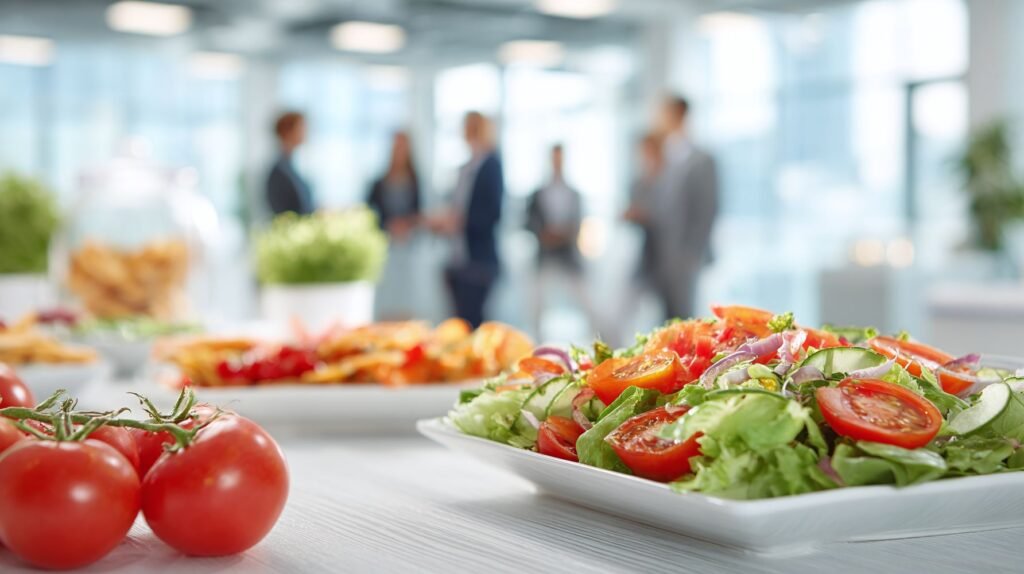
Investing in healthy catering yields measurable returns for corporate events. Attendees experience improved concentration and longer-lasting energy, leading to more productive brainstorming sessions and greater retention of presented information. It can also foster a positive perception of the host company, showcasing a forward-thinking and employee-centric ethos.
Furthermore, by preventing the post-meal sluggishness associated with heavy foods, event schedules can maintain momentum, keeping participants engaged from start to finish.
Key Takeaway
Transitioning to healthier catering options for corporate events can be a strategic decision with multifaceted benefits. It involves a thoughtful shift toward whole ingredients, creative menu design, inclusive offerings, and mindful presentation.
By keeping the information mentioned above in mind, your company can directly enhance the productivity, satisfaction, and well-being of its teams and clients, transforming a routine business necessity into a valuable component of corporate wellness and a memorable event experience.