

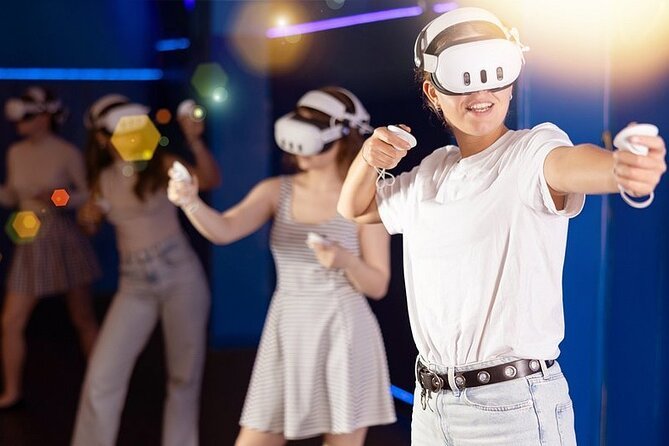
We’ve all been there. A friend drops by, spots your VR headset on the shelf, and their eyes light up. Before you know it, they’re asking, “Can I try?”
You have exactly 10 minutes to blow their mind. This is where most VR owners make a critical mistake: they load up their personal favorite game rather than something tailored for a beginner. The result? Your guest gets hit with motion sickness, struggles with a confusing user interface, and leaves feeling disappointed instead of amazed.
To prevent this, we’ve put together a curated selection of field-tested games that deliver instant fun, require zero explanation, and won’t cause motion sickness. We will start with the safest entry-level options and gradually move toward more advanced experiences.
Table of Contents
The Host’s Golden Rules: Prep Before They Put on the Headset
A successful demo takes just a couple of minutes of preparation, but it will save both your guest’s experience and your living room furniture.
- Clear the zone early: Set up your Guardian or Boundary system before your guest puts on the headset, not while they are wearing it. Move fragile items out of the play area, especially floor lamps, glasses of water, and pets (cats have a knack for walking right under a blindfolded player’s feet).
- Keep it hygienic: Wipe down the facial interface with a skin-safe wet wipe. If you host people often, a silicone face cover is a lifesaver; it doesn’t absorb sweat and wipes clean instantly.
- Ban thumbstick movement: This is the absolute golden rule of hosting. Never start a beginner on a game that uses smooth thumbstick artificial locomotion. It is the fastest way to trigger intense motion sickness in an unconditioned brain. Stick entirely to stationary games or teleportation.
- Stay physically close: People in VR genuinely lose their balance, swat at walls, and try to lean on virtual tables. It is not an exaggeration; it happens all the time. Stand by to catch them if they stumble.
- Build up gradually: Always start with the gentlest experience. If your guest feels great after the first game, you can safely step up the intensity.
Level 1: Perfect for First-Timers
These titles are designed for the absolute beginner. They offer high comfort and intuitive mechanics to ease the brain into a virtual environment.
First Encounters
If you are hosting on a Meta Quest, First Encounters is the ultimate introductory experience. Even better, it’s free.
The premise is brilliantly simple: cute, fuzzy aliens start breaking through the actual walls of your room, and you have to zap them with a blaster. Because it runs in Mixed Reality (MR), your guest can still see your actual living room through the headset’s cameras. This prevents them from losing their bearings and keeps them grounded.
The controls are entirely intuitive, there is nothing scary, and the sheer novelty of seeing reality bend ensures an immediate “wow” factor. For a first contact with VR, mixed reality is incredibly comfortable because the brain doesn’t have to cope with a total loss of physical surroundings.
Beat Saber
Beat Saber needs no introduction. You hold two glowing laser swords and slice oncoming blocks to the beat of the music. You don’t need to explain the rules at all; anyone can grasp the concept in three seconds.
Drop the difficulty down to Easy or Normal and watch your guest naturally start grooving to the rhythm. This is the definitive gateway game — the one that leaves people pulling off the headset with a massive grin, asking, “Where do I buy one of these?”
Home Sports
Are you into sports or enjoy betting via the TonyBet sportsbook Ontario? Then try Home Sports. It’s a modern version of Wii Sports rebuilt for mixed reality on the Quest 3. Featuring timeless classics like badminton, bowling, and mini-golf, it is entirely intuitive regardless of your guest’s age or gaming background.
The court or lane unfolds right in the middle of your room, allowing the player to stay connected to their actual surroundings. It’s one of the gentlest, most familiar ways to experience spatial computing for the first time.
Level 2: The Thrill Factor (Zero Motion Sickness)
Once your guest understands the basic mechanics, you can turn up the excitement. These games offer deeper immersion and cinematic action without requiring the player to move an inch in virtual space.
Superhot VR
Superhot VR instantly fulfills the fantasy of becoming an action movie hero. The core mechanic is pure genius: time only moves when you move. If you stand completely still, bullets freeze in mid-air. Step to the side, duck, grab a weapon right out of an enemy’s hand, and fire back.
Every single person who tries Superhot for the first time instantly feels like Neo from The Matrix. The opening levels fit perfectly into a 10-minute demo window and require zero tutorial text. Watching a guest play this from the couch is half the fun; they will freeze in bizarre poses, slowly reach for an invisible pistol, and suddenly dive away from something you can’t see.
Elven Assassin
This is a classic tower-defense game where you stand on a castle wall and use a bow and arrow to fend off waves of attacking orcs. The mechanics are beautifully natural: draw the string, aim, and release.
The graphics are sharp, the pacing scales up smoothly, and the tactile sensation of archery in VR triggers pure childhood joy in adults. Because the player stands completely stationary on a platform, there is zero risk of motion sickness.
Fruit Ninja VR
This game leverages a smartphone concept that almost everyone on Earth is already familiar with, except now you are standing inside the game. Slice flying fruit with dual katanas and dodge explosive bombs. It’s simple, high-energy, and physically engaging. This is an excellent alternative if your guest isn’t a traditional gamer and terms like “tower defense” make them apprehensive.
Level 3: For the Bold Guest
If your guest handles the initial round with ease and asks for something a little more adventurous, you can introduce experiences that feature mild virtual movement.
Richie’s Plank Experience
This experience takes less than two minutes, but people remember it for a lifetime. You step into an elevator, ride it to the top of a towering skyscraper, the doors open, and you are forced to walk out onto a narrow wooden plank suspended over a massive drop.
There is no traditional gameplay here, but nothing demonstrates the psychological power of VR “presence” better. People frequently freeze and refuse to take a step forward, even though they rationally know they are standing safely on a living room carpet. If you want a demo that leaves an unforgettable impression, this is your silver bullet.
Walkabout Mini Golf
If your guest wants a deeper experience but prefers a relaxed atmosphere over high-stakes action, this is the perfect pick. It features beautifully stylized courses, flawless ball physics, and a comfortable teleportation movement system that guarantees zero nausea. If you have a second headset or join via a phone, you can jump in with them, turning the demo into a pleasant, shared virtual hangout.
I Am Cat
For a lighthearted, chaotic experience, I Am Cat lets your guest step into the paws of a mischievous cat tasked with destroying a house and messing with a sweet old grandmother. The controls are incredibly fun and the sandbox activities are inherently hilarious. However, because it involves feline jumping and running locomotion, keep a close eye on your guest to ensure they don’t experience a sudden flash of motion sickness.
What Not to Show a Beginner: The VR Blacklist
Knowing what to avoid is just as crucial as choosing the right game. One bad initial experience can turn a person off from virtual reality permanently. Avoid these common pitfalls:
- Boneworks / Bonelab: These titles feature advanced, physics-heavy body simulation and mandatory thumbstick movement. They can cause motion sickness even in seasoned VR veterans. For a newcomer, they are a one-way ticket to instant nausea.
- Half-Life: Alyx: While it is an absolute masterpiece of the medium, it requires a PC connection, tethering, and a significant time commitment to appreciate the narrative and mechanics. (Though if your sole goal is to show off high-end graphics, the opening balcony scene is an incredible visual showcase).
- VRChat: Without a primer, a newcomer will drop into an overwhelming, chaotic space with no clear objective. They will likely leave the experience confused and wondering what the hype was about.
- Surprise Horrors (Phasmophobia, etc.): Throwing an unsuspecting friend into a terrifying horror game can easily backfire. While some people enjoy a good jump scare, it can genuinely trigger a severe panic attack in an intense VR environment.
- Racing Simulators (Assetto Corsa, etc.): Driving games are notorious for inducing rapid motion sickness in beginners. When your eyes see your vehicle tearing down a track at 100 mph but your inner ear feels you sitting perfectly still on a living room couch, the sensory mismatch triggers a wave of discomfort quickly.


