


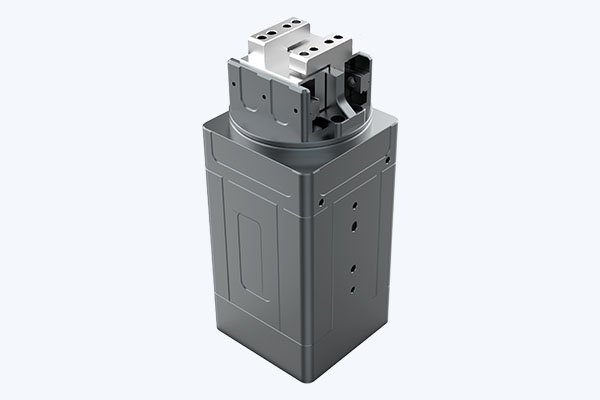
Modern manufacturing floors demand more than simple pick-and-place operations. As product designs grow complex and assembly lines diversify, robotic systems must handle components from multiple angles, without slowing production. This is exactly where a rotary gripper steps in. Combining rotation with gripping in a single compact unit, these devices allow robots to orient parts precisely before placing them.
From electronics assembly to food packaging and medical device manufacturing, rotary grippers are quietly transforming what automated systems can achieve. This blog explores how these mechanisms work, why industries are embracing them, and what makes them a smart investment for modern automation setups.
Table of Contents
Why Multi-Angle Part Handling Is the Real Challenge in Robotic Automation
Standard robotic grippers excel at moving objects from point A to point B. But real production environments often require components to be repositioned, flipped, or rotated mid-process. Without an integrated rotation capability, manufacturers must add extra robotic axes or manual intervention, both costly and time-consuming.
A rotating gripper solves this by embedding angular motion directly into the end-of-arm tooling. The robot arm handles linear movement while the gripper independently manages orientation. This division of tasks simplifies programming, reduces cycle times, and improves overall throughput without adding mechanical complexity to the robot itself.
1. Reducing Robotic Axes Without Sacrificing Flexibility
Fewer robot axes mean simpler control systems. Rotary grippers take on the angular workload, letting engineers design leaner robotic cells.
2. Enabling Precise Part Orientation at the End-Effector
By handling rotation at the gripper level, engineers achieve fine angular control that would otherwise require high-cost multi-axis robots.
3. Streamlining Assembly Line Programming
When orientation is managed locally at the gripper, programmers write simpler motion paths for the robot arm, cutting setup time significantly.
4. Supporting High-Mix Production Environments
In facilities producing multiple product variants, grippers that rotate on demand adapt quickly without retooling the entire robotic cell.
How Rotary Grippers Actually Work: Mechanisms and Core Design Principles
At its core, a rotary gripper integrates two functions: a gripping jaw mechanism and a rotary actuator. These may be powered pneumatically or electrically, depending on application needs. The gripper clamps the workpiece, rotates it to the desired angle, and releases, all within a single programmed sequence.
The rotary actuator is typically a vane-type or rack-and-pinion design that converts energy input into precise angular displacement. Modern units offer rotation angles ranging from 90° to 360°, with some advanced models providing programmable intermediate stops for complex assembly tasks.
1. Jaw and Actuator Integration in a Single Housing
Combining the jaw and actuator within one compact body reduces the weight on the robot flange and simplifies the overall end-of-arm tooling architecture.
2. Vane-Type vs. Rack-and-Pinion Rotation Mechanisms
Vane designs offer smooth, low-shock rotation ideal for fragile parts. Rack-and-pinion configurations deliver higher torque and better repeatability for heavier workpieces.
3. Angular Positioning and Repeatability Tolerances
Top-tier rotary grippers achieve angular repeatability within ±0.05°, ensuring consistent part placement across thousands of cycles in precision assembly applications.
4. Gripping Force and Torque Balancing
Proper engineering ensures gripping force remains stable during rotation, preventing part slippage caused by centrifugal effects at higher rotational speeds.
Pneumatic vs. Electric: Choosing the Right Rotary Gripper Technology
The two dominant drive technologies for rotary grippers, pneumatic and electric, each carry distinct advantages. The right choice depends on production environment, cycle speed, required precision, and infrastructure availability.
1. Understanding the Pneumatic Rotary Gripper for High-Speed Tasks
A pneumatic rotary gripper suits applications demanding fast cycle times and robust force. Compressed air drives rapid actuation, making it ideal for high-volume production lines where speed is the priority.
2. Advantages of the Pneumatic Rotating Gripper in Harsh Environments
A pneumatic rotating gripper is naturally resistant to dust, moisture, and temperature extremes, making it reliable in foundries, food processing lines, and outdoor automation systems.
3. How a Rotary Pneumatic Gripper Simplifies Maintenance
The mechanical simplicity of a rotary pneumatic gripper means fewer electronic components to service. Maintenance teams appreciate straightforward seal replacements and standard pneumatic diagnostics.
4. Why the Electric Rotary Gripper Wins on Precision
An electric rotary gripper offers programmable angular positioning, quiet operation, and energy efficiency. It excels in cleanroom environments and applications where intermediate stop angles are frequently required.
5. Evaluating Cost, Energy, and Infrastructure Factors
Pneumatic systems require compressor infrastructure; electric models need only power and signal cables. Total cost of ownership comparisons should consider energy consumption, maintenance cycles, and installation complexity.
Key Industries Leveraging Rotary Grippers for Smarter Automation
Rotary grippers appear across a surprising range of sectors. Wherever components need repositioning during automated handling, these devices add measurable value. Industries as diverse as electronics, medical devices, food packaging, and automotive manufacturing rely on them daily.
1. Electronics and Semiconductor Assembly Applications
Tiny components must be placed with exact angular alignment on circuit boards. Rotary grippers deliver the micro-level precision these delicate assemblies demand.
2. Medical Device and Implant Manufacturing
Orthopedic implants and surgical instruments require multi-orientation machining. Rotary grippers enable consistent repositioning between machining stations.
3. Food Packaging and Consumer Goods Lines
Fragile items like baked goods or cosmetics must be oriented and placed without damage. Gentle rotary gripping ensures intact, shelf-ready products every cycle.
4. Automotive Component Handling and Sub-Assembly
Connectors, fasteners, and structural components often require specific angular placement. Rotary grippers handle this efficiently within high-speed automotive assembly cells.
How SCHUNK Brings Engineering Depth to Rotary Gripper Applications
SCHUNK approaches automation with this precise mindset. With extensive expertise across toolholding, workholding, gripping technology, and automation technology, SCHUNK’s specialists develop solutions that address the full complexity of production environments, not just individual component needs.
For engineers exploring gripping systems that integrate with broader rotary motion assemblies, understanding rotary feedthrough technology becomes equally important, enabling the transmission of pneumatic, electrical, or hydraulic signals through rotating joints without limiting the range of motion.
Conclusion
Rotary grippers have moved from niche components to essential tools in modern robotic automation. By combining gripping and rotation in a single unit, they simplify robot design, reduce cycle times, and unlock multi-angle part handling that rigid systems simply cannot match.
Whether the application calls for the speed of a pneumatic solution or the programmable precision of an electric model, today’s options cover virtually every industrial need. As automation continues evolving toward greater flexibility and tighter tolerances, rotary grippers will remain at the heart of smarter, more capable robotic cells, enabling manufacturers to do more with less, faster and more reliably than ever before.


