

Position feedback is a foundational requirement in industrial automation. Whether controlling linear actuators, monitoring rotary motion, or verifying end positions, machines depend on sensors that can report movement accurately and consistently. Over time, however, many automation failures trace back not to control logic, but to sensing technologies that were poorly matched to real operating conditions.
Industrial environments are rarely clean, static, or forgiving. Dust, vibration, temperature variation, misalignment, and long duty cycles all place stress on sensing devices. As a result, engineers and system designers often face a practical comparison: optical sensors that offer high resolution under controlled conditions, mechanical devices that are simple but wear over time, and magnetic sensors that trade extreme precision for robustness. Understanding where magnetic position sensors offer clear advantages helps explain why they are increasingly favored in industrial automation systems.
Table of Contents
How Magnetic Position Sensors for Industrial Automation Differ From Other Sensing Technologies
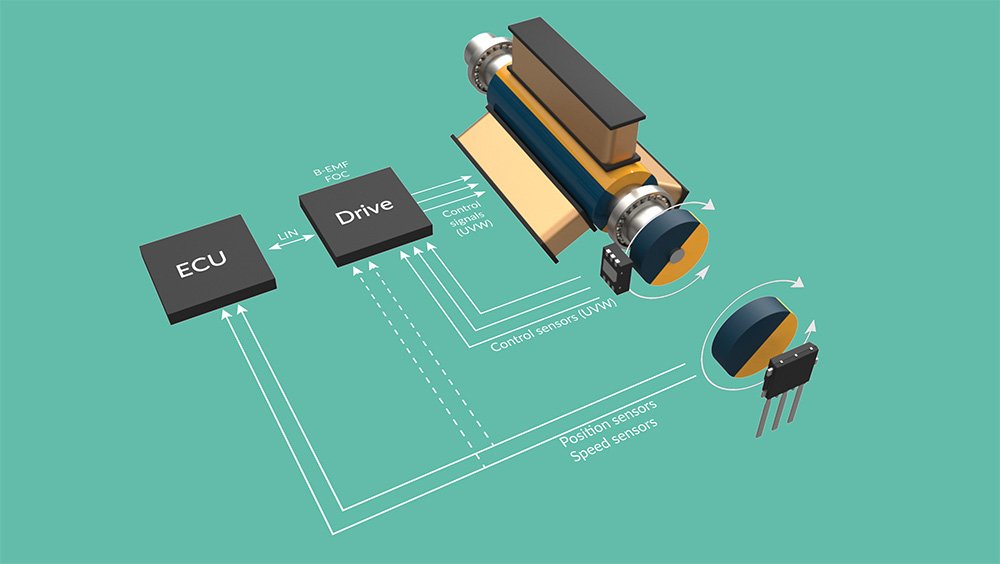
Magnetic Position Sensors for Industrial Automation determine position by detecting changes in a magnetic field rather than relying on direct physical contact or optical visibility. A magnet is mounted on the moving component, and the sensor interprets variations in the magnetic field as position changes. This basic principle leads to several practical differences when compared with optical and mechanical alternatives.
The most significant distinction is that magnetic sensing does not depend on line-of-sight or mechanical engagement. This allows magnetic sensors to function reliably in environments where dirt, vibration, or slight misalignment would compromise other technologies.
Optical Position Sensors: Strengths and Practical Limitations
Optical sensors and encoders are widely used in automation, particularly in applications that demand very high resolution. They work by detecting interruptions or reflections of light, often using finely patterned disks or scales.
Their strengths include:
- High positional resolution
- Precise repeatability under controlled conditions
- Well-established use in precision machinery
However, optical sensors have limitations that become apparent in industrial settings.
Sensitivity to Contamination
Optical systems depend on clean optical paths. Dust, oil mist, moisture, or residue can interfere with light transmission or reflection.
In practice, this means:
- Performance can degrade gradually without obvious failure
- Frequent cleaning may be required
- Harsh environments reduce reliability
Magnetic sensors are unaffected by visual contamination, giving them a clear advantage in dirty or wet environments.
Alignment and Mechanical Tolerance
Optical encoders often require precise alignment between moving and stationary parts. Small shifts due to vibration or thermal expansion can introduce errors.
Magnetic sensors tolerate:
- Minor misalignment
- Mechanical movement over time
- Less rigid mounting requirements
This tolerance simplifies installation and reduces long-term drift.
Mechanical Position Sensors: Simplicity With Wear-Related Tradeoffs
Mechanical position sensors, such as limit switches and potentiometers, are among the oldest sensing technologies in industrial use. They rely on physical contact between moving components.
Their appeal lies in:
- Simple operating principles
- Low initial complexity
- Direct physical interaction with motion
Despite these advantages, mechanical sensing introduces inherent limitations.
Wear and Degradation Over Time
Physical contact leads to wear. Springs fatigue, contacts erode, and moving parts loosen.
As a result:
- Accuracy degrades gradually
- Failure modes are often unpredictable
- Maintenance frequency increases
Magnetic sensors avoid these issues entirely by operating without contact.
Limited Suitability for Continuous Measurement
Many mechanical sensors are best suited for discrete detection rather than continuous position feedback.
In contrast, magnetic sensors can provide:
- Continuous position measurement
- Stable output over long cycles
- Consistent performance without mechanical fatigue
This makes them more suitable for modern closed-loop control systems.
Environmental Robustness as a Key Advantage
Industrial automation often operates in conditions far removed from laboratory environments. Sensors must perform reliably despite exposure to vibration, temperature shifts, moisture, and airborne contaminants.
Magnetic position sensors offer clear advantages because:
- Magnetic fields are not obstructed by dust or oil
- Sealed designs protect internal electronics
- Performance remains stable across temperature ranges
This robustness reduces both unplanned downtime and routine maintenance.
Reliability in High-Vibration Applications
Vibration is a common challenge in industrial machinery, especially in material handling, packaging, and heavy manufacturing.
Optical systems may suffer from:
- Signal instability due to vibration
- Alignment drift over time
Mechanical systems may experience:
- Accelerated wear
- Contact bounce or fatigue
Magnetic sensors maintain stable output because:
- They do not rely on precise mechanical alignment
- There is no physical contact to degrade
This stability is a major reason they are used in mobile equipment and heavy-duty machinery.
Long-Term Stability and Reduced Maintenance
One of the most practical advantages of magnetic position sensors is long-term stability. Once installed and configured, they tend to maintain consistent behavior over extended periods.
This stability supports:
- Predictable system performance
- Reduced recalibration requirements
- Lower maintenance workload
In contrast, optical and mechanical sensors often require more frequent attention to maintain accuracy.
Installation Flexibility and Design Freedom
System designers value components that simplify integration. Magnetic sensors offer flexibility that reduces mechanical constraints.
They allow:
- Greater tolerance in mounting position
- Compact or enclosed designs
- Easier retrofitting into existing equipment
Optical systems, by comparison, often impose tighter mechanical and spatial requirements.
Performance Tradeoffs and Realistic Expectations
Magnetic position sensors do not replace all other technologies. Optical encoders still dominate applications requiring extremely high resolution, and mechanical switches remain useful for simple, discrete detection.
However, magnetic sensors are often preferred when:
- Environmental conditions are harsh
- Moderate accuracy is sufficient
- Reliability and uptime matter more than fine resolution
This balance aligns well with many industrial automation use cases.
Role in Closed-Loop Control Systems
Modern automation increasingly relies on closed-loop control, where feedback continuously adjusts system behavior. Magnetic sensors provide reliable position data that supports this approach.
They contribute by:
- Delivering consistent feedback to PLCs and controllers
- Supporting smooth motion control
- Reducing false readings caused by contamination
Reliable feedback improves both performance and safety.
Compatibility With Industrial Control Platforms
Magnetic position sensors are designed to integrate with standard industrial control systems. Their outputs are compatible with common PLC input modules and motion controllers.
This compatibility:
- Simplifies system design
- Supports standardization across equipment
- Eases replacement and scaling
Standardization reduces long-term operational complexity.
Human Factors and Operator Confidence
Operators and maintenance teams rely on sensor data to understand machine behavior. Sensors that produce erratic or ambiguous signals undermine confidence.
Magnetic sensors support confidence by:
- Providing stable, predictable readings
- Reducing unexplained signal variation
- Supporting intuitive understanding of motion
Confidence in measurement reduces unnecessary intervention and error.
Understanding the Technology Context
Position sensing technologies are part of a broader discipline of industrial automation and control. General overviews of sensing and automation principles, such as those outlined in the Wikipedia article on industrial sensors, help explain why different technologies coexist and are selected based on application needs rather than theoretical performance alone.
Magnetic sensing fits within this context as a practical solution shaped by real-world constraints.
Avoiding Over-Specification in Sensor Selection
Over-specifying sensors can introduce unnecessary cost and complexity. Choosing the highest-resolution option is not always the best engineering decision.
Magnetic position sensors are often the right choice when:
- Durability outweighs ultra-high precision
- Maintenance access is limited
- Environmental exposure is unavoidable
Matching sensor capability to actual requirements improves overall system reliability.
Supporting Incremental Automation and Legacy Systems
Many facilities operate mixed-generation equipment. Magnetic sensors integrate well into both new and existing systems without forcing architectural changes.
They support incremental upgrades by:
- Working with legacy controllers
- Requiring minimal infrastructure changes
- Improving measurement reliability without disruption
This adaptability is valuable in real industrial settings.
Conclusion: Why Magnetic Sensing Often Wins in Industrial Environments
Magnetic position sensors for industrial automation offer clear advantages over optical and mechanical alternatives in environments where contamination, vibration, and long operating cycles are unavoidable. Their non-contact operation, environmental tolerance, and long-term stability address many of the failure modes that affect other technologies.
While no single sensing method fits every application, magnetic sensors occupy a critical space where reliability, simplicity, and consistency matter most. By understanding these comparative advantages, engineers and system designers can make more informed decisions that align sensing technology with real operational demands rather than idealized conditions.