

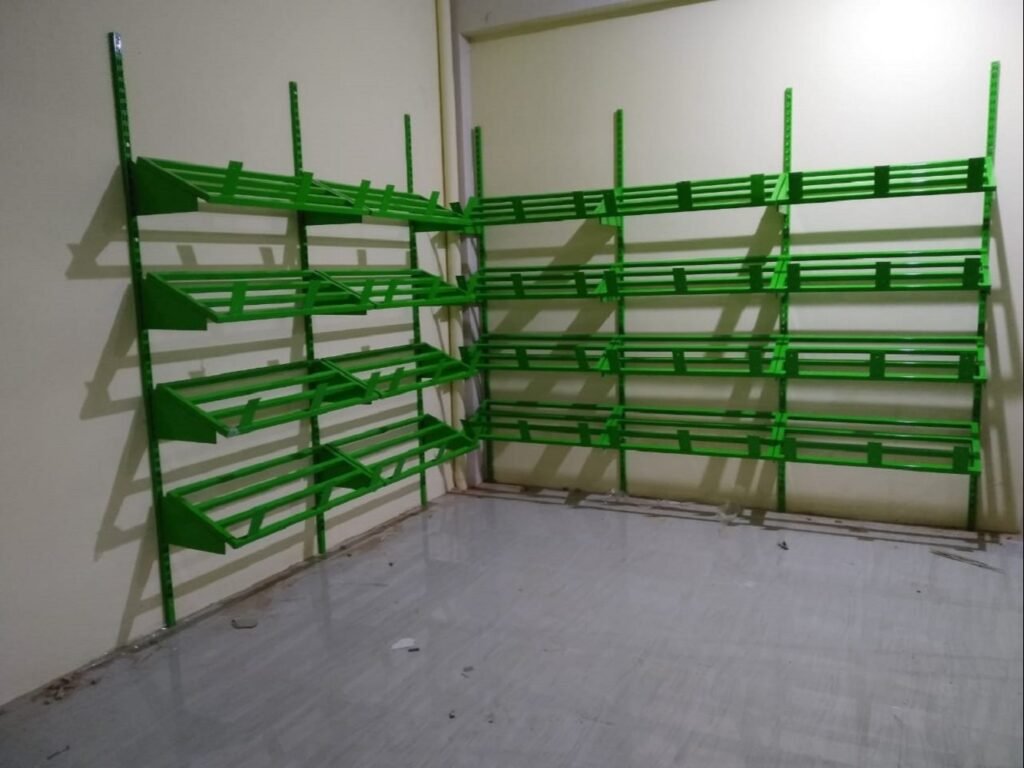
Vegetable handling is one of the most operationally demanding parts of food retail and distribution. Unlike packaged goods, vegetables arrive in mixed conditions, move quickly through facilities, and deteriorate when storage systems fail to support airflow, access, and rotation. In Chennai, these pressures are intensified by heat, humidity, and high daily volumes moving through wholesale markets, distribution centers, and modern retail stores.
For retailers and distributors, tray rack systems are not just fixtures. They shape how produce is received, stored, rotated, cleaned, and replenished. Choosing the right manufacturing partner therefore affects daily efficiency, waste levels, staff workload, and long-term operating costs. This guide focuses on what buyers should understand before sourcing tray rack systems in Chennai and how local manufacturing fits into real operational needs.
Table of Contents
What a Vegetable Tray Rack Manufacturers in Chennai Guide Covers in Practical Terms
A vegetable tray rack manufacturers in chennai guide is not about comparing catalogs or finishes. It is about understanding how tray rack systems support produce flow under real conditions. Tray racks divide vegetables into shallow, accessible layers, reducing pressure damage and making movement predictable in both backroom and front-of-house environments.
Manufacturers in Chennai operate close to the realities of local produce handling. They see how vegetables arrive from mandis, how quickly stock turns in retail, and how often racks are cleaned or repositioned. This proximity influences design decisions in ways that generic systems often miss.
For buyers, the value lies in aligning rack design with how produce actually moves through their operations.
Why Tray-Based Storage Is Central to Produce Operations
Vegetables vary widely in size, weight, moisture content, and sensitivity to handling. Deep stacking concentrates weight, restricts airflow, and hides aging stock. Tray-based systems address these problems by limiting stack depth and improving visibility.
Tray racks support produce handling by:
- Reducing compression damage from vertical weight
- Improving airflow around individual items
- Making inspection and rotation easier
- Allowing selective access without disturbing other stock
For high-turnover environments, these benefits translate directly into lower waste and faster handling.
Chennai’s Climate and Its Impact on Storage Design
Chennai’s warm and humid climate places consistent stress on produce storage systems. Moisture buildup accelerates spoilage, while frequent cleaning introduces water exposure to rack surfaces and joints.
Local manufacturers account for these conditions through:
- Corrosion-resistant materials and coatings
- Slotted or perforated trays that allow drainage
- Designs that prevent water pooling
- Smooth surfaces that tolerate regular washdowns
These design choices are not optional features. They are responses to daily environmental exposure that affect how long racks remain usable and hygienic.
Retail Backrooms: Where Efficiency Is Won or Lost
In retail settings, the backroom functions as a staging area rather than long-term storage. Produce arrives, is sorted, and moves to the floor quickly. Without structured storage, backrooms become congested and rotation discipline breaks down.
Tray rack systems bring order by creating defined storage zones. Each tray acts as a handling unit that can be moved independently, supporting faster replenishment cycles.
Well-designed backroom racks help retailers:
- Separate incoming and outgoing stock
- Maintain clear first-in, first-out handling
- Reduce time spent restacking
- Keep aisles clear during peak hours
Manufacturers familiar with retail workflows design racks that fit these patterns instead of disrupting them.
Front-of-House Display Support
In modern supermarkets, display consistency matters. Customers expect clean, organized produce sections that are easy to browse. Tray racks support this by standardizing presentation while making replenishment efficient.
Effective tray rack designs allow:
- Uniform display heights
- Clear visibility of produce
- Faster restocking with minimal disruption
- Reduced clutter from crates or loose boxes
Manufacturers often adjust tray angles, spacing, and rack dimensions to match store layouts and customer flow, ensuring that infrastructure supports the retail experience without drawing attention to itself.
Warehouse and Distribution Center Use Cases
Distributors handling vegetables face different challenges from retailers. Bulk quantities arrive in short windows and must be sorted, staged, and dispatched efficiently. Floor stacking increases damage risk and complicates sanitation.
Tray racks introduce structure by lifting produce off the floor and organizing it into manageable units. In distribution environments, this supports:
- Faster picking and sorting
- Clear zoning by product type
- Reduced spoilage from uneven stacking
- Easier cleaning and inspection routines
Manufacturers designing for warehouses often emphasize load stability and vertical capacity while preserving access.
Material Selection and Load Durability
Tray racks in produce environments are subjected to continuous load variation. Trays are filled, emptied, and refilled multiple times a day. Weak frames or poor welds lead to deformation, misalignment, and safety issues.
Manufacturers in Chennai typically consider:
- Expected daily load cycles
- Weight variation across vegetable types
- Exposure to moisture and cleaning agents
- Long-term structural stability
Durable construction reduces maintenance interruptions and avoids premature replacement, which is especially important in high-volume operations.
Supporting Hygiene and Food Safety Practices
Food handling infrastructure must support sanitation rather than hinder it. Tray racks that trap debris or retain water increase hygiene risk and cleaning time.
Effective designs support hygiene by:
- Keeping produce off the floor
- Allowing airflow and drainage
- Providing smooth, cleanable surfaces
- Reducing contact between batches
Guidance from the Food and Agriculture Organization of the United Nations on post-harvest handling emphasizes that structured storage and airflow are key to reducing losses and maintaining quality in fresh produce supply chains. Tray-based rack systems align with these principles when designed appropriately.
Adaptability Across Store Formats and Volumes
Chennai’s retail ecosystem includes small neighborhood stores, large-format supermarkets, and wholesale outlets. Storage needs vary widely across these formats, but consistency in handling practices is still valuable.
Local manufacturers often offer:
- Modular rack components
- Adjustable tray spacing
- Stackable configurations
- Options for fixed or mobile installations
This adaptability allows businesses to standardize systems while adjusting layouts as volumes change or new locations open.
Labor Efficiency and Ergonomic Considerations
Staff interact with tray racks continuously. Poor ergonomics slow handling and increase fatigue, especially during long shifts or peak periods.
Thoughtful rack design supports:
- Access at practical working heights
- Reduced bending and lifting strain
- Stable tray movement under load
- Clear movement paths around racks
Over time, these factors improve productivity and reduce error rates in fast-moving environments.
Local Manufacturing and Operational Responsiveness
Sourcing from manufacturers based in Chennai offers practical advantages beyond initial design. Faster communication, easier customization, and quicker turnaround times matter when operations change.
Local manufacturing supports:
- Custom sizing for existing spaces
- Faster modifications during expansion
- Easier alignment with local hygiene standards
- Ongoing support without long lead times
This responsiveness helps retailers and distributors adapt infrastructure as their operations evolve.
Cost Control Through Fit-for-Purpose Systems
Upfront cost is only one part of the investment equation. Poorly suited racks often lead to higher long-term costs through waste, repairs, and labor inefficiencies.
Fit-for-purpose tray racks help control costs by:
- Reducing product damage
- Lowering cleaning and maintenance effort
- Supporting faster handling
- Extending service life
Manufacturers who design with operational realities in mind help buyers avoid hidden expenses.
Key Questions Buyers Should Ask Manufacturers
Before committing to a supplier, retailers and distributors should assess how well a manufacturer understands produce operations.
Useful evaluation points include:
- Experience with food and produce environments
- Willingness to customize designs
- Material choices suited to humidity
- Ability to support scaling volumes
These questions shift the focus from price alone to long-term operational fit.
Conclusion: Using Infrastructure to Support Produce Performance
Vegetable handling success depends on systems that quietly support daily work. Tray racks influence how produce flows, how staff operate, and how quality is preserved under constant movement.
A well-informed vegetable tray rack manufacturers in chennai guide helps retailers and distributors look beyond surface specifications and focus on how infrastructure performs under real conditions. By choosing manufacturers who understand local climate, volume pressure, and handling workflows, businesses invest in systems that support efficiency, hygiene, and consistency over time.