

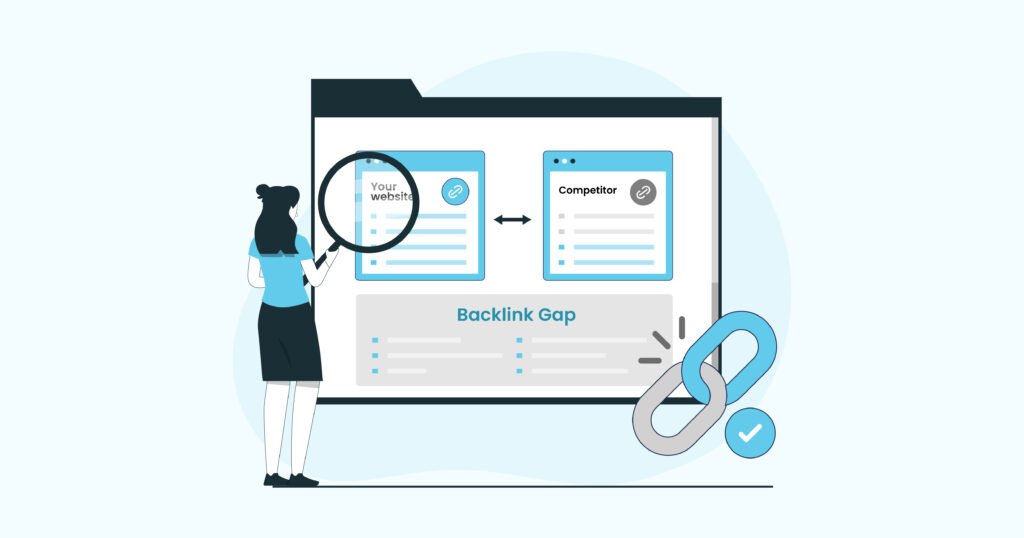
For a SaaS company, a strong backlink profile is not just a count of websites linking to its domain. The links that matter most help the right pages get discovered by people who may become customers. A page level backlink gap analysis makes that distinction clear: it compares the backlinks earned by specific pages on your site with those pointing to relevant competitors’ pages, then identifies realistic opportunities to close the gap.
This approach is more useful than chasing a rival’s overall link total. A competitor may have thousands of links to its homepage, while your product comparison page needs only a handful of relevant links to become more visible. A useful page-by-page SaaS backlink strategy starts with the pages that support business goals and works outward from there.
Table of Contents
Start With Pages That Have a Job to Do
Before comparing backlinks, decide which pages deserve attention. A SaaS site may have product and feature pages, integration pages, pricing information, use-case pages, and educational content. Each serves a different purpose. A guide may attract links from industry publications, while an integration page may be useful to partners and customers evaluating software options.
Choose a manageable set of priority pages and record what each one is meant to accomplish. For example, does it explain a product capability, help buyers compare solutions, or answer a question that regularly comes up during sales conversations? This keeps link building tied to an actual business need rather than a vanity metric.
Compare Like With Like
The analysis is only as sound as the pages selected for comparison. Identify competing pages that address the same topic, search intent, or buyer need. Comparing your pricing page with a competitor’s popular blog post is unlikely to reveal a useful gap. A feature page should be assessed against equivalent feature pages, and an educational resource against competing resources on the same subject.
For each page, note the number and quality of referring domains, the relevance of those domains, and the context in which links appear. A link from a respected industry site that discusses the same problem can be more valuable than several unrelated links. Also look for patterns: Are competitors earning links through original research, practical templates, expert commentary, or partner relationships?
Turn the Gap Into a Prioritised List
A list of missing links is not yet a plan. Assess each opportunity by asking whether the linking site is relevant, whether its audience could plausibly care about your page, and whether you can offer a useful reason to link. Then consider the effort required. A credible data study may take weeks to prepare, while a clear partner resource might be quicker to produce.
One simple scoring method is to rate each opportunity for relevance, potential business value, and execution effort. Give the strongest priority to opportunities that are relevant and achievable, rather than treating every competitor backlink as something to copy. Some links may be incidental, outdated, or tied to a relationship your company cannot replicate.
Improve the Page Before Outreach
Outreach works best when the destination page is worth recommending. Check whether it answers the reader’s question quickly, explains the product or topic clearly, and offers something distinctive. That might be a worked example, a comparison table, original findings, or a concise explanation of a complicated process. If a page is thin or difficult to navigate, a potential publisher has little reason to send readers to it.
Make sure the claims are supportable and the information is current. For pages touching on finance, security, or legal obligations, be especially careful about accuracy and appropriate review. A link-building campaign can bring more attention to a page, but it cannot substitute for sound information or clear caveats.
Build a Repeatable Outreach Process
For each priority page, create a short plan that identifies likely publishers, the value you can offer their readers, and the person responsible for follow-up. Personalise outreach around the recipient’s work rather than sending the same generic request to a large list. Possible approaches include offering a qualified expert for a relevant article, sharing original research, or suggesting a resource that genuinely fills a gap in existing coverage.
Some teams use freelancers for research, writing, design, or outreach support. The choice of hiring model can affect both costs and expectations. Before assigning work, define deliverables, deadlines, revision limits, and how success will be assessed. Understanding the problems with freelance bidding can help a business decide whether open bids or a clearly scoped fixed-price arrangement better fits its project. Osdire, for example, is a marketplace where buyers can hire across categories including writing, design, and marketing, with flat pricing and payment held during an order until the work is approved. Whatever route you choose, keep ownership and access to research, outreach records, and finished assets clear in the agreement.
Measure Progress Beyond Link Counts
Track new referring domains for each page, but also monitor whether the page earns relevant organic visits, appears for useful searches, and contributes to enquiries or product evaluations. Results take time, and a link does not guarantee a ranking change. Recording the starting point and reviewing progress at consistent intervals makes it easier to learn which tactics are producing meaningful outcomes.
Repeat the analysis as your product, competitors, and content library change. A page-level view helps teams spend limited time and budget where they can plausibly make a difference. Instead of trying to imitate every competitor link, focus on earning relevant attention for pages that support the next step in a buyer’s decision.