


Smart travelers have long understood that the difference between a forgettable trip and a genuinely transformative one often comes down to the granular, local details. Knowing which neighborhood to stay in, which bar pours an honest drink, and which back-street guesthouse has the kind of host who will change your entire itinerary for the better. Seeking out reliable accommodation and bar information from local sources is a step you shouldn’t skip, and here’s why:
Table of Contents
You Truly Experience the Destination, Not a Curated Version of It
Mass-market travel platforms are built on popularity, and popularity has a flattening effect. The accommodations that dominate search results are the ones with the most reviews, which tend to be the ones that cater to the broadest possible audience.
Local accommodation is a different proposition entirely. A family-run pensione in a Sicilian hill town, a converted shophouse in Penang’s old quarter, or a bed tucked above a working-class café in Buenos Aires are places that have character precisely because they’re not designed with a global audience in mind. They reflect the tastes, habits, and priorities of the people who built them. For travelers seeking a balance between this local authenticity and high-end comfort, looking toward the likes of Dunes Beach Resort accommodation serves as a great example of how a property can offer premium glamping while remaining deeply connected to its specific coastal environment.
The same logic applies to bars. A neighborhood tavern that locals rely on for after-work drinks operates under completely different incentives than a rooftop cocktail lounge designed to photograph well. Local bars are mirrors. They show you how people actually socialize, what they drink, what they argue about, and what makes them laugh. You won’t find this in a curated city guide, but you will find it if you ask the right person at the right moment. Good hotel information, the kind that goes beyond star ratings and amenity lists, works exactly the same way: it comes from people, not platforms.
Protect Your Budget Without Sacrificing Quality
There’s a stubborn myth that the best travel experiences are expensive ones. In reality, the most overpriced options in any destination tend to be the ones most visible to outsiders. Centrally located hotels charge a premium for their postcode. Tourist-facing bars mark up their drinks because they know their customers will never return. The pricing model is built on transience.
Travelers who invest time in sourcing genuine local accommodation and bar information consistently stretch their budgets further by bypassing the tourist markup entirely. For instance, when traveling with a group, it’s worth asking whether a group rate is available at smaller, independently run properties or private villas. Many will negotiate directly in ways that large chains simply won’t.
Always confirm reservation cutoff dates early, particularly during festivals or high season, when even modest guesthouses fill weeks in advance. A guesthouse two streets off the main square might cost half the price of the one on the main square and offer a quieter room, a more helpful host, and a breakfast that wasn’t pre-packaged. A bar where the regulars drink costs less per pour and delivers more atmosphere than the one with the neon sign and the laminated cocktail menu.
Smart travelers understand that the local economy and the tourist economy often run in parallel, and that crossing from one to the other almost always improves both the experience and the value. This dynamic plays out especially clearly in dense, multi-city regions. In the San Francisco area, for instance, savvy visitors learn quickly that the most memorable meals, stays, and bars are rarely found in the neighborhoods that rank highest in guidebooks.
It Opens Doors That Would Otherwise Stay Closed
Local accommodation hosts, by their nature, have networks. They know the butcher who also makes wine, the hiking guide who doesn’t advertise, the restaurant that only opens on Thursdays. They want guests who appreciate these things, and when they sense that you do, they share. A well-connected host can also point you toward nearby accommodation for friends joining later in the trip, saving everyone the frustration of searching blind in an unfamiliar city, and will often share location links and hotel addresses that don’t appear on any major booking platform.
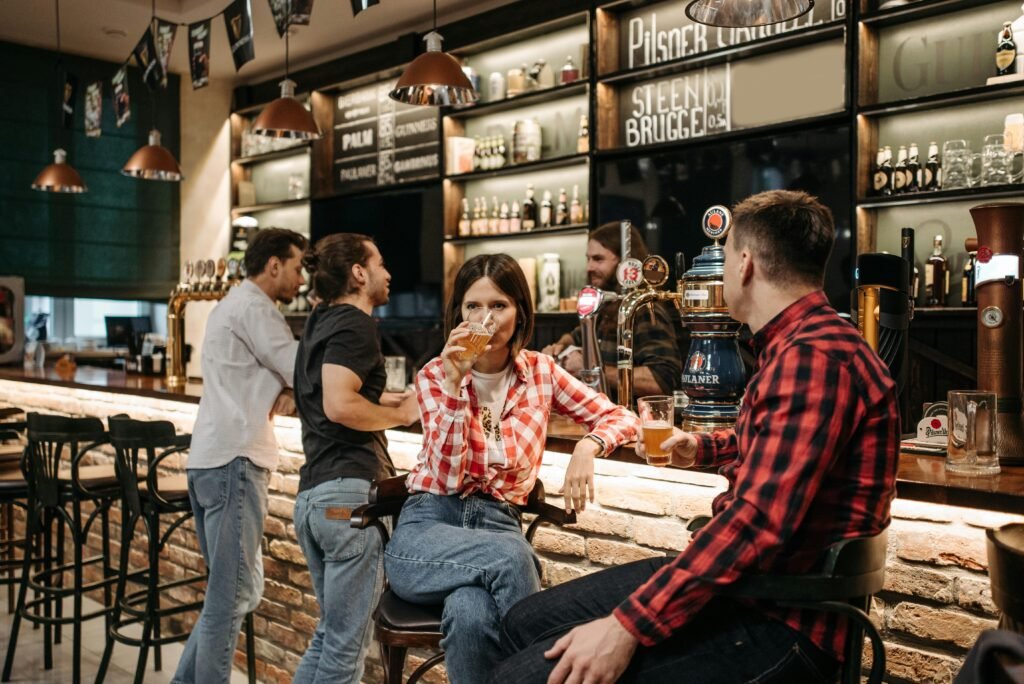
Bars operate as the social infrastructure of any neighborhood. A regular at the bar is never fully a stranger; they belong, at least temporarily, to a community. This is how travelers end up at private gatherings, spontaneous road trips, and fishing boats at dawn.

Contribute Meaningfully to the Places You Visit
Tourism, at scale, has an extraction problem. Money flows into destinations but often fails to reach the people who actually live there.
Understanding accommodations history (who built them, who has kept them running, how they’ve evolved alongside their neighborhood) often makes the stay feel far more intentional. Choosing local accommodation is a meaningful act of economic solidarity. When you pay a family-owned guesthouse, the money stays. It pays local salaries, funds school fees, and supports the neighborhood bakery where the owner buys breakfast supplies.
The same is true for an independent bar run by the person behind the counter. Your drink order is, in a small but real way, an investment in the continuity of that place and its culture.
Travelers making their way through regions like the San Diego area have found this principle particularly easy to act on, given how many of the most distinctive neighborhoods are anchored by exactly these kinds of independently owned, community-rooted businesses.
The Stories You Bring Home Are Entirely Your Own
Seeking out local accommodation and bar information is a commitment to the unpredictable. It means accepting that your trip will not look like anyone else’s social media feed. The hotel of your choice is a genuine choice, made with real information and personal intention rather than defaulting to whatever ranks highest in a search result.
On a side note, it pays to think ahead about accessibility. Travelers who use a mobility device or who have learning disabilities that affect how they process unfamiliar environments benefit especially from researching properties directly. Local hosts are far more likely to give honest, specific answers about physical access and sensory conditions than any standardized listing will.
Some destinations have begun making this easier through digitized documents and supporting documentation that hosts can share in advance, alongside clear testing accommodations policies for travelers who need structured support, so that guests arrive informed rather than uncertain. This is a welcome shift in places like the Anaheim area, where the sheer volume of visitors means that hosts who go the extra mile on accessibility and transparency stand out immediately.
Meanwhile, the bar you end up loving might not be photogenic. The guesthouse might have irregular Wi-Fi and a dog that sleeps on the stairs. But these are the details that survive in memory because they’re real, textured, unrepeatable. The traveler who leaves a destination with stories that genuinely surprise people is the traveler who understood that the best experiences are earned through attention, not just itinerary.
Conclusion
It’s almost always a question of how deeply you’re willing to engage with a place on its own terms. Seeking local knowledge is the fastest shortcut to that depth. The tools for this kind of research are everywhere: local forums, city-specific social groups, conversations with people who live where you are going, and the simple habit of asking questions when you arrive. The reward is a trip that feels genuinely earned, genuinely yours, and genuinely worth repeating.