

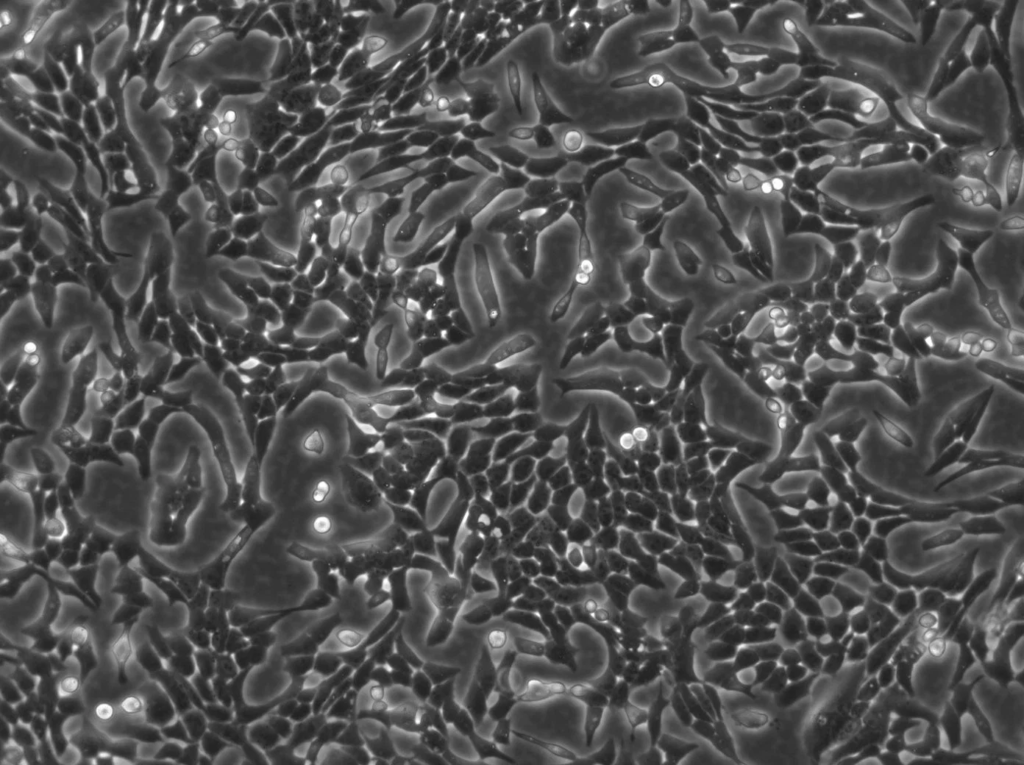
Few tools in virology have earned their reputation quite as quietly — or as durably — as the VERO cell line. Decades after researchers first cultured them, these unassuming kidney cells from the African green monkey continue to underpin some of the most consequential work in vaccine science. That longevity is not inertia. It reflects a set of biological and regulatory advantages that rival cell lines have yet to fully replicate.
Table of Contents
An Origin Story Worth Knowing
The VERO cell line was first established at Chiba University in Japan, and its trajectory from academic curiosity to industrial workhorse is closely tied to regulatory trust. It became the first continuous cell line approved by the World Health Organisation for the manufacturing of viral vaccines for human use — a milestone that set the template for how continuous cell lines are evaluated to this day. The first major large-scale application was the production of inactivated poliovirus vaccine, and the cell line gained formal FDA approval in the 1980s, after which it has been deemed nontumorigenic and safe to use within the range of 150 passages.
That regulatory history matters enormously in an industry where the path from bench to approved product can take years. Sponsors working with VERO cells are not starting from scratch with regulators — they are building on nearly four decades of accumulated safety data.
The Biology That Makes VERO So Useful
Regulatory pedigree alone would not sustain a cell line for this long. The real reason scientists keep returning to VERO is biological versatility. The cells are susceptible to infection by viruses from a remarkably wide range of families, including poliovirus from Picornaviruses, the rabies virus from Rhabdoviruses, and the influenza virus from Orthomyxoviruses. Critically, they also lack type 1 interferon production, which facilitates viral replication and makes them especially permissive hosts.
The practical consequence is a single platform that researchers can apply across multiple vaccine candidates without retooling the fundamental substrate. That breadth is why approved VERO cell-based vaccines already cover diseases including Ebola, Japanese encephalitis, poliomyelitis, rabies, rotavirus, and smallpox — and why COVID-19 vaccine candidates were also pursued using this platform.
For any team sourcing material to begin this kind of work, VERO Cells from a reliable supplier with documented provenance and passage history are a non-negotiable starting point. The quality of the substrate shapes every downstream result.
Regulatory Confidence and Quality Control
The WHO has gone further than simply approving the VERO line — it has established a certified master cell bank specifically for distribution to vaccine manufacturers. That standardised source exists precisely to reduce lot-to-lot biological variability and give regulators a fixed reference point. Among continuous cell lines used in vaccine production today — including MDCK, CHO, and PER.C6 — VERO holds the distinction of being both the first WHO-approved option and the most widely used for viral vaccine production over the past 25 years.
For quality and compliance teams, this matters at every stage of a programme. Batch records, comparability studies, and regulatory submissions are all simplified when the cell substrate carries an established dossier that inspectors worldwide already recognise.
Where Bioprocess Engineering Is Heading
No platform is static, and VERO research is actively evolving. The traditional adherent phenotype of VERO cells — grown in monolayers on flat surfaces — has always imposed a ceiling on productivity and created logistical complexity at scale. Recent work is addressing this directly.
A 2025 study published in npj Vaccines, involving researchers from Sanofi Vaccines and the University of Lyon, characterised a suspension-adapted VERO cell line and found a 30% increase in poliovirus production compared with standard adherent cultures. Separately, microcarrier-based bioreactor systems are already in commercial use, allowing high-density VERO culture within a stirred-tank format that reduces both labour input and contamination risk relative to stacked flasks.
These developments do not make the classic adherent VERO format obsolete — they extend it. Researchers working at smaller scale, in discovery or early characterisation phases, continue to rely on conventional monolayer culture precisely because the data generated is directly comparable with decades of published literature.
Practical Considerations for Research Teams
Choosing the right cell line is only one part of running a reliable viral research programme. A few principles consistently separate robust workflows from fragile ones:
- Passage discipline: VERO cells should be used within validated passage limits; working beyond these boundaries risks phenotypic drift that compromises reproducibility.
- Media selection: Low-serum or chemically defined formulations reduce lot-to-lot variability and simplify downstream analytics, an important consideration for any team eventually targeting regulatory submission.
- Scale planning: Teams should decide early whether their process will remain adherent or move to microcarrier or suspension formats, since that decision affects equipment, media optimisation, and the comparability data required for filing.
VERO cells have now supported vaccine manufacturing for more than 30 years, and millions of doses produced on this substrate are administered every year. The staying power of this cell line reflects something simple: when a biological tool is versatile, well-characterised, and trusted by regulators across multiple jurisdictions, switching away from it requires a compelling reason. For most viral research programmes, that reason has yet to materialise. The job of the VERO cell line, it turns out, is far from finished.