

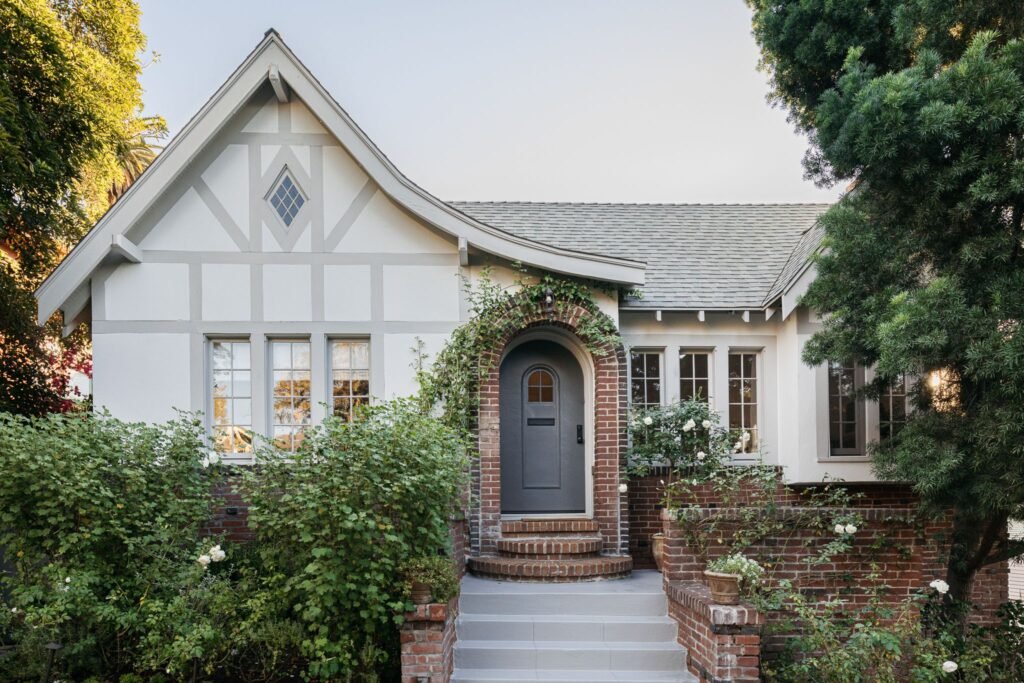
Whether you’re preparing to sell your home or aiming to build your dream house, understanding architectural types is a great first step. Though architecture is vast, you can pin down basic styles by learning more about different types.
Fortunately, most architectural styles have distinctive features and names, making it easier to identify your specific style. So, pick up a building design book or browse unique house floor plans to determine which architectural type you’re dealing with.
Read on to learn about six standard architectural features that can offer valuable insight into what style your home is.
Table of Contents
Rooflines
A roof is a valuable tool for evaluating home styles. Some homes have tall rooftops that dominate the home’s look, while others with dormers tend to indicate Cape Cod or Georgian styles.
Simpler roof lines may indicate a colonial or traditional ranch, while those with turrets and several peaks or valleys often belong to a Victorian or Queen Anne home.
Columns
Homes with columns tend to belong to a small group of architectural types. Greek Revival and Italianate homes often have large columns that create a focal point at the front door—but keep in mind that columns and posts are different structures.
Columns tend to be bulky and decorative, while posts are used for more structural purposes.
Angles
Older-style homes like Colonials, Georgians, and Greek Revivals are often rectangular with few additional angles.
However, home styles from the late 1800s, like Queen Anne and Victorians, have curves and angles often covered with gingerbread trim. Tudor, Craftsman, Dutch Colonial, and modern style homes also tend to have a variety of angles.
Age and era
Another important factor when determining the architectural style and type of homes is the time the house was built.
Homes in the early 1900s had fancier, more extravagant features, like Queen Anne and Cottage styles, while those in the mid-1900s were often mid-century modern, ranch, or contemporary. That said, you might also find Mediterranean styles from the early 1900s, too.
Coverings and materials
Though home structures can help determine architectural styles, materials and coverings are also great indicators of different architecture types. For example, contemporary homes usually have vinyl siding and other standard features, like faux stones or brickwork.
On the other hand, homes covered in stucco fall into a handful of categories. Tudor homes usually have plaster with wood accents and trims, but Mediterranean or Spanish-style homes also have stucco elements. Georgians and French Colonials usually have symmetrical brickwork on the front fascia.
Mid-century modern, craftsman, and traditional colonial homes almost always have wood clapboard siding in horizontal patterns. Mid-century modern can also have unique features like stone or brickwork, while contemporary homes usually combine natural elements like wood and brick.
Height
The home’s height can also dictate the architectural style. Ranches are single-story homes, while mid-century modern homes are often low to the ground, even if they have a second story or a split-level style.
Additionally, Victorian, Queen Anne, Tudor, and Gothic Revival homes have tall elements. In contrast, cottages, bungalows, and craftsman homes can be two stories, but they look like single-story homes from the street.
Wrapping up
Choosing an architectural style for your home can showcase your personality and style aesthetic. Knowing your favorite home style makes it easier to choose a home you will love for years to come.