

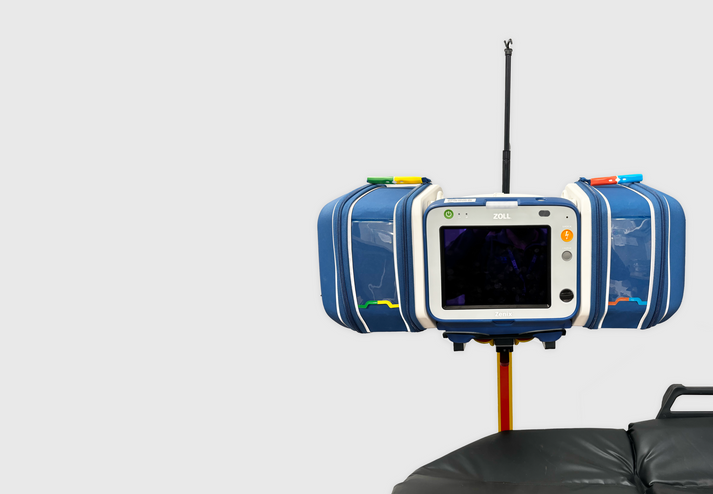
In emergency response operations, fast access to clinical equipment can support quicker on-scene assessment and more efficient decision-making. When a cardiac monitor is needed, responders should be able to reach, view and use it without delay or unnecessary movement inside the emergency response vehicle. But even the most advanced cardiac monitors only help when they are easy to access, securely positioned and properly integrated into the vehicle layout.
That’s where the cardiac monitor mount comes in. A good mount keeps your monitor stable during vehicle movement, visible at a glance and within arm’s reach, so you don’t waste a moment searching or adjusting equipment. However, a poorly chosen mount can slow you down, create hazards or risk equipment damage exactly when you can’t afford it.
In this buyer’s guide, you will walk through everything you need to know to choose the right cardiac monitor mount for your emergency response vehicle, supervisor SUV, command vehicle or community paramedicine unit.
This guide focuses on emergency response vehicle storage systems, not full ambulance storage systems, so teams can choose the right setup without confusion.
Table of Contents
Why Proper Mounting Matters
You might think a monitor is only a monitor, but placement inside your vehicle is an important operational factor. When arriving at a critical scene, reaching for your monitor should be automatic, not a guessing game.
Proper mounting ensures:
- Equipment stays secure during fast or bumpy rides.
- You can see readings instantly without leaning or adjusting.
- Responders can work efficiently without bumping into each other.
A well-positioned mount supports the crew without adding complexity. It doesn’t do the work for you, but it makes everything you do faster and more secure.
Types of Cardiac Monitor Mounts
Not all mounts are created equal. Choosing the right type depends on your emergency response vehicle setup and workflow. Here is a quick breakdown:
- Fixed mounts: Solid and stable, stay in one place. Great if you want zero movement.
- Swivel or Articulating Arms: Adjustable angles will allow you to position and set the monitor for multiple users.
- Portable clip-on mounts: Easy to move or transfer between emergency response vehicles, though less permanent.
All mounts have their own advantages and disadvantages; it is important to consider what is best for your team, vehicle and the type of emergency that you would encounter.
Key Features to Look For
When evaluating mounts, focus on practical, life-saving features. You want a mount that does its job without adding complexity. Look for:
- Stability and durability: It should hold the monitor steady on every ride.
- Adjustable angles and swivel: Make viewing and access easier for everyone in the vehicle.
- Check model compatibility: It needs to be compatible with your cardiac monitor model.
- Easy installation: Ease of setup and removal during emergency situations.
- Safety requirements: Confirm the mount supports applicable Canadian, provincial and Ministry safety expectations for secure equipment placement.
These features make your mount more than a holder; it becomes an essential part of your workflow.
How to Choose the Right Mount for Your Vehicle
Every vehicle layout is different. You need a mount that fits the space and works with your team’s movement. A poorly positioned mount can slow you down or create safety risks.
Keep these tips in mind:
- Place it where the responder has a clear line of sight to the screen.
- Avoid obstructing other equipment or pathways.
- Ensure it works well inside a supervisor SUV, command vehicle, community paramedicine vehicle or compact emergency response vehicle.
In Canada, emergency response vehicle upfitting should account for applicable Transport Canada requirements, provincial EMS guidelines, provincial first responder equipment standards, Ministry Standards and internal fleet safety policies.
Proper planning ensures your mount is ready when you need it most. Using the right cardiac monitor mount transforms your vehicle into a fully optimized emergency workspace, helping you act faster and more efficiently.
Maintenance and Longevity Tips
A mount is only effective if it stays reliable. Small issues like loose screws or worn joints can turn a trusted tool into a hazard. Keep it in top shape by:
- Checking locking mechanisms regularly.
- Inspecting stability after every few shifts.
- Cleaning and sanitizing surfaces to avoid contamination.
- Replace worn or damaged parts promptly.
A well-maintained mount keeps your monitor functional and your workflow smooth.
Benefits of a Well-Chosen Mount
Investing in the right mount is more than convenience; it improves response quality. With a properly installed cardiac monitor mount, you get:
- Faster access to critical readings in emergencies.
- Safer cabin conditions for response crew members.
- Reduced risk of equipment damage during vehicle movement and daily field use.
- Better organization inside smaller emergency response vehicles.
It also allows your team to focus entirely on on-scene clinical support instead of adjusting gear.
Practical Buyer’s Checklist
Before making a purchase, check for:
- Mount type (fixed, swivel or portable)
- Vehicle compatibility
- Adjustable and swivel features
- EMS compliance and safety certification
- Durability and stability
- Suitability for supervisor SUVs, command vehicles or community paramedicine units
This checklist keeps your selection focused on what truly matters: speed, safety and reliability.
Mounting Success: The Key to Efficient Cardiac Response
The right cardiac monitor mount doesn’t only hold equipment; it streamlines your workflow, minimizes delays and gives your team confidence on every call. When your monitor is stable, visible and accessible, you can act instantly rather than fumbling or repositioning gear.
For emergency response vehicles, especially smaller SUVs, command units and community paramedicine vehicles, the right mounting setup helps make the best use of limited space while keeping essential equipment close at hand. Every second saved supports faster on-scene assessment and more efficient emergency response operations. A thoughtful mount setup is an investment in efficiency, safety and emergency response operations.
For EMS leaders planning safer, more efficient emergency response vehicle storage systems, Rowland Emergency can help identify mounting and storage solutions tailored to real fleet requirements.