

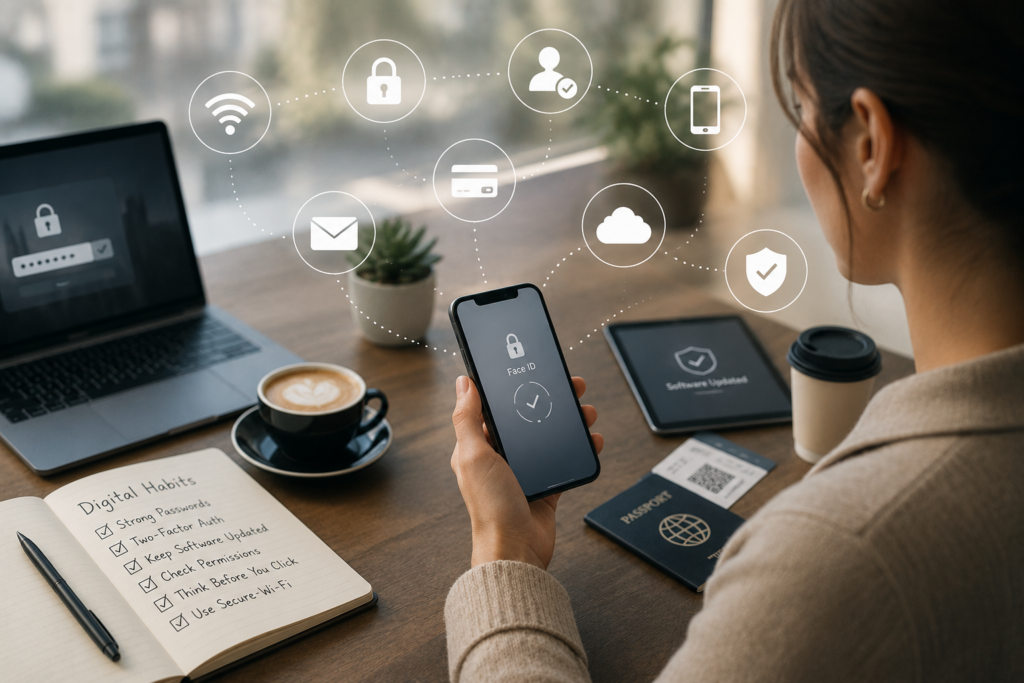
A decade ago, most people did not think much about digital privacy during an ordinary day.
They checked email, browsed websites, used social media, and connected to Wi-Fi without much hesitation. Online safety felt like something handled by IT departments, banks, or people who worked in technology.
That has changed.
Today, many people follow small digital routines without even noticing them. They unlock phones with Face ID, approve two-factor authentication prompts, avoid suspicious links, check app permissions, update software, scan QR codes more carefully, and think twice before joining unfamiliar Wi-Fi networks.
These habits may seem minor on their own. Together, they show how digital privacy has quietly become part of everyday life.
Table of Contents
Our Daily Routine Has Changed
Modern life is filled with digital actions that once felt unusual.
Paying for coffee with a phone, using a digital boarding pass, opening a hotel room with an app, saving passwords in a password manager, or approving a login from another device now feels normal. Even people who do not consider themselves tech-savvy are using tools that would have sounded advanced not long ago.
The shift did not happen all at once. It happened gradually, through convenience.
People adopted mobile wallets because they were faster. They accepted biometric logins because they were easier than typing passwords. They started using cloud storage because files needed to move between devices. They enabled two-factor authentication because more services began requiring it.
Over time, these choices became habits.
Privacy Became Part of Convenience
Most people do not wake up thinking about cybersecurity.
They think about getting through the day without trouble. They want their email to work, their payment app to be safe, their photos to sync, their bank account to stay protected, and their personal information to remain private.
That is why everyday privacy habits are so important. They do not need to feel technical to be useful.
A stronger password, a software update, or a quick check before clicking a strange link can make a difference. The goal is not to turn every person into a security expert. The goal is to make simple protective behavior feel as normal as locking a door before leaving home.
This is where digital privacy has become more personal. It is no longer only about companies protecting networks. It is also about individuals managing the small risks that come with living online.
Small Habits Add Up
The most effective digital habits are often the simplest.
Using unique passwords for important accounts, enabling multi-factor authentication, keeping apps updated, avoiding unknown attachments, and reviewing app permissions all help reduce everyday exposure.
Public Wi-Fi is another area where habits matter. People now connect from cafés, airports, hotels, schools, coworking spaces, shopping malls, and public venues. These networks are convenient, but they are not always as controlled as a private home connection.
Some people also choose a free VPN when using unfamiliar public Wi-Fi, making it one more small habit alongside other everyday privacy practices.
Services such as X-VPN provide one example of tools people include in their broader online privacy routine, especially when they want a simple way to protect browsing activity across different networks.
Digital Habits Will Keep Evolving
The next stage of everyday technology will likely create even more habits.
Passkeys are beginning to replace traditional passwords. Artificial intelligence tools are becoming part of work and search behavior. Smart devices are appearing in more homes. Digital IDs, cloud accounts, wearable devices, and connected cars are becoming more common.
Each new tool brings convenience. It also asks people to make small decisions about trust, access, privacy, and security.
That does not mean people need to be afraid of technology. It means digital awareness will continue becoming part of ordinary life.
Just as people learned to lock phones, recognize spam calls, and avoid suspicious emails, they will continue learning new routines for a more connected world.
The New Normal Is Quiet
The most interesting thing about digital habits is how quickly they disappear into the background.
Nobody thinks twice about unlocking a phone with a face scan. Few people are surprised when an app asks for a verification code. Updating software, declining unnecessary permissions, or checking a link before opening it now feels ordinary.
That is the quiet rise of everyday digital habits.
Privacy is no longer a separate topic reserved for experts. It is becoming part of how people shop, travel, work, communicate, and relax online.
The future of digital life will not be shaped only by bigger platforms or smarter devices. It will also be shaped by small routines people repeat every day, often without realizing how much those routines protect them.