

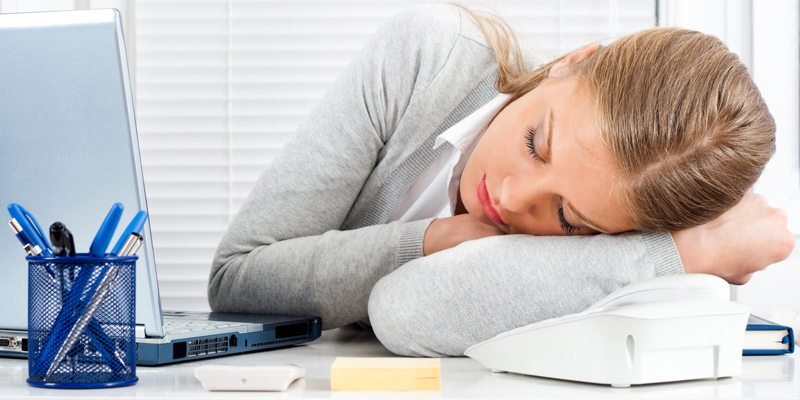
It’s normal for individuals to feel drowsy from time to time, especially after a long day. Nonetheless, extreme drowsiness can be disruptive & make it challenging to effectively perform normal daily actions. Though not a disorder in itself, extreme daytime drowsiness is something to take seriously. The body may be attempting to tell you that you aren’t getting sufficient sleep, or it may be raising red flags about a certain sleep disorder or another health condition. Read on to learn more about extreme drowsiness, its causes, symptoms, & treatment options.
Table of Contents
What Is Excessive Daytime Sleepiness?
Excessive daytime sleepiness (or EDS) is described as difficulty staying awake or alert or an augmented urge to sleep during the day. The feeling of drowsiness may be extremely strong when you’re sedentary, e.g., while you’re driving or sitting at work. Although it’s normal to feel drowsy once in a while after going short on sleep, it’s considered EDS when this happens almost every day for at least 3 months [1].
It’s easy to mistake drowsiness for fatigue since both conditions are characterized by a shortage of energy & may arise under similar circumstances, e.g., being awake for a long period. The paramount difference is that individuals with fatigue may be incapable of falling asleep despite feeling fatigued & sluggish. People may also experience concurrent fatigue & drowsiness.
About 20% of adults in the USA report having moderate to extreme daytime drowsiness that interrupts their daily activities. The prevalence of EDS is highest in adolescents, older persons, & shift workers. Sleep issues contribute to more than 100,000 motor vehicle accidents that result in 71,000 personal injuries & 1,500 deaths annually in the United States. Just up to 52% of single-vehicle crashes involving heavy trucks are indeed fatigue-related, with the driver falling asleep in 17.6% of cases [2].
Symptoms
Sleep plays an essential role in consolidating memory, correcting the immune system, & other important processes. As a consequence, a deficiency of quality sleep may result in a host of symptoms. It may be a concern for you if you show the following things:
- you’re having trouble awakening in the morning;
- you’re often feeling drowsy during waking hours;
- you’re feeling drowsy even after taking a nap.
Besides, you may be suffering from EDS if you are experiencing any of the following symptoms:
- trouble remaining alert & focusing;
- slower reaction times;
- loss of hunger;
- difficulties with thinking or memory;
- feelings of irritability or anxiety;
- trouble making decisions;
- difficulty retaining new info;
- risk-taking behaviors.
Further, being drowsy can have wide-ranging impacts on health & daily life. Here is a list of effects of EDS:
- augmented risk of car & work accidents [3];
- lessened work productivity or poor academic performance;
- more impaired quality of life;
- difficulty regulating mood & emotions;
- social & relationship issues.
Long-term sleep deprivation leads to a more heightened risk of developing diabetes, heart disease, obesity, & other chronic conditions. Further, EDS in children may influence their overall development, while in older adults, it may be a risk factor for cognitive impairment, memory loss, & earlier mortality [4][5].
Causes of Excessive Sleepiness
There may be many different causes of EDS. If it affects your day-to-day life, or if you think it might be an indication of an underlying health problem, see your doctor. They will run tests & ask questions about your sleep habits to determine the cause of your drowsiness. Below are some of the main causes of EDS.
Inadequate Sleep
A frequent cause of EDS is a lack of sleep. Although medical professionals recommend that adults rest 7–9 hours per night, many individuals fall short. Most individuals, especially irregular workers, don’t get adequate sleep. Also, work schedules, family life, & social obligations can all meddle with an individual’s capability to get sufficient rest. Note that when there’s a discrepancy between the amount of sleep an individual needs & the amount they get, sleep deprivation accumulates, leading to EDS.
Sleep Apnea
Many patients with this condition (shortened as SA) also experience EDS. Obstructive sleep apnea (OSA) happens when breathing breaks during sleep just because of the blocked airway. When this occurs, individuals somewhat awaken as they struggle to continue breathing. The sleep fragmentation induced by SA, plus other breathing issues, leads to a variety of signs including EDS.
Periodic Limb Movement Disorder
Shortened as PLMD, it is also referred to as nocturnal myoclonus syndrome. This condition is characterized by frequent movements of legs (sometimes arms) during sleep. The main signs of PLMD include poor sleep, frequent awakenings, & daytime drowsiness.
Restless Legs Syndrome
Individuals with restless legs syndrome (RLS) feel a strong desire to move their legs. Although they may feel this urge while awake, it also oftentimes disturbs their sleep. RLS & related problems can make it more difficult to fall asleep, as well as stay asleep. This can result in an individual getting poor sleep & less sleep altogether.
Narcolepsy
This condition usually stems from a shortage of certain chemicals in the brain. Without these brain chemicals, individuals have trouble remaining awake during the day. This results in sleep episodes during which an individual briefly falls asleep while driving, eating, or having a conversation. EDS is the most noticeable symptom of narcolepsy. Other signs include sleep paralysis, hallucinations, & a loss of muscle control.
Mental Disorders
Certain mental disorders such as bipolar disorder and major depressive disorder may be linked to EDS. These conditions can make individuals rest more than usual & nap overly. Patients may also have trouble falling asleep or have systematic sleep disturbances. Besides, EDS can be a negative effect of mental health therapy, such as psychiatric meds.
Other Health Conditions
Several medical conditions may induce EDS. Nonetheless, if the condition responds successfully to therapy, consequential drowsiness is likely to improve as well. Below is a list of some health problems that may cause EDS:
- underactive thyroid gland;
- cancer;
- gastroesophageal reflux disease;
- peptic ulcer;
- chronic liver disease;
- Parkinson’s & Alzheimer’s diseases + other types of dementia.
Also, brain inflammation, including viral encephalitis, can also be the cause of EDS.
Medications
Certain prescription & over-the-counter meds, plus recreational drugs, may induce extreme drowsiness. Some of these include:
- opioid pain meds;
- antihistamines;
- marijuana;
- antiseizure meds;
- meds for heart disease & high blood pressure.
If you’re concerned that a prescribed med may cause EDS, talk with your physician before stopping or changing the dose.
Diagnosis and Treatment of Conditions That Cause Excessive Daytime Sleepiness
The cause of EDS may sometimes be apparent. For instance, those who take certain meds or who don’t get sufficient rest, may not require further testing. If a physician can’t easily determine the cause, they may order several diagnostic tests such as the following:
- health history: A physician often asks a patient about the meds they’re taking, mood, & sleep habits, + any history of snoring or restless legs syndrome. Further, they may ask when the problem has emerged & recommend keeping a sleep diary;
- Epworth Sleepiness Scale: It’s a questionnaire asking how likely an individual dozes off in certain circumstances. It can be useful in distinguishing between individuals who have EDS & those with low energy or fatigue;
- polysomnography (or sleep study): It’s conducted in a sleep laboratory & involves taking physical measurements during sleep. This is to provide info about an individual’s sleep that can aid in diagnosing a sleep disorder;
- home sleep apnea test (HSAT): It’s mostly done if OSA is suspected. It’s performed using a portable device at home during sleep;
- multiple sleep latency test (MSLT): It’s conducted in a special laboratory, typically following polysomnography. An MSLT works to measure sleep latency (the amount of time it takes for a person to fall asleep). If an individual falls asleep in less than 8 minutes, the test usually indicates EDS.
The therapy of EDS depends on an underlying cause. For instance, if one is drowsy because they aren’t getting adequate rest, therapy might involve counseling to help them enhance their sleep hygiene & create a sleep schedule. If EDS is caused by a sleep disorder, therapy targets that disorder. For example, a doctor may suggest that you use a continuous positive airway pressure (CPAP) machine for SA or take iron supplements or other meds for restless legs syndrome. If a physician determines that a prescribed med is behind EDS, they may recommend changing the drug or the time of day it should be administered, e.g., taking it at bedtime rather than during the day.
The symptom of EDS itself can sometimes be treated with medication. For instance, individuals with narcolepsy or shift work sleep disorder (SWSD) might be treated with stimulants or meds that promote wakefulness. The most known eugeroic is modafinil, which is approved by the Food and Drug Administration (FDA) to treat EDS due to narcolepsy, OSA, & SWSD. So, if a physician suggests that you use a wakefulness-promoting drug, modafinil should be your go-to med. You may decide to buy modafinil over the counter from an online pharmacy and have it shipped to your address. Purchasing this drug online is cheap, and most vendors don’t require a prescription for it.
Conclusion
Although EDS can be dangerous if left untreated, the causes of the condition are treatable. When the issue stems from insufficient rest, enhancing sleep hygiene can be helpful. If you’re feeling extremely drowsy during waking hours, and it’s affecting your daily life, it’s advisable to seek medical advice as soon as possible. Modafinil is thought to be the first-line treatment of EDS if it’s caused by OSA, SWSD, & narcolepsy. It is not addictive and has a generally mild negative-effect profile.
References
- An Approach to Excessive Daytime Sleepiness in Adults. By James Brown and Himender K. Makker. Published: March 27, 2020. Bmj.com.
- Excessive Daytime Sleepiness. Published: March 1, 2009. Aafp.org.
- Excessive Daytime Sleepiness and Safety Performance: Comparing Proactive and Reactive Approaches. By Vahid Gharibi, Hamidreza Mokarami, Rosanna Cousins, Mehdi Jahangiri, Davood Eskandari. Published: April 2020. Pubmed.ncbi.nlm.nih.gov.
- Approach to a Child With Excessive Daytime Sleepiness. By Keshavamurthy Kallambella and Nahin Hussain. Retrieved: January 8, 2023. Ep.bmj.com.
- Excessive Daytime Sleepiness Is Related to Subjective Memory Impairment in Late Life: A Cross-Sectional Community-Based Study. By Tsuyoshi Okamura, Chiaki Ura, Fumiko Miyamae, et al. Published: May 2016. Pubmed.ncbi.nlm.nih.gov.