

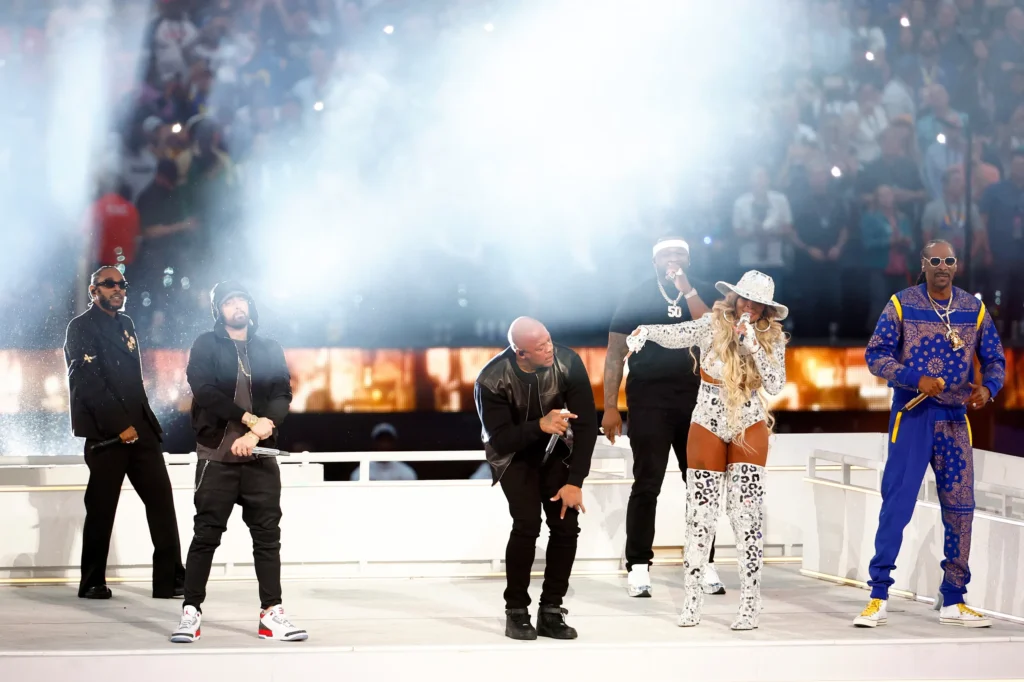
The Super Bowl halftime show features some of the best performers worldwide and unites fans in a way that only music can do. Jay Z’s Roc Nation has been producing the halftime show for eight years now, and the most memorable shows are those that have cultural significance or that dominate conversations for weeks afterward.
Michael Jackson
Before 1993, the halftime shows would feature themed productions or marching bands. Michael Jackson changed the halftime show forever. His entrance, where he stood still for almost two minutes while the crowd cheered, was iconic. He performed some of his most popular hits, like ‘Billie Jean’ and ‘Black or White, ‘ and in the finale sang ‘Heal the World’ and spoke a message of hope.
The performance was watched by over 133 million viewers, a record that was only overtaken in 2025. Betting on the outcome of the Super Bowl is also very popular, and odds open as soon as the previous season ends. Many states allow online sports betting, and the Pennsylvania sports betting market is one of the largest in the U.S.
Prince
Prince’s Super Bowl halftime performance is regarded by many expert critics as one of the best. The NFL had been playing it safe with more traditional rock performances since Janet Jackson had her ‘wardrobe malfunction’ and then took a chance and made a risky choice with Prince, who was anything but traditional. He performed a medley including his own hits and songs by Queen, Bob Dylan, Creedence Clearwater Revival and Foo Fighters.
As the rain poured down over Miami, he ended with a goosebump-inducing rendition of ‘Purple Rain.’ He didn’t rely on any special guests, and his talent was on full display. The performance showed what a virtuoso he was on the guitar, and his solo behind an illuminated curtain became infamous, with the guitar’s shadow sticking out suggestively from his hip.
U2
This was a moving halftime show performance, with the Irish rockers performing ‘Beautiful Day’ and ‘MLK’ before singing a touching rendition of ‘Where the Streets Have No Name.’ The names of victims who died in the September 11 attacks scrolled continuously on huge screens behind the band.
Some felt an Irish rock band wasn’t the right choice at the time, but the performance worked in a strangely affecting way, balancing grief with hope and unifying the audience. Bono had an American flag sewn into the lining of his jacket and opened it at a certain point, creating a powerful visual that resonated with the audience. Getting big names to perform was difficult before U2, but after them, it was easier. They helped America recover from the disaster.
Beyoncé
As one of the world’s leading performers, Beyoncé doesn’t ever seem to take a break from work, and she commits herself fully to any show. Her performance at the 2013 halftime show is widely regarded as her best one. Her flawless live vocals, the choreography, and her reunion with Destiny’s Child members Kelly Rowland and Michelle Williams made it iconic. They performed hits like “Single Ladies” together, electrifying the crowd.
The show was watched by over 110 million viewers and reminded everyone of the superstar’s amazing abilities as a performer. Beyoncé closed her show by singing ‘Halo’ and the Superdome lost power shortly afterward in a bizarre but iconic twist. The whole production was fiercely feminist, with an all-female 10-piece band and 120 female backup dancers. It set a record as the most tweeted-about performance in Twitter history.
Kendrick Lamar
The Super Bowl is one of the most popular sports events in the US, and the halftime show featuring Kendrick Lamar was the first one ever to feature a solo hip-hop artist. He didn’t just sing all his hit songs. His performance was tightly choreographed, and he used storytelling and sharp social commentary to challenge Americans about issues such as systemic racism. The set was like a video board game and opened with actor Samuel L. Jackson as ‘Uncle Sam’ in the center as both a narrator and scorekeeper.
At the end of the performance, Jackson was gone, and Lamar sat in the center square. It was the perfect satirical critique of how mainstream America often rejects Black expression until it’s convenient. The performance sparked many discussions about race and culture in a way that few other cultural events could and showcased how the rap genre can speak the truth of the lived experiences of the unheard.