

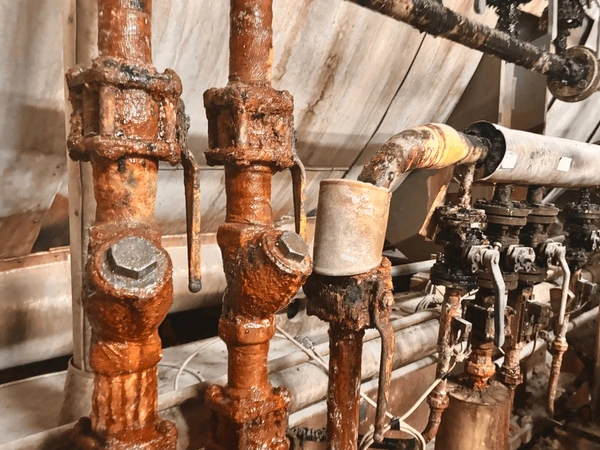
Most plumbing systems do not fail all at once. They age in stages, and the pipe’s material often determines what those stages look like. Some pipes thin from the inside due to corrosion, while others become brittle from heat cycles or chemical exposure. Joints can loosen gradually, or a line can crack suddenly after years of quiet stress. Because water is always moving through a home, small changes are easy to miss until a stain appears, a drain slows down, or a pressure drop shows up at the shower. Understanding how different pipe materials fail over time helps homeowners spot early warning signs and plan repairs before a leak becomes major damage. It also explains why a fix that works for one home may not fit another, even if both houses are the same age.
How pipe age shows up
- Galvanized steel and cast iron fail from the inside out.
Older homes often have galvanized steel supply lines or cast-iron drain lines, and both materials tend to fail from internal corrosion rather than from obvious exterior damage. Galvanized steel can corrode internally as the protective zinc layer wears away, allowing rust to form and narrow the inside diameter. That narrowing shows up as lower water pressure, uneven flow between fixtures, and a tendency for sediment to clog faucet screens. Because corrosion can be patchy, one section may be nearly closed while another still flows, which can make symptoms confusing. Cast iron drains age differently. They can develop internal scaling and roughness, and the rough interior catches debris more easily, leading to recurring clogs and slower drainage. Over many years, cast iron can also thin and pit, especially in areas where water sits, such as low spots or sections with limited slope. Exterior rust stains on the pipe can be a sign, but the more important change is often inside, where the flow path shrinks, and the pipe wall becomes weaker.
- Copper aging and pinhole leak patterns
Copper supply piping has a different aging profile. In many homes,s it lasts a long time, yet it can develop pinhole leaks caused by internal pitting corrosion. These leaks may appear as tiny sprays that leave greenish or white mineral staining on the pipe surface. Copper is also sensitive to changes in water chemistry, velocity, and temperature. If water is aggressive or if turbulence occurs at fittings, localized wear can accelerate. Over time, copper can become thinner in certain areas, and a minor disturbance can cause a leak where the wall has weakened. Another failure pattern is at joints. Soldered connections can degrade if the original workmanship was inconsistent or if expansion and contraction cycles slowly stress the joint. Homeowners may first notice small damp spots, a musty smell, or discoloration in drywall near the pipe run. If you are trying to confirm whether symptoms point to aging copper, a visit from Tennessee’s Choice Plumbing can help identify whether the issue is localized pinholes, joint wear, or something related to pressure and water quality. Early detection matters because pinholes can appear in clusters, and another may follow one repair if underlying conditions remain.
- Plastic piping, heat cycles, and joint fatigue
Plastic systems age in their own way. PVC and ABS drain pipes can become brittle over time, especially when exposed to heat, UV light, or harsh chemicals. A drain line under a sink can be stressed by repeated use of chemical drain openers, which may soften or deform parts and strain slip joints. For supply lines, different plastics have different risks. Some older types of plastic piping and certain fittings used in past decades have known failure histories, often tied to brittle fittings or chemical reactions with disinfectants. Even when the pipe itself stays intact, joints and connectors can fatigue over time. Expansion and contraction cycles occur every time hot water runs, and that movement can slowly loosen threaded connections or stress-glued fittings. Plastic also tends to transmit sound differently, so homeowners may notice new rattling, clicking, or water hammer noises as supports loosen and the pipe shifts slightly. This movement can lead to rub points where a pipe contacts framing, eventually creating wear. Plastic failures often show as cracks at stress points, fractures at fittings, or leaks at joints, rather than the gradual narrowing seen in older metal lines.
Next Steps for Pipe Aging
Aging pipes fail differently depending on what they are made of and how they have been used over time. Galvanized steel and cast iron often undergo internal changes, narrowing flow paths and weakening from the inside. Copper may develop pinhole leaks or joint issues due to water chemistry and temperature fluctuations. Plastic piping can face joint fatigue, cracking at stress points, and damage from heat or harsh chemicals. In homes with mixed materials, problems can overlap, and symptoms can appear far from the real weakness. Paying attention to changes in pressure, recurring clogs, stains, odors, and dampness helps you catch issues earlier. With timely inspection and targeted repairs, homeowners can reduce surprise leaks and keep plumbing systems stable for longer.