

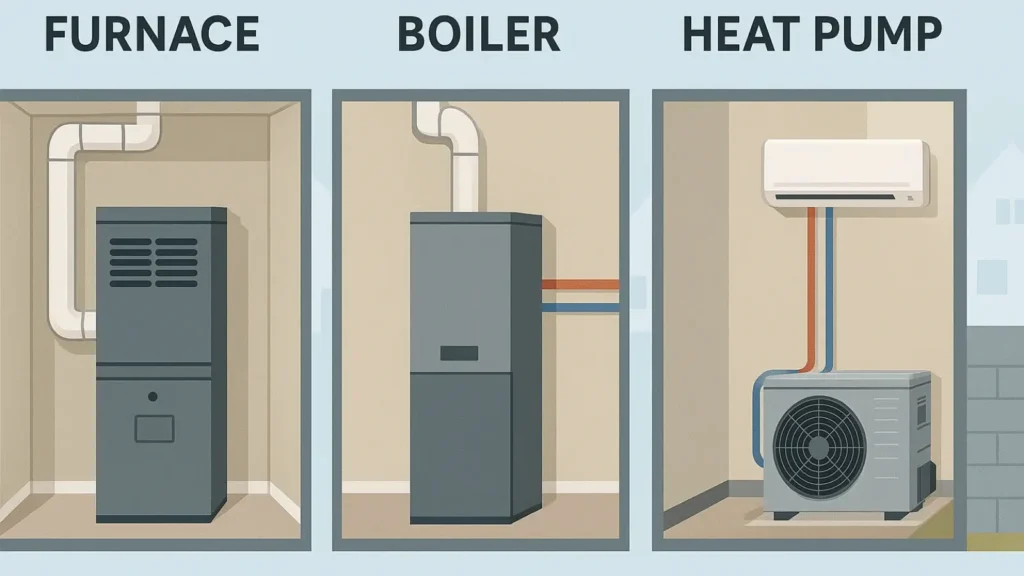
We will explore the primary differences between furnaces, boilers, and heat pumps, focusing on how each system operates, their efficiency, and suitability for different homes. Heating systems are a crucial part of any building, providing comfort and safety during cold seasons. Many homeowners face the challenge of choosing the right system, as each option offers distinct advantages and operates using different methods. Understanding how these systems work, how much energy they consume, and what type of heat they provide can help homeowners make informed decisions.
Key Differences Between Heating Systems
- Operation and Heat Distribution
Furnaces heat air and distribute it through ductwork. They use fuel sources such as natural gas, electricity, or oil to warm the air, which is then circulated via vents to different rooms. This method allows homes to heat quickly and evenly, making furnaces suitable for larger spaces with extensive duct networks. Milton Heating and Air Conditioning companies provide installation and maintenance services to ensure furnaces operate efficiently and safely. In contrast, boilers use water to generate heat. Water is heated in a central tank or a coil and then pumped through radiators or underfloor piping. The warmth is transferred indirectly through the radiators, producing a more even and gentle heat throughout the building.
Heat pumps, however, function differently from both furnaces and boilers. They do not generate heat through combustion or by heating water; instead, they transfer heat from one place to another. In winter, they extract heat from the outside air, even when it’s cold, and release it indoors. During summer, the process reverses, allowing the heat pump to cool the home by moving heat outside. This dual functionality makes heat pumps versatile for year-round climate control.
- Energy Efficiency and Costs
Energy efficiency is a major consideration for anyone selecting a heating system. Furnaces can vary in efficiency depending on the type of fuel and the model’s design. High-efficiency furnaces can convert most of the fuel into usable heat, but older units may waste significant energy. Boilers are generally efficient at maintaining a consistent temperature, as water retains heat longer than air. This means that less energy is needed to keep rooms warm over time, although initial installation and water maintenance can add costs. Heat pumps are known for their energy-saving potential because they transfer heat rather than generate it, which can significantly reduce energy consumption in moderate climates.
However, in regions with extreme cold or heat, heat pumps may require supplemental heating, which can increase energy use. Comparing initial costs, operating expenses, and long-term energy efficiency can help homeowners evaluate which system aligns with their financial and environmental goals.
- Installation and Space Requirements
The installation process and spatial needs differ significantly between these systems. Furnaces require ductwork for air distribution, which can be complex and costly to install in homes without existing ducts. Boilers require space for the central tank and a network of pipes to connect radiators or underfloor heating. This can be easier to implement in homes with established plumbing or where floor-based radiators are an option. Heat pumps require outdoor units and indoor air handlers or ductwork, similar to furnaces in some cases, but installation can be less invasive if mini-split systems are used. The size of the system and the available space in a home can influence the choice, as certain systems may require remodeling or adjustments to accommodate equipment. Proper sizing is essential, as undersized systems struggle to maintain comfort, while oversized systems may cycle too frequently, reducing efficiency and lifespan.
- Temperature Control and Comfort
Comfort levels and temperature control vary between furnaces, boilers, and heat pumps. Furnaces provide fast, direct heat, which is ideal for quickly warming cold rooms. However, heated air can feel dry, which may require supplemental humidity management. Boilers provide a slower, steady heat that is often described as more natural and comfortable. Radiators emit warmth gradually, keeping rooms evenly heated without drafts. Heat pumps offer consistent temperature control and can maintain a stable indoor environment. Since heat pumps can both heat and cool, they allow for precise control of indoor climate throughout the year. Each system has its own comfort profile, and homeowners may prioritize quick heating, even warmth, or year-round climate adaptability when making their selection.
- Maintenance and Lifespan
Maintenance requirements and system longevity are important factors in evaluating heating systems. Furnaces typically need annual inspections, filter changes, and occasional cleaning of burners and ducts to maintain efficiency. Boilers require regular checks of water level, pressure, and, if needed, flushing to prevent sediment buildup. Heat pumps demand consistent maintenance of both indoor and outdoor units, including cleaning coils, checking refrigerant levels, and ensuring proper airflow. Lifespan varies by system type: furnaces and boilers often last 15 to 30 years with proper care, while heat pumps may last 10 to 20 years. Planning for long-term maintenance and potential repairs helps ensure that heating systems remain safe, effective, and economical over time.
Choosing among furnaces, boilers, and heat pumps requires understanding how each system operates, its energy efficiency, installation requirements, comfort levels, maintenance needs, environmental impact, and adaptability to local climate. Furnaces provide fast, dry air heating, boilers offer gentle, consistent warmth through water, and heat pumps transfer heat efficiently while providing both heating and cooling. Homeowners must weigh factors such as upfront cost, operational efficiency, and long-term performance to determine which system meets their needs. By carefully considering these differences, individuals can select a heating system that provides reliable, comfortable, and energy-efficient indoor temperatures throughout the year.