

Solar energy is one of the smartest investments a homeowner can make. From lowering monthly utility bills to increasing property value and reducing dependence on traditional energy sources, solar offers long-term benefits that continue paying off year after year.
But there’s one part of solar ownership many homeowners don’t think about until it suddenly becomes unavoidable:
Table of Contents
What happens when your roof needs work?
Whether your roof has reached the end of its lifespan, suffered storm damage, or simply needs repairs, one thing becomes immediately clear. Your solar panels can’t stay in place while the work is being done.
That’s where solar panel removal and reinstallation comes in.
When handled correctly, the process is smooth, organized, and protects both your roof and your solar investment. But when corners are cut or inexperienced contractors get involved, the results can be expensive and stressful.
Understanding how solar panel removal and reinstallation works can help homeowners avoid common mistakes, protect their warranties, and ensure their solar system continues performing efficiently for years to come.
Why Solar Panels Must Be Removed Before Roof Work
One of the biggest misconceptions homeowners have is assuming roofers can simply “work around” the solar panels.
Unfortunately, roofing systems don’t work that way.
Solar panels are mounted directly into your roof using specialized hardware that penetrates the roofing material and connects to structural supports beneath the surface. Those penetrations are sealed carefully using flashing and waterproofing techniques designed to prevent leaks.
When roofing work begins, contractors typically need full access to:
- Shingles or roofing materials
- Underlayment
- Roof decking
- Flashing systems
- Structural components
Leaving solar panels in place prevents roofers from properly inspecting and repairing those areas.
Trying to work around the system often creates major risks, including:
- Incomplete roofing work
- Improper sealing
- Water intrusion
- Damaged mounting systems
- Future roof leaks
The bottom line is simple: if your roof needs major work, your solar panels need to come off first.
What Solar Panel Removal and Reinstallation Actually Involves
Many homeowners assume the process is as simple as uninstalling the panels temporarily and putting them back later.
In reality, solar panel removal and reinstallation (often called a “detach and reset”) is a detailed, multi-step process that requires technical expertise and careful coordination.
The process typically includes:
- Safely shutting down the system
- Disconnecting electrical components
- Removing panels and mounting hardware
- Organizing and storing equipment
- Coordinating with roofing contractors
- Reinstalling the system properly
- Testing and verifying energy production
Each stage matters.
Solar systems are complex electrical systems integrated directly into your roof structure. Proper handling is essential for protecting both the home and the solar equipment.
The Most Common Reason for Solar Panel Removal: Roof Replacement
In most residential projects, solar panel removal and reinstallation happens because the roof needs replacement.
This situation is incredibly common.
Solar panels are built to last 25 years or longer, while many roofing systems (especially asphalt shingles) typically last 20 to 30 years depending on climate and material quality.
That means many homeowners eventually face a mismatch between the life of their roof and the lifespan of their solar system.
If you’re planning to install solar on an older roof, many professionals strongly recommend replacing the roof first. Doing so helps avoid paying for removal and reinstallation only a few years later.
However, if you already have solar and your roof is beginning to age, there’s no reason to panic. Removal and reinstallation is a routine service when handled by experienced professionals.
Step-by-Step: What Homeowners Can Expect During the Process
Understanding the process ahead of time helps eliminate uncertainty and allows homeowners to plan more effectively.
While every project is unique, most professional removal and reinstallation jobs follow a similar sequence.
Step 1: Evaluation and Project Planning
Before any work begins, a professional solar team will inspect the system carefully.
This stage usually includes:
- Evaluating roof condition
- Assessing the solar array
- Reviewing mounting systems
- Inspecting electrical components
- Coordinating timelines with the roofing contractor
This planning stage is critical because it helps prevent delays, scheduling conflicts, and costly mistakes later in the project.
Strong communication between the roofing company and solar contractor is essential from the very beginning.
Step 2: Safe System Shutdown
Safety always comes first.
Solar panels generate electricity whenever sunlight hits them, which means the system must be shut down correctly before removal begins.
Technicians safely disconnect:
- Inverters
- Electrical circuits
- Monitoring systems
- Battery storage systems (if applicable)
Proper shutdown procedures help protect workers, equipment, and the home itself during removal.
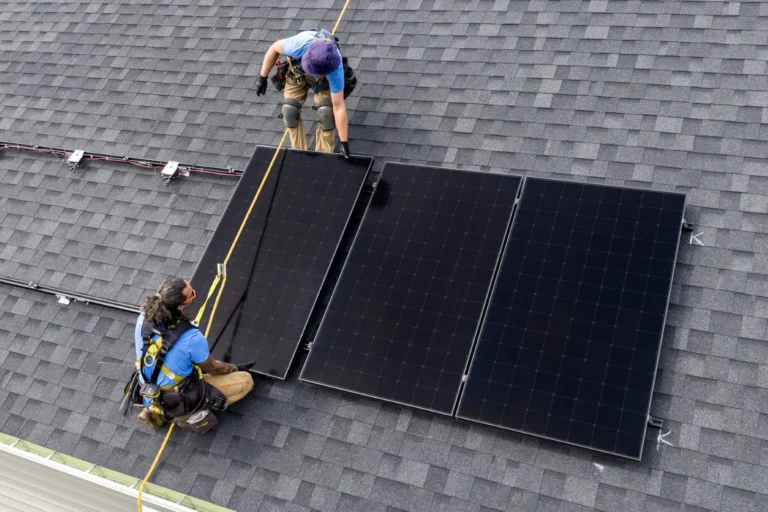
Step 3: Removing Panels and Mounting Hardware
Once the system is powered down safely, technicians carefully remove:
- Solar panels
- Mounting racks
- Wiring connections
- Roof attachments
Every component is labeled and organized to ensure the system can be reinstalled accurately later.
Careful handling is extremely important because solar panels are durable but still vulnerable to impact damage, scratches, and cracked glass if mishandled.
Step 4: Equipment Storage and Protection
One of the most overlooked parts of the process is proper storage.
Panels and equipment must be:
- Stored in a dry environment
- Protected from weather exposure
- Shielded from accidental damage
- Organized for efficient reinstallation
Improper storage can create unnecessary damage that leads to costly repairs or replacements before the system even goes back onto the roof.
Experienced solar professionals understand how to protect equipment throughout the entire project timeline.
Step 5: Roofing Work Begins
Once the solar system is removed completely, the roofing contractor can begin repairs or full roof replacement.
Depending on the scope of work, this stage may involve:
- Removing old shingles
- Replacing underlayment
- Repairing roof decking
- Installing new roofing materials
- Improving flashing and waterproofing
This stage varies depending on roof size, weather conditions, and project complexity.
Step 6: Reinstallation of the Solar System
After roofing work is complete, the solar system is reinstalled carefully.
This process includes:
- Reattaching mounting hardware
- Installing flashing properly
- Reinstalling panels
- Reconnecting electrical systems
- Restoring monitoring equipment
Precision during reinstallation is absolutely critical.
Improper mounting or sealing can lead to leaks, electrical problems, or reduced energy efficiency.
Step 7: Testing and System Activation
Before the project is finished, the system undergoes comprehensive testing to ensure everything is functioning properly.
Technicians verify:
- Electrical safety
- Energy production levels
- Monitoring system communication
- Inverter functionality
- Proper panel performance
Only after full testing is completed is the system officially turned back on.
How Long Does Solar Panel Removal and Reinstallation Take?
Every project timeline is different, but most homeowners can expect the process to follow a general schedule.
Typical timelines include:
- Solar removal: 1–2 days
- Roofing work: several days to a week
- Reinstallation: 1–2 days
However, permitting requirements, weather conditions, and contractor schedules can extend the overall timeline.
The most important factor is coordination.
When roofing and solar teams communicate effectively, projects move far more efficiently and homeowners experience fewer delays.
Understanding the Costs Involved
Cost is naturally one of the first questions homeowners ask.
The total cost of solar panel removal and reinstallation depends on several factors, including:
- Number of panels
- Roof size and pitch
- Roof accessibility
- Complexity of the solar system
- Electrical configuration
- Equipment condition
- Labor requirements
Additional repairs or system upgrades can also affect pricing.
While every project is different, homeowners should remember one very important thing:
This is not the place to choose the cheapest option available.
Low-cost work often results in:
- Roof leaks
- Improper flashing
- Poor system alignment
- Reduced energy production
- Warranty issues
Investing in experienced professionals protects your home and your long-term solar savings.
Why Experience Matters More Than Ever
Solar panel removal and reinstallation requires expertise in two highly specialized systems:
- Roofing
- Solar energy
An experienced solar contractor understands:
- Structural mounting systems
- Electrical safety requirements
- Waterproofing methods
- Local code compliance
- Proper permitting procedures
This isn’t simply about removing equipment temporarily. It’s about preserving the integrity and performance of the entire system.
Working with qualified professionals dramatically reduces the risk of future problems.
A Perfect Opportunity to Upgrade Your System
One major advantage of removal and reinstallation is the opportunity to improve your system while everything is already being disassembled.
Depending on your energy goals, homeowners may choose to:
- Upgrade to more efficient panels
- Add battery backup systems
- Expand solar capacity
- Improve panel layout
- Install newer inverter technology
Solar technology evolves quickly, and roof replacement projects often provide the perfect opportunity to modernize an older system.
Common Mistakes Homeowners Should Avoid
Over the years, several mistakes continue causing unnecessary stress and expenses for homeowners.
Poor Contractor Coordination
Roofers and solar contractors must work together closely.
Without proper communication, delays and installation issues become much more likely.
Hiring Inexperienced Contractors
Not every contractor understands solar systems properly.
Choosing inexperienced providers can result in roof damage, electrical issues, and warranty complications.
Rushed Work
Solar removal and reinstallation require precision.
Rushing the process increases the likelihood of mistakes significantly.
Skipping Permits
Permits and inspections help ensure code compliance and system safety.
Ignoring them can create major complications later.
Waiting Until the Last Minute
Scheduling early gives homeowners more flexibility and helps avoid unnecessary delays.
Planning ahead almost always leads to smoother projects.
What Happens If the Job Is Done Incorrectly?
Unfortunately, improper removal and reinstallation can create serious long-term problems.
Common issues include:
- Roof leaks
- Structural damage
- Electrical failures
- Reduced system efficiency
- Broken panels
- Voided manufacturer warranties
And once those problems develop, repairs can become extremely expensive.
That’s why choosing the right team matters so much.
Protecting Your Solar Investment for the Long Run
Your solar system is more than equipment sitting on top of your home.
It’s a long-term investment designed to:
- Lower energy costs
- Increase home value
- Improve energy independence
- Deliver reliable performance for decades
Proper solar panel removal and reinstallation helps protect:
- Your roof
- Your energy production
- Your warranties
- Your long-term savings
- Your peace of mind
When handled properly, your system should continue performing just as efficiently after reinstallation as it did before.
Work With a Team You Can Trust
If you’re planning roof work, dealing with storm damage, or simply unsure about your next steps, don’t try to navigate the process alone.
Working with experienced professionals makes all the difference.
That’s why homeowners trust Positive Energy Solutions for expert solar panel removal and reinstallation services.
Their team understands how to coordinate roofing and solar projects carefully while protecting your home and your investment every step of the way.
Whether you need:
- Full solar panel removal and reinstallation
- Roof replacement coordination
- System upgrades
- Performance evaluations
- Expert guidance
they’re equipped to help make the process smooth, safe, and stress-free.
Because at the end of the day, your solar investment deserves the same level of care and protection as every other part of your home.


