

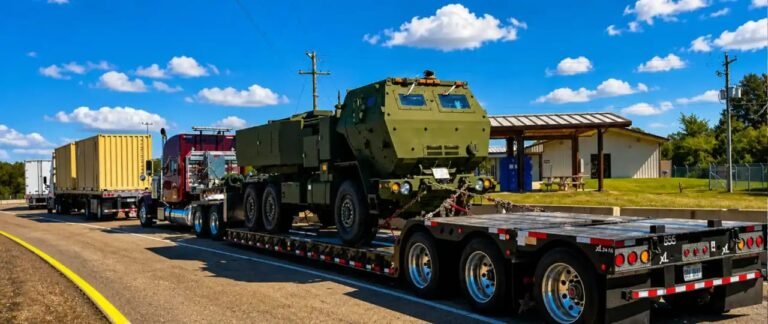
Most people look at a semi-truck and just see a “big rig.” They don’t see the engineering nightmare happening where the tires touch the pavement. In the heavy haul world, the way you distribute weight across your axles isn’t just a technical detail—it’s the difference between a profitable run and a massive fine that shuts you down at the first scale house you hit.
Table of Contents
The Physics of Bridge Protection
Heavy haul permitsThe core reason axle configuration is so strictly regulated is simple: roads and bridges have breaking points. A concentrated 80,000-pound load is far more destructive to a bridge span than that same weight spread across a longer wheelbase with more axles. State DOTs use the Federal Bridge Formula to calculate how much weight a specific configuration can legally carry.
If your axles are spaced too close together, you’re creating a “concentrated load” that violates these formulas. It doesn’t matter if your total gross weight is legal—if your axle group is too tight, you’re hitting the asphalt with too much force per square inch. This is exactly how you get flagged for bridge damage and why inspectors look at your axle spread before they even glance at your cargo.
How Spread Determines Your Payload
Configuration dictates your ceiling. If you’re running a standard 5-axle setup, you’re capped by rigid federal limits. By adding a lift axle or stretching your wheelbase, you’re essentially “buying” more legal capacity.
Smart dispatchers understand that the right axle layout allows them to bid on heavier freight without pushing the rig into the danger zone. When you optimize your spread, you lower the load on each individual tire and axle, which reduces equipment fatigue and keeps you within the legal tolerances of an overweight truck permit. It’s not just about compliance; it’s about mechanical survival.
The Cost of Ignoring Distribution
If you try to run heavy without dialing in your axle distribution, the costs multiply fast:
Premature wear: Overloading specific axles destroys bearings, tires, and suspension components in weeks, not years.
Safety risks: Poor weight distribution kills your handling. If your drive axles don’t have enough weight, you lose traction on hills. If your steer axle is too light, you can’t steer properly in high winds.
Legal liability: If you’re involved in an accident, one of the first things a forensic investigator will check is your weight distribution. If you’re over-gross on an axle group, your insurance might void the claim, leaving you personally liable for damages.
Why You Can’t “Wing It”
Dispatchers who think they can just load up and “see how it scales” are playing a dangerous game. Modern, high-performance logistics operations verify their axle weights on a certified scale before they leave the yard. They know exactly how their weight shifts when the fuel burns off or the load settles.
Axle configuration is the primary variable you control to manage risk. If you’re moving extreme weight, you need a configuration that satisfies the bridge formula, protects your equipment, and ensures the truck actually handles safely at highway speeds. If you don’t treat axle geometry as a critical engineering component of your business, you’re eventually going to end up parked at a scale house with a fine that makes your entire project look like a bad idea.


