

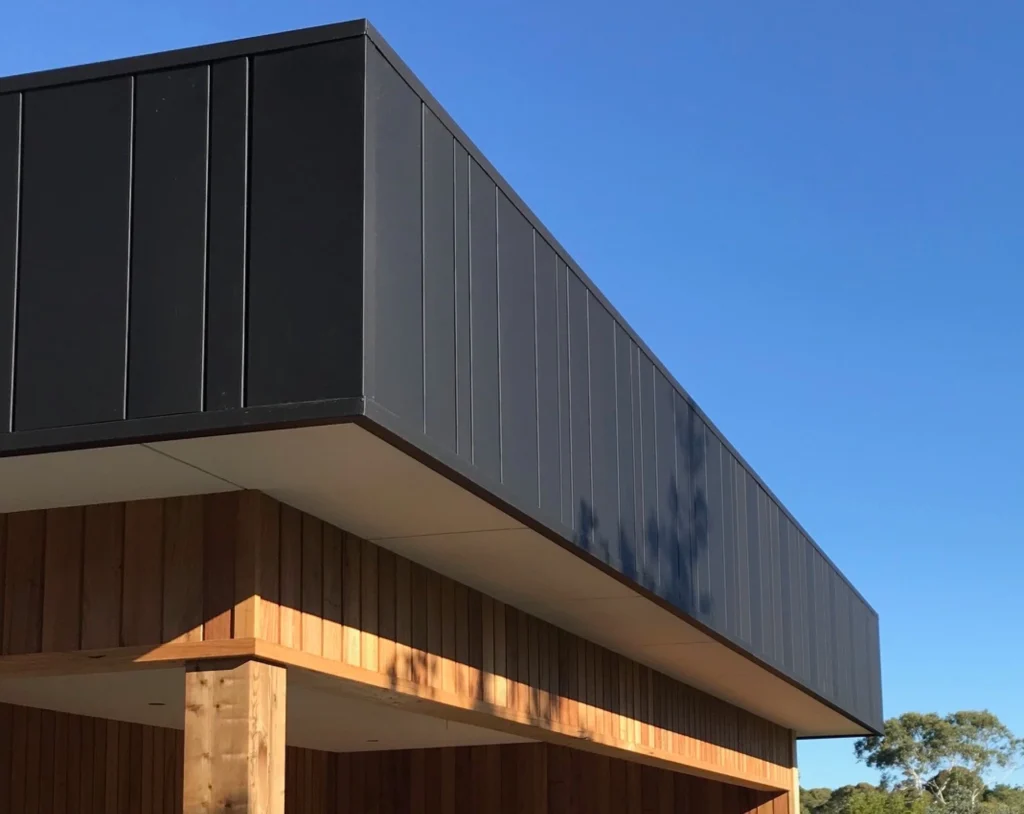
You don’t always notice a building straight away. Sometimes it’s just… there. Sitting quietly on a street you’ve walked past a hundred times. But then one day, something looks different. Cleaner lines. Sharper edges. No peeling paint. No patches that look like they’ve been “fixed” five times already.
And you pause. Just for a second. Chances are, there’s a good chance colorbond Interlocking cladding is part of that story.
Table of Contents
It Usually Starts With Frustration, Not Design Inspiration
Most projects don’t begin with, “Let’s make this look amazing.” They begin with problems. Weather damage. Fading paint. Water getting into places it shouldn’t. Maintenance costs creeping up every year. That constant cycle of fixing, patching, repainting… repeating.
A builder or property owner reaches a point where they think, “There has to be a better way.” That’s often where Colorbond interlocking cladding enters the conversation. Not as a flashy upgrade. More like a practical solution that happens to look good.
Weather Does What It Wants. Always Has
If you’ve seen buildings age over time, you’ll know. Sun fades things. Rain finds gaps. Wind tests everything that isn’t fixed properly. And over years, those small effects build up.
Traditional materials can handle it for a while. Then they start showing it. Cracks. Warping. Rust in the wrong places. This is where Colorbond interlocking cladding tends to hold up better than expected.
It’s designed for exposure. The kind that doesn’t stop just because a project is finished. And because the panels interlock, there are fewer obvious weak points for water or wind to exploit. It’s not invincible. Nothing is. But it holds its ground.
Maintenance… Or The Lack Of It
This is the part people care about more than they admit. No one wants to keep fixing the same exterior every couple of years. And yet, that’s what happens in many buildings. Paint chips. Panels loosen. Surfaces stain. It becomes part of the routine. Switching to colorbond Interlocking Cladding changes that rhythm a bit. Not zero maintenance. Let’s be realistic.
But significantly less. Fewer touch-ups. Fewer “we need to fix this again” moments. And over time, that difference becomes noticeable. Especially for commercial properties where downtime equals lost business.
Installation Feels… Cleaner
I once watched part of a façade being redone. It was messy. Bits everywhere. Adjustments. Re-adjustments. People stepping back, then forward again. Then, on another site using Colorbond interlocking cladding, the process felt different.
Panels aligned. Locked into place. Less guesswork. Less improvising on-site. It looked more… controlled. That interlocking system isn’t just about the final look. It changes how the installation happens. More precision upfront. Less correction later.
Design Without Overthinking It
Not every project needs to be bold. Sometimes, you just want something that looks clean. Modern. Not dated in five years. That’s where colorbond Interlocking Cladding fits in quietly. Straight lines. Consistent finish. No overly complicated textures.
It doesn’t try too hard. Which, in a way, makes it easier to work with. Architects can build around it without forcing the design. Builders can install it without constant adjustments. And the result usually feels… balanced.
Renovations Feel Less Like A Gamble
Renovation projects are unpredictable. You start with one issue, then uncover three more. Budget shifts. Timelines stretch. Choosing materials becomes a bit of a gamble. But using Colorbond interlocking cladding tends to reduce some of that uncertainty.
Because once it’s in place, it covers a lot of underlying issues. Uneven surfaces. Ageing materials. Minor structural inconsistencies.
It doesn’t fix everything underneath. But it creates a clean, consistent outer layer that holds things together visually and functionally.
The “Looks New For Longer” Factor
Some materials age quickly. You can see it within a year. Others take longer. With Colorbond interlocking cladding, the ageing process is slower. More gradual. Less obvious. So buildings maintain that “just finished” appearance for longer.
Which matters more than people think. Especially in commercial settings where first impressions still count.
It’s Not Just For One Type Of Project
You’ll see Colorbond interlocking cladding in different places once you start noticing. Residential homes. Office spaces. Retail units. Industrial buildings. It doesn’t belong to one category.
That flexibility is part of its appeal. It adapts. Different profiles. Different colours. Different layouts. Same core idea. Just applied differently.
There’s A Cost Conversation, Of Course
There always is. Initial cost vs long-term value. At first glance, some hesitate. Understandably. But when you factor in reduced maintenance, fewer repairs, and longer lifespan, Colorbond interlocking cladding often balances out over time.
Not instantly. But gradually. And for many projects, that long-term view matters more.
Small Details That Change The Outcome
Things like alignment. Fixings. Proper sealing. They sound minor. But they’re not. Even with a good material, poor installation can undo everything.
That’s why working with experienced installers for Colorbond interlocking cladding makes a difference.
It’s not just about putting panels up. It’s about getting those small details right so the system works as intended.
It’s A Quiet Upgrade, Not A Loud One
Some building materials shout for attention. Bright finishes. Complex textures. Statement designs. Colorbond interlocking cladding doesn’t do that. It sits somewhere in the background. Doing its job. Looking clean without trying too hard. And maybe that’s why it works.
Because not every project needs to stand out loudly. Some just need to work well. For a long time.
A Quick Moment, Just Observing
I passed a small commercial building recently. Nothing special at first glance. But it looked… well-kept. Solid. Like it didn’t need constant attention. No peeling edges. No mismatched repairs. And it struck me. This is what good material choices do.
They don’t demand attention. They remove problems. That building? Pretty sure it used Colorbond interlocking cladding.
Final Thought… It’s About Fewer Problems Later
Most decisions in construction come down to this. What will cause fewer issues down the line? Because initial builds are one thing. Living with the result is another. Leaks. Repairs. Maintenance calls. Unexpected costs. If a material reduces even some of that, it becomes worth considering.
And that’s where Colorbond interlocking cladding from Metal Klädding keeps showing up. Not as a trend. Not as a luxury. Just as a practical choice that happens to solve more problems than it creates. Which, honestly, is what most builders are looking for anyway.