

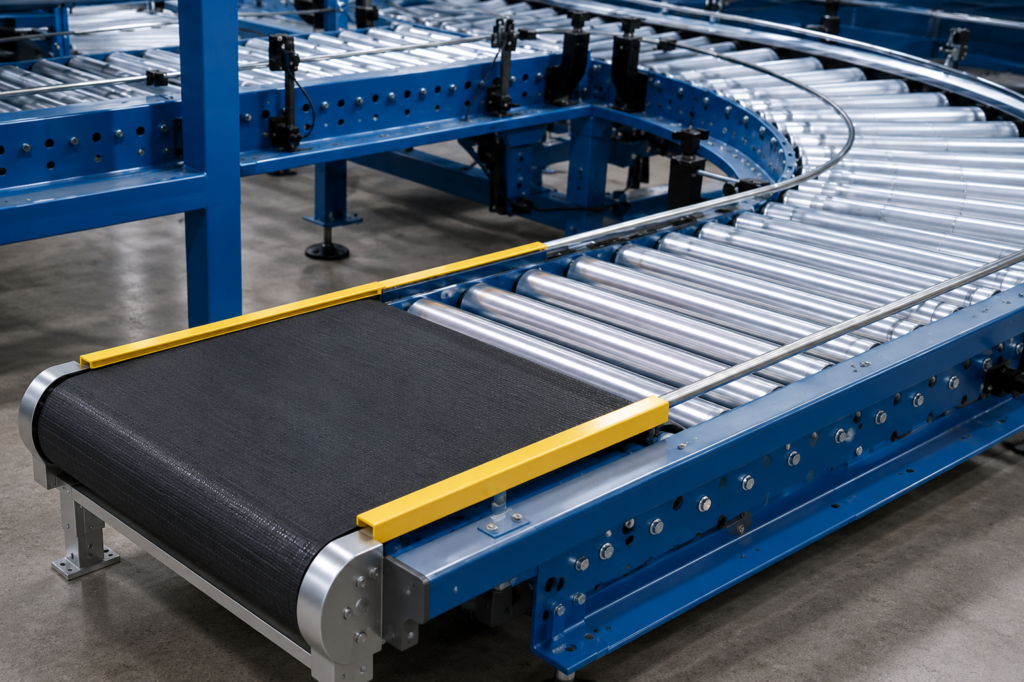
Roller conveyor systems help warehouses, distribution centers, manufacturing facilities, and other industrial operations move products safely and efficiently. Because these systems often run for long periods and handle steady product flow, routine conveyor maintenance is key to keeping them reliable. Regular inspections, cleaning, lubrication, and timely repairs can reduce unexpected downtime, extend equipment life, and catch small issues before they disrupt operations. The tips below cover practical ways to maintain roller conveyor systems and support safer, more consistent performance.
Table of Contents
Inspect Rollers Regularly
Rollers are arguably the most important part of a roller conveyor, so regular inspection is essential to keep the system running smoothly. Check rollers for signs of wear, dents, corrosion, or damage that could prevent packages from moving smoothly down the line. Make sure rollers rotate freely without excessive noise or resistance. Clean and lubricate them regularly to keep the conveyor system running smoothly.
Check Bearings and Moving Parts
The bearings support the rollers and allow them to turn properly. Inspect your bearings for unusual noises, excessive heat during use, looseness, or other signs of wear. Lubricate bearings according to the manufacturer’s recommendations whenever it’s needed. Avoid over-lubricating the components, as excess lubricant can attract dust and debris or get on materials as they move down the line. Other moving parts, like shafts, sprockets, chains, and drive components, should also get routine inspections.
Keep the Conveyor Clean
Dirt, dust, packaging materials, and other debris can interfere with conveyor performance and accelerate wear on moving parts. Regular conveyor maintenance should include cleaning the frame, rollers, and surrounding work areas to prevent buildup. Pay close attention to bearings, motors, and drive components where debris can affect movement and reliability. Keeping the conveyor clean also makes routine inspections easier by giving maintenance teams a clear view of cracks, loose hardware, damaged rollers, and other developing issues to address before they lead to downtime.
Address Problems Early
Small maintenance issues can quickly become bigger problems if you don’t address them. Unusual sounds, vibrations, inconsistent movement, damaged rollers, and other changes in your conveyor system’s performance should get prompt attention. Routine inspections and early problem-solving can help keep your roller conveyor system running efficiently while reducing the likelihood of unexpected downtime.
With proper inspection and care, material handling solutions like a conveyor system can provide many years of reliable service, keeping your warehouse or other business space running efficiently day after day.