

Rising land prices and crowded cities drive people to reconsider how much space they need. Tiny homes promise lower costs and simpler routines while staying solid and personal.
That’s where shipping container homes become an option, offering steel strength in a compact shell. Keep reading to see why this modern tiny living approach draws serious attention.
Table of Contents
Smart Use of Space
Standard containers arrive with fixed dimensions, which forces careful planning from the start. Designers use every wall for storage, including recessed frames and stair risers. Fold-down desks and wall beds keep the floor open during the day.
Design hinges on seamless form and function, where clean lines meet practical layouts. Many homeowners discover container home options with open floor plans and well-placed windows. Interior finishes stay modern yet warm, so the compact space feels personal rather than temporary.
Long, narrow interiors can feel generous when sightlines run from one end to the other. Instead of building extra walls, subtle shifts in flooring or lighting define each zone. A reading nook and a compact kitchen can share the same footprint without crowding.
Built for Harsh Conditions
Most steel containers cross oceans under salt air and heavy winds. That rugged origin gives shipping container homes a structural edge in storm-prone regions. Proper anchoring and welding create a rigid shell that resists strong gusts.
Fire risk often concerns homeowners, especially in dense areas. Steel framing doesn’t ignite the way timber can. With the right interior finishes, the structure offers a level of reassurance many small cabins lack.
Insulation requires careful thought, particularly in humid climates. Spray foam or mineral wool prevents condensation on metal walls. Exterior cladding and shading screens reduce heat gain before it enters the living space.
Disaster recovery planners have begun to notice another benefit. From an emergency shelter, a container can become a permanent home. That continuity spares families from repeated displacement.
Faster Construction
Traditional home building stretches across months of site work and framing. Shipping container homes shorten that timeline through off-site modification. Workshops cut window openings, install wiring channels, and reinforce walls before delivery.
Once the container reaches the lot, crews focus on foundations and connections. Fewer raw materials sit exposed to weather, which limits delays. A compact footprint speeds interior finishing as well.
Phased construction offers flexibility that large homes rarely provide. A single container can function as a starter unit. As budgets grow, additional modules attach without requiring relocation.
Sustainable Potential
Repurposing retired containers diverts steel from scrap yards and extends its useful life. Fewer new materials enter the supply chain, which trims construction waste. Thoughtful design choices amplify that benefit.
Flat roofs accommodate solar panels with minimal adjustment. Rainwater collection systems connect easily to gutters along the steel edges. Green walls or trellises shade exterior surfaces and cool the interior naturally.
Urban planners see promise in tight city lots. Shipping container homes fit into irregular parcels that standard houses ignore. That infill approach increases housing options without spreading development into farmland.
Cost Control
Upfront container prices attract attention, yet budgeting involves more than steel boxes. Site grading, utility hookups, and insulation require careful estimates. Still, predictable dimensions simplify material planning.
Roofing costs often drop because the container already includes a structural top. Exterior walls double as framing, which reduces lumber expenses. Smaller square footage keeps utility bills manageable month after month.
Creative financing models have emerged around container builds. Cooperative land ownership spreads infrastructure costs across several households. Shared solar arrays or water systems reduce individual spending while maintaining independence.
Flexible Design
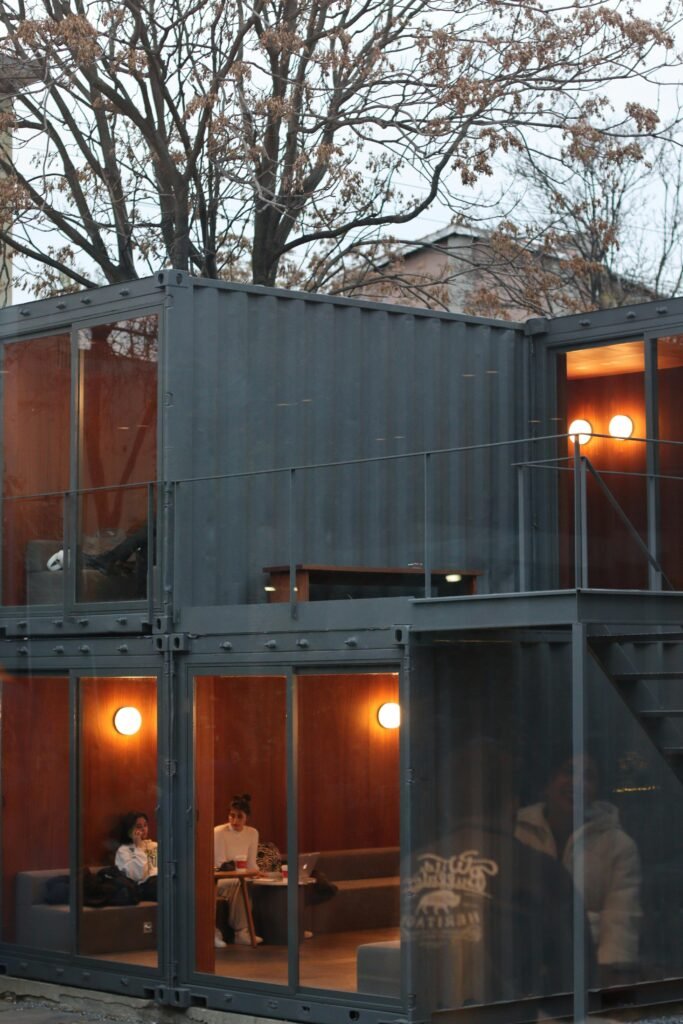
Stacking containers creates vertical homes with small footprints. Upper units can extend slightly to form shaded patios below. Rooftop decks emerge once guardrails and stairs are installed.
Side-by-side placement widens the interior dramatically. High ceilings and large glass panels soften the industrial outline. Meanwhile, sliding doors open wide to patios or decks, strengthening indoor-outdoor flow.
Aesthetic choices range from raw steel finishes to warm wood cladding. Some owners embrace the industrial look, while others prefer a suburban appearance.
Creative architects have even inserted containers inside existing warehouses. Underused parking areas have transformed into compact live-work units through similar strategies.

Mobility and Freedom
Not every container home travels frequently, yet relocation remains possible. Structural planning allows the unit to lift onto a trailer when necessary. That option offers peace of mind for leased land.
Remote professionals often value that flexibility. A home office travels with the owner, eliminating repeated setups in unfamiliar spaces. Solid steel walls provide stability that many trailers cannot match.
In coastal regions, relocation may serve as long-term planning. Rising flood risks prompt some owners to move inland rather than rebuild. A portable structure supports that decision without sacrificing comfort.
Community Possibilities
Across several cities, clusters of shipping container homes support shared gardens and workshops. Compact footprints leave room for communal courtyards. Social interaction grows naturally in those shared spaces.
Some cities now revise zoning codes to permit alternative housing types. Container villages can include affordable units alongside market-rate homes. Architectural quality remains consistent across income levels.
Developers have begun to explore mixed-use concepts as well. Ground-level containers host small shops or studios, while upper units provide housing. That blend encourages daily activity within walking distance.
Practical Challenges
Steel requires maintenance to prevent rust, especially near coastal areas. Protective coatings and regular inspections keep corrosion in check. Proper ventilation reduces moisture buildup inside walls.
Cutting large openings demands structural reinforcement. Engineers calculate load paths before removing sections of steel. Professional guidance ensures safety and compliance with local codes.
Permitting can take patience in regions unfamiliar with container construction. Clear documentation and experienced contractors smooth that process. Preparation solves most obstacles before they escalate.
Conclusion
Tiny living asks for discipline, creativity, and a willingness to rethink comfort. Shipping container homes answer that call with strength, adaptability, and smart design. For many, that combination makes the compact dream feel sturdy enough to last.