

A yard can go from tidy to overgrown surprisingly quickly. After a windy weekend, branches may cover the lawn, leaves can collect around fences and flower beds, and grass clippings may end up scattered across the driveway. During spring and summer, regular mowing and trimming add another layer of work.
The good news is that homeowners do not need a garage full of specialized machinery to handle most routine landscaping. A carefully selected combination of hand tools, lawn care equipment, and cordless machines can cover the majority of common cleanup and maintenance tasks.
The right setup depends on the size of the property, the type of landscaping, local weather, and how frequently the homeowner handles the work.
Table of Contents
What Is Essential Yard-Cleanup Equipment?
Essential yard-cleanup equipment includes the hand and powered tools commonly used to cut grass, trim vegetation, collect leaves, move debris, prune plants, maintain garden beds, and prepare outdoor areas for changing seasons. The most useful setup combines versatile equipment for frequent jobs with specialized tools only when the property requires them.
The goal is to select tools based on actual maintenance needs rather than purchasing equipment simply because it is available.
Start With the Most Common Yard Tasks
Before deciding what to buy, identify the jobs that occur repeatedly.
Typical residential maintenance includes:
- Mowing grass
- Trimming around fences and trees
- Edging sidewalks and driveways
- Collecting leaves
- Removing small branches
- Pruning shrubs
- Clearing patios and walkways
- Maintaining garden beds
- Moving soil, mulch, and yard waste
- Preparing the property for winter
Once these tasks are listed, it becomes easier to identify which equipment will receive regular use.
Mowers for Routine Lawn Maintenance
For properties with substantial turf, a mower is usually the central piece of lawn care equipment.
Walk-Behind Mowers
Push mowers can be practical for smaller, relatively flat lawns. Self-propelled models may be more convenient for larger yards or properties with slopes.
When comparing mowers, look beyond engine or motor power. Cutting width, height adjustment, maneuverability, battery runtime, collection options, and storage requirements can have a greater effect on day-to-day use.
A homeowner with a 2,000-square-foot lawn may value compact dimensions and easy storage, while someone maintaining half an acre may benefit from a wider cutting deck and longer operating time.
Riding Mowers
Riding equipment becomes more practical as lawn area increases. It can reduce physical effort and shorten mowing sessions on large, open properties.
However, it also requires more storage space and maintenance. For a property with numerous trees, garden beds, and narrow passages, a walk-behind mower may remain easier to maneuver.
String Trimmers for Hard-to-Reach Areas
A mower cannot reach every part of a lawn. Grass around fence posts, trees, foundations, garden borders, and uneven ground often requires a string trimmer.
A trimmer is particularly useful after mowing because it can clean up areas where the mower leaves uneven growth.
When comparing cordless equipment, homeowners can review greenworks outdoor tools as one example of the battery-powered equipment available through retail channels. When evaluating any cordless system, pay attention to battery compatibility, expected runtime, charging time, replacement batteries, and the range of tools supported by the platform.
For a small yard, one battery may be enough for trimming and light cleanup. Larger properties may require additional batteries so the homeowner does not have to stop halfway through a maintenance session.
Leaf Blowers and Rakes
Leaves and grass clippings are among the most common seasonal cleanup problems.
A rake is inexpensive, quiet, and useful for collecting material in garden beds or small areas. A blower can move large quantities of loose debris across lawns, driveways, patios, and sidewalks more quickly.
When to Use Each
Use a rake when:
- Working around delicate plants
- Collecting material in a small area
- Cleaning garden beds
- You want maximum control over where debris moves
Use a blower when:
- Clearing large paved areas
- Moving dry leaves across an open lawn
- Removing grass clippings after mowing
- Cleaning around outdoor structures
Wet leaves are considerably heavier than dry ones, so blower performance and battery runtime can vary significantly depending on weather conditions.
Pruners, Loppers, and Hedge Trimmers
Pruning equipment handles a different category of landscaping work.
Hand pruners are useful for small branches and selective cuts. Loppers provide greater leverage for thicker branches. A hedge trimmer is better suited to maintaining longer stretches of relatively uniform shrub growth.
Homeowners should avoid treating these tools as interchangeable. Using a hedge trimmer for thick branches, for example, can damage the equipment and produce poor results.
For trees and large branches, a pole saw or chainsaw may be appropriate depending on the size and location of the material. Larger or elevated branches can create significant safety hazards and may be better handled by a qualified professional.
Shovels, Rakes, and Garden Hand Tools
Powered equipment is only part of a practical outdoor maintenance setup.
Every homeowner should have a few dependable hand tools available. A shovel can move soil, mulch, compost, and loose debris. A garden rake helps prepare beds and level loose material. A garden hoe can assist with cultivating soil and removing weeds.
Other useful tools include:
- Hand trowel
- Garden fork
- Weeding tool
- Cultivator
- Wheelbarrow or garden cart
- Hand pruner
These tools are often faster for small jobs than setting up a powered machine.
Equipment for Moving Yard Waste
Cleanup becomes much easier when collected material can be moved efficiently.
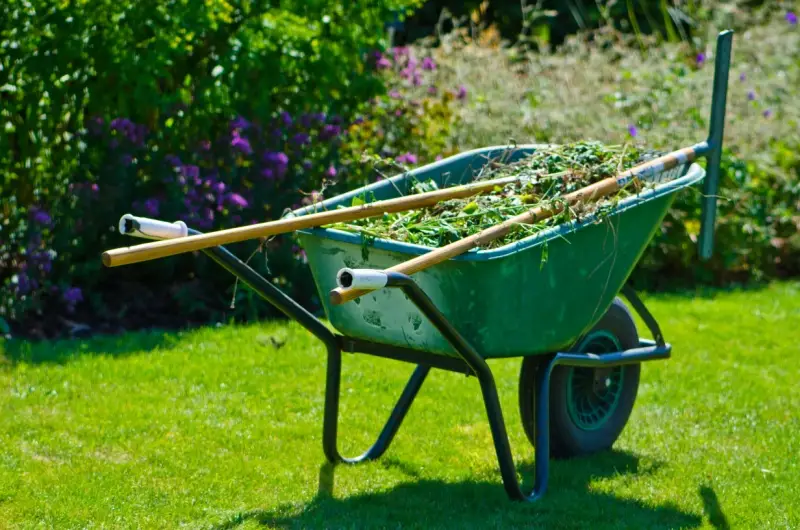
A wheelbarrow works well for transporting branches, leaves, soil, mulch, and garden debris. Garden carts may be more comfortable for homeowners who need to move larger loads over relatively level ground.
For larger properties, reusable yard-waste containers or tarps can make leaf and branch collection more manageable.
The best choice depends on distance, terrain, load size, and storage space.
Comparing Essential Yard Equipment
| Equipment | Primary task | Best for | Main consideration |
| Mower | Cutting grass | Lawns | Yard size and terrain |
| String trimmer | Cutting around obstacles | Borders and tight spaces | Runtime and balance |
| Leaf blower | Moving loose debris | Lawns and hard surfaces | Battery capacity and airflow |
| Rake | Gathering debris | Small areas and garden beds | Manual effort |
| Hedge trimmer | Shaping shrubs | Hedges | Blade length and branch size |
| Hand pruner | Selective pruning | Small branches | Cutting capacity |
| Loppers | Larger pruning cuts | Shrubs and branches | Handle length and leverage |
| Shovel | Digging and moving material | Beds and landscaping | Blade design |
| Wheelbarrow/cart | Transporting material | Larger cleanup jobs | Capacity and terrain |
Match Equipment to Property Size
A small city lot may need only a compact mower, string trimmer, rake, hand pruners, shovel, and perhaps a small blower.
A typical suburban yard can justify a broader collection that includes a mower, trimmer, blower, hedge trimmer, loppers, garden tools, and a wheelbarrow.
A large property or acreage may require longer-runtime cordless equipment, additional batteries, larger cutting equipment, and specialized tools for trees or rough terrain.
The climate also matters. Properties in areas with heavy autumn leaf fall may benefit more from a blower and collection system than yards where leaves are relatively sparse.
Seasonal Yard-Cleanup Needs
Spring is usually the time to inspect equipment, remove winter debris, prune where appropriate, prepare garden beds, and begin regular mowing.
Summer often brings frequent mowing, trimming, watering, and weed control. Battery charging becomes more important when cordless equipment is used several times each week.
Fall can create the heaviest cleanup workload. Leaves, branches, and other debris may require repeated raking or blowing.
Winter requirements vary by region. In snowy areas, homeowners may need snow shovels or snow blowers, while warmer climates may continue to require pruning, cleanup, and occasional mowing.
Homeowners planning landscape improvements can also consult USDA conservation guidance for residential landscapes, which covers practices related to soil, water, vegetation, and resource conservation. (USDA Natural Resources Conservation Service)
Safety and Equipment Maintenance
Regular inspection should be part of every outdoor maintenance routine.
Before using powered equipment, check blades, guards, handles, wheels, switches, battery connections, and other components for visible damage. Clean grass, dirt, and plant residue after use.
Protective equipment should match the job. Eye protection is especially important when cutting or blowing material that could become airborne. Hearing protection may also be appropriate around loud equipment.
OSHA’s landscaping safety guidance addresses hazards associated with machinery, cuts, eye injuries, noise, lifting, chemicals, and outdoor working conditions. (OSHA)
Best Practices & Pro Tips
- Buy equipment around recurring tasks, not rare possibilities.
- Match mower size to the actual lawn area and terrain.
- Choose battery capacity based on realistic work time rather than advertised maximums.
- Keep a second battery available if a regular job consistently exceeds one charge.
- Clean tools after mowing, trimming, pruning, or blowing.
- Keep blades and cutting components sharp and properly maintained.
- Use hand tools for small jobs rather than automatically using powered equipment.
- Store batteries and equipment according to manufacturer recommendations.
- Inspect tools before each major maintenance session.
- Keep basic replacement supplies such as trimmer line, blades, and fasteners available.
- Avoid using equipment for tasks it was not designed to perform.
Build Your Equipment Collection Gradually
A practical yard-tool collection does not need to be assembled in one purchase. Start with equipment that handles the work you perform most often.
For most homeowners, that means a mower, string trimmer, basic pruning tools, rake, shovel, and a way to move yard waste. A blower, hedge trimmer, cultivator, or other specialized equipment can be added when seasonal or property-specific needs justify it.
The most useful equipment is the equipment that fits the property and gets used regularly. Prioritize durability, ease of use, maintenance requirements, battery compatibility, and realistic workload rather than collecting tools simply because they offer more features.
With a thoughtful setup and regular maintenance, a relatively small collection of dependable lawn care tools can handle most routine outdoor maintenance tasks throughout the year.