

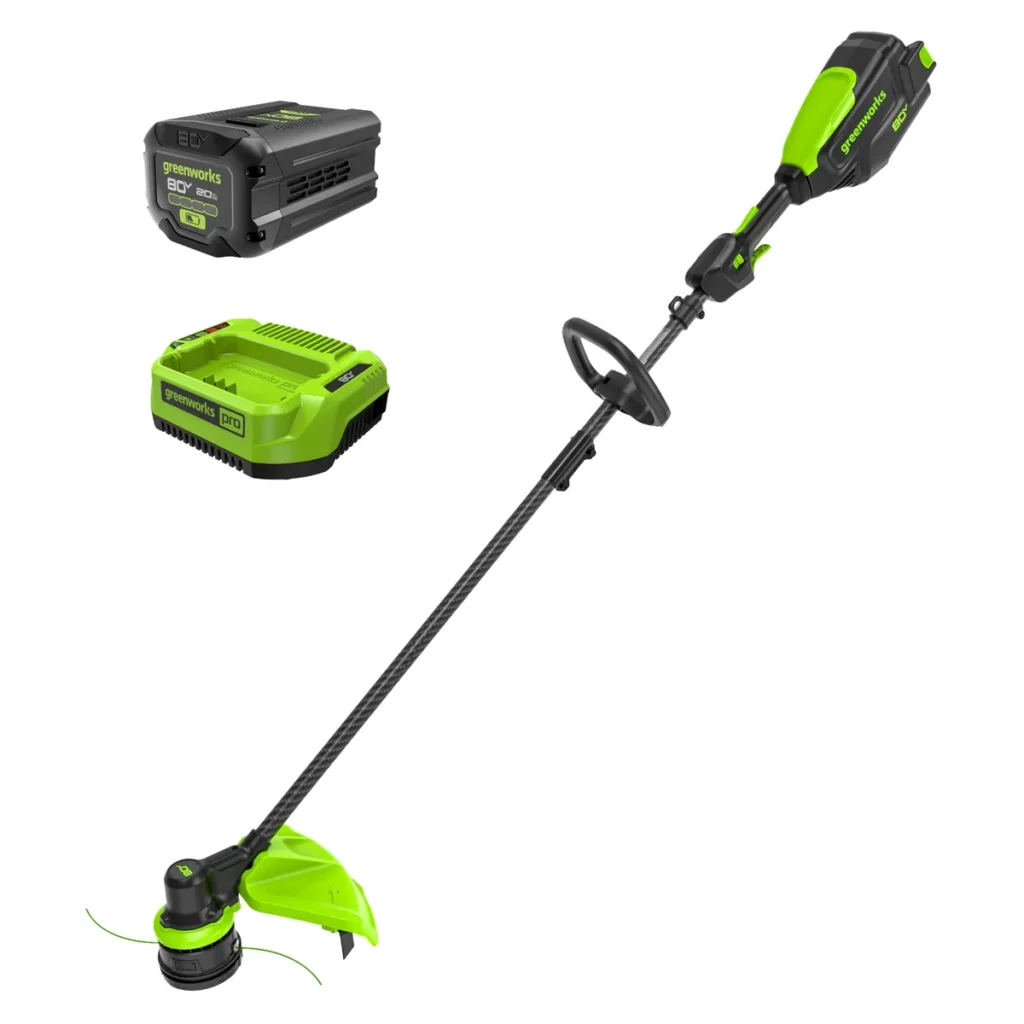
An electric weed trimmer can make edging, trimming, and clearing around landscape obstacles considerably more controlled but only when the tool is positioned correctly. One overlooked factor is the guard. Often treated simply as a protective component, the trimmer guard also influences how much of the cutting area you can see and where grass clippings, stones, and other debris are directed.
For homeowners who regularly work around fences, garden beds, walkways, trees, and other obstacles, understanding guard positioning can improve both control and consistency. When evaluating an electric weed trimmer, it is worth considering not only motor power and cutting width, but also how the guard interacts with the way you work.
Table of Contents
Why the Trimmer Guard Matters More Than It Appears
The primary purpose of a guard is to help shield the operator from material thrown outward by the rotating cutting line. It also helps define the working area around the head.
That creates a practical tradeoff. A guard that provides broad coverage may offer stronger debris protection but can partially obstruct the cutting zone from certain angles. A guard that seems less intrusive may improve visibility while requiring more deliberate positioning.
The best setup is not necessarily the one that exposes the most line. It is the one that provides enough visibility to control the cut without compromising protection.
How Guard Positioning Changes Your Line of Sight
Visibility becomes especially important when trimming along irregular edges. If you cannot clearly see where the line is contacting vegetation, it is easy to remove more material than intended.
A useful working position generally allows you to see the approximate path of the cutting head while keeping the guard between you and the primary direction of debris.
When trimming around valuable plants, for example, avoid relying solely on the visible tip of the cutting line. Use the guard, shaft position, and your body position together to maintain a predictable cutting arc.
Visibility Matters Most Around Obstacles
Open lawn gives you plenty of room for error. Landscape borders do not.
When approaching:
- Stone or concrete edging
- Fence posts
- Young trees
- Garden borders
- Mailboxes
- Raised beds
- Outdoor structures
small changes in head angle can significantly change where the line contacts the vegetation.
A clear view of the guard and cutting head makes it easier to maintain a consistent distance from these objects.
Debris Control Depends on More Than the Guard
The guard cannot prevent every piece of debris from moving unpredictably. Cutting-line speed, vegetation density, head angle, and material being struck all influence the direction of discharge.
Dry grass generally behaves differently from damp vegetation. Small stones hidden beneath grass can also become projectiles when contacted by rotating line.
For that reason, the Occupational Safety and Health Administration emphasizes appropriate personal protective equipment and hazard awareness when using powered landscaping equipment. The OSHA landscaping safety resources provide broader guidance for reducing risks around outdoor power equipment.
The guard should be viewed as one layer of protection not a substitute for eye protection, appropriate footwear, and sensible operating technique.
Finding the Right Balance Between Protection and Visibility
A common mistake is assuming that maximum guard coverage automatically produces the best working experience. In practice, the ideal arrangement depends on the task.
For general grass trimming, debris control may be the primary concern. Along a carefully maintained garden edge, visibility and precision become more important.
| Trimming situation | Primary concern | Useful approach |
| Open lawn | Debris direction | Keep a stable, controlled cutting angle |
| Garden borders | Precision | Maintain clear sight of the cutting area |
| Fence lines | Consistent distance | Keep the head parallel to the edge |
| Around trees | Bark protection | Use slower, deliberate movements |
| Hard surfaces | Flying debris | Increase caution and maintain distance |
The goal is not to continually adjust the guard while working. Instead, understand the manufacturer’s intended guard configuration and develop a consistent operating position around it.
How to Position an Electric Weed Trimmer for Better Control
Guard positioning works best when combined with proper body positioning. Experienced operators tend to make fewer aggressive movements because they let the cutting head do the work.
Start with the trimmer held comfortably at the recommended operating height. Keep both hands positioned as instructed by the manufacturer and maintain a balanced stance.
Then establish the cutting angle before approaching the vegetation.
Use the Guard as a Visual Reference
Rather than watching the cutting line continuously, use the guard as a reference point for maintaining distance.
For example, when trimming beside a walkway, keep the guard oriented consistently relative to the hard edge. This creates a repeatable movement pattern instead of relying on small corrections throughout the cut.
That approach becomes particularly useful when trimming several hundred feet of edging. Consistency reduces the tendency to repeatedly dip the head toward the surface.
Match Guard Awareness to the Cutting Direction
String trimmers can behave differently depending on which portion of the rotating line contacts the vegetation.
Instead of treating the entire cutting circle as equally predictable, pay attention to the side of the head closest to the work. A slight change in body position can change the apparent relationship between the guard, cutting line, and debris path.
This is one reason experienced operators avoid sweeping the head rapidly through dense vegetation. Controlled passes make the cutting action easier to predict.
A Simple Three-Step Technique
For routine trimming:
- Identify the edge before starting the cut.
- Set the head angle while still a safe distance from the vegetation.
- Make controlled passes rather than forcing the line deeply into thick growth.
This technique also reduces accidental contact with fences, siding, tree bark, and hard edging.
Guard Positioning Mistakes That Reduce Control
Some of the most common trimming problems are not caused by insufficient equipment power. They come from inconsistent technique.
One mistake is holding the head too close to the ground. This can increase the likelihood of striking stones and other hard objects while making the cutting path harder to judge.
Another is leaning the trimmer dramatically to expose more of the cutting line. Doing so may improve short-term visibility but can also change the debris trajectory and make the tool harder to control.
A third mistake is using the guard as a reason to ignore the surrounding work area. Before trimming, remove loose objects such as sticks, stones, toys, and other debris whenever practical.
When to Prioritize Visibility and When to Prioritize Debris Protection
There is no single guard orientation that is ideal for every trimming task.
Prioritize visibility when:
- Creating a precise lawn edge
- Working around established landscape features
- Trimming close to defined boundaries
- Controlling the shape of ornamental areas
Prioritize debris awareness when:
- Clearing dense or dry vegetation
- Working near people or property
- Trimming areas containing loose gravel
- Cutting vegetation along hard surfaces
In both cases, the operator should follow the specific guard and operating instructions supplied with the trimmer. The U.S. Consumer Product Safety Commission also provides consumer safety information covering outdoor power equipment and related hazards through its Outdoor Power Equipment Safety resources.
Practical Habits That Make Guard Positioning Easier
Good guard awareness eventually becomes part of normal trimming technique rather than something that requires conscious thought.
A few habits make that transition easier:
- Inspect the guard before each use for damage or looseness.
- Confirm the cutting head is correctly assembled.
- Clear obvious loose debris from the work area.
- Keep bystanders at a safe distance.
- Wear eye protection even when the guard appears substantial.
- Use slower passes around hard surfaces and landscape features.
- Stop the equipment before inspecting or clearing the cutting head.
- Follow the manufacturer’s instructions for guard installation and operation.
These practices are simple, but they address the conditions that create many avoidable trimming problems.
A Better Way to Think About the Guard
The most useful perspective is to stop viewing the guard as an obstacle between the operator and the cutting line.
Instead, think of it as a control reference.
The guard establishes a physical boundary around the cutting head, helps manage debris, and gives the operator a consistent visual relationship with the work surface. Once that relationship becomes familiar, trimming tends to become more deliberate.
That is particularly valuable for edging. Rather than repeatedly correcting the head position, the operator can maintain a consistent distance and let the cutting line gradually establish the desired boundary.
Frequently Asked Questions About Trimmer Guard Positioning
Should I remove the guard for better visibility?
No. The guard is an important safety component and should remain installed as specified by the manufacturer. Better visibility should come from positioning the tool and operator appropriately, not from removing protective equipment.
Does a larger guard always provide better debris protection?
Not necessarily. Guard effectiveness depends on its design, the direction of material being thrown, cutting conditions, and how the tool is operated. Protective equipment should always be used according to the manufacturer’s instructions.
How can I improve visibility while trimming around garden beds?
Use a controlled cutting angle and position your body so you can see the working area without moving the guard out of its intended position. Slow passes are generally easier to control than aggressive sweeping motions.
Why does debris sometimes travel toward unexpected areas?
Debris direction can change with cutting-line rotation, vegetation density, head angle, and the material being contacted. Loose stones and dry vegetation can behave particularly unpredictably.
Should the guard be adjusted for different trimming jobs?
Only make adjustments specifically permitted by the manufacturer. The better approach is usually to change your operating angle, speed, and body position while keeping the safety components correctly installed.
The Takeaway: Use the Guard as Part of Your Technique
A trimmer guard does more than separate the operator from the cutting line. It influences visibility, debris management, cutting consistency, and the way the tool interacts with the surrounding landscape.
The most effective technique combines the guard’s protective coverage with a stable body position, controlled cutting angle, and deliberate passes. When those elements work together, an electric weed trimmer becomes easier to control around both open lawn and detailed landscape edges.
Rather than looking for a guard configuration that eliminates every limitation, focus on developing a repeatable relationship between the guard, cutting head, and work surface. That small shift in technique can make routine trimming cleaner, more predictable, and considerably easier to manage.