

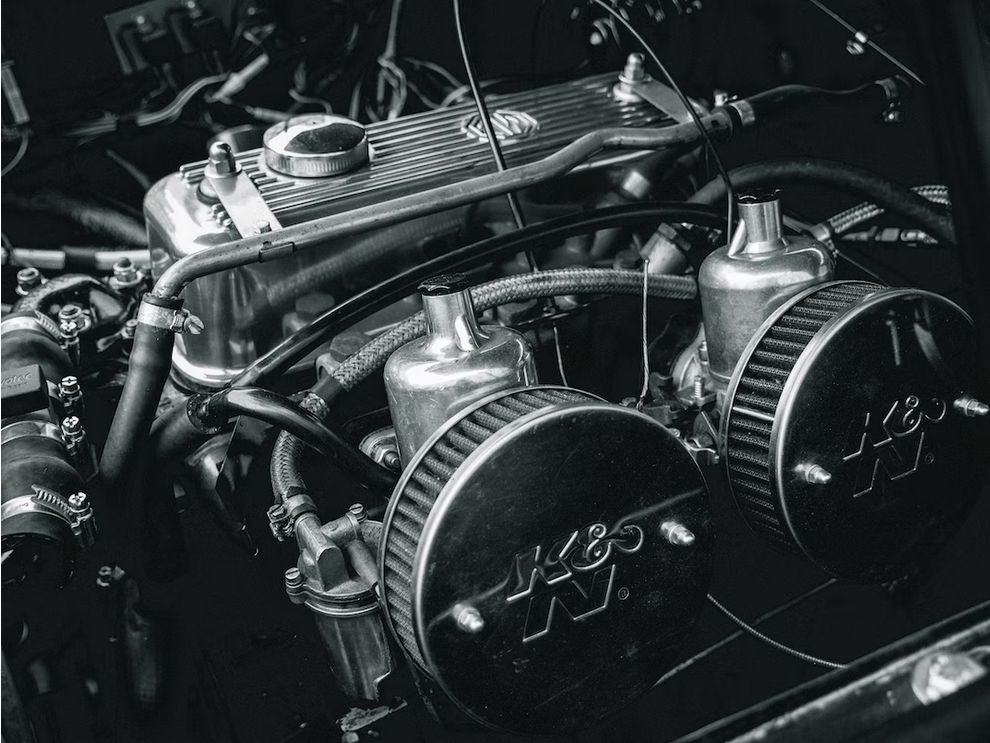
Generators are essential pieces of equipment. They provide backup power in an outage and serve as a primary power source in remote locations. Understanding how a generator works is important to maintain and operate one properly. In this blog post, we’ll take a closer look at an essential component: the generator’s carburetor. We’ll explain how a carburetor works for a generator and the different kinds of carburetors for generators.
Table of Contents
The Basics of a Carburetor
A carburetor mixes the air and fuel inside a generator’s internal combustion engine. It regulates the ratio of air and fuel needed for the engine to perform efficiently. A carburetor basically functions as a “mixer,” providing a specific amount of fuel to the engine based on the amount of air taken in.
The device consists of a venturi tube, intake chamber, float chamber, an exhaust port, a valve, and a fuel-injection nozzle. It also has an accelerator pump.
The Inner Workings of a Carburetor
To ensure the right mix of air and fuel, the carburetor uses several components that work together in harmony.
The main component is the venturi tube. This tube has a narrow throat at one end and an enlarged throat at the other end. As air is drawn inside, it passes through the narrow throat of the tube, increasing its velocity as it does so. At the same time, fuel is injected into the venturi tube via a nozzle or jet. This causes a vacuum that helps to pull in more air, resulting in a well-mixed fuel and air combination.
Other components inside a carburetor include a throttle valve, idle speed screw, accelerator pump, float chamber, and main jet. The throttle valve connects to the accelerator pedal and controls how much fuel and air enters the combustion chamber. The idle speed screw adjusts the engine’s idle speed.
The accelerator pump maintains smooth acceleration by allowing for the release of fuel during high acceleration. The float chamber controls fuel levels inside the carburetor by allowing excess fuel to overflow. Finally, the main jet ensures that enough fuel is fed into the combustion chamber at all times.
Additionally, the carburetor also regulates the engine’s running speed. It does so by using a throttle, which can be adjusted to either increase or decrease the amount of air and fuel entering the engine. By adjusting the throttle, you can control how fast or slow the engine will run. Without a carburetor, the engine would be unable to generate enough power or output to effectively power the generator.
In summary, a carburetor’s inner workings are fairly complex and involve multiple components working together.
The Different Types of Carburetors
Each type of carburetor works differently and has varying levels of efficiency and performance.
The most common carburetors types are the butterfly, side-draft, downdraft, and rotary slide. Butterfly carburetors have a butterfly valve that controls air intake, altering the amount of fuel that is drawn into the engine. Side-draft carburetors draw fuel in from the side rather than the top or bottom, allowing for enhanced efficiency.
On the other hand, downdraft carburetors draw fuel down from the top of the engine and are well suited for engines with higher power levels. Rotary slide carburetors use a series of small chambers that draw in fuel, creating an effective system.
Regardless of carburetor type, they all mix air and fuel efficiently, which is important for optimal generator performance. Understanding the differences between these types of carburetors can help you make an informed decision when selecting the right one for your generator.
Conclusion
A carburetor is an essential device that regulates the flow of air and fuel into an engine, and in the case of a generator, it is vital for efficient operation. In this blog post, we provided a comprehensive overview of the inner workings of a carburetor, as well as descriptions of the four basic types.